
SOCIETY — February 21, 2026
Afghan Girls Who Migrated Abroad Still Await Reopening of Schools
Afghan girls who migrated to Iran and Pakistan to continue education amid the Taliban ban express hope for schools to reopen at home and call for international accountability. Activists and a UNICEF report highlight the severe impacts of the ongoing restrictions.
The Ehtebar Desk — originates with Amu TV — corroborated by Hasht-e Subh — 2 min read
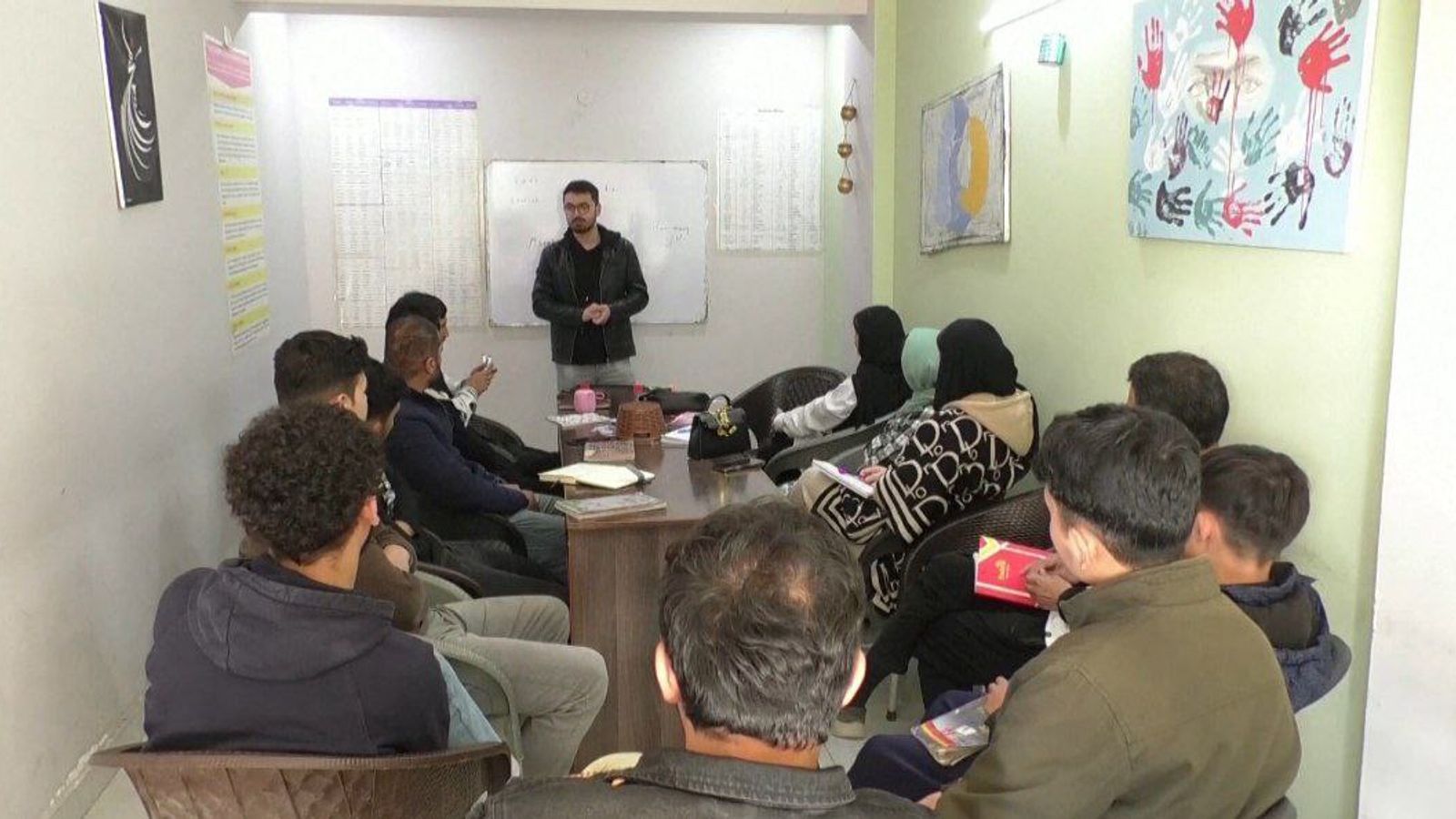
Some Afghan girls who left the country for Iran and Pakistan after the ban on female education say they continue to wait for schools and universities to reopen in Afghanistan, despite access to education in host countries.
The girls urge the international community to hold the Taliban accountable for restrictive policies on girls' education. Sara, a migrant student, said: "Despite the lack of educational conditions in my country, I decided to leave my country to build a better future for myself. This decision was not easy and I faced many challenges including culture and language. However, I was able to successfully complete one year of my studies. I hope that universities and schools will open to girls at the earliest opportunity so that they can build a better future."
Women's rights activists describe the deprivation of girls' education as a violation of fundamental human rights. Soria Haidari, a member of the Women's Unity and Solidarity Movement, said: "When a woman is deprived of the right to education, her future is destroyed. Education is not only an individual right, but the basis of independence, awareness, and human dignity. The Taliban, along with restricting women's work, have deprived them of the most basic tools of survival."
Despite domestic and international pressure, the Taliban have provided no specific timeline or clear response on reopening schools and universities for girls.
Global organizations have warned of serious psychological and social consequences from depriving Afghan girls of education. According to a UNICEF report, more than 2.2 million adolescent girls remain out of school as the ban approaches its fifth year.
Read the original reporting at Amu TV →
Reliability assessment
Key facts corroborated by two independent Afghan outlets (Amu TV, Hasht-e Subh), including direct quote from migrant student Sara and reference to UNICEF report on education ban impacts; aligns with well-known Taliban policy.
The source language mixes facts with framing or advocacy wording. "clear violation of fundamental and human rights"; "her future is destroyed"; "deprived of the most basic tools of survival" - these activist quotes use strong emotional and advocacy language framing the policy as destructive and rights-violating.
Across the newsrooms
Filed by 2 outlets
Amu TV
Originating
Hasht-e Subh
Filed under
Society — Girls' education, Taliban, Migration, Iran, Pakistan
Reader supported
Keep Ehtebar running
Every published story uses paid tools to translate reporting, compare sources, extract claims, and produce a clearer read on Afghanistan. Reader support helps keep that work independent.
€5
helps cover daily verification runs
€15
supports a week of source comparison
€50
keeps independent analysis moving
More in Society
Health Officials and Experts Discuss Rise in Black Jaundice Cases in Afghanistan
— Reliable
Discussion on Agricultural Products and Health Services in Samangan Province
— Reliable
WHO Report Cites Taliban Restrictions and Funding Shortfalls as Threats to Health Services in Afghanistan
— Reliable
Afghan officials report returns of families from Pakistan and Iran alongside releases from Pakistani prisons
— Reliable