INTERNATIONAL — March 22, 2026
Pakistan's President Urges India to Resume Full Implementation of Indus Waters Treaty
Pakistani President Asif Ali Zardari urged India on World Water Day to resume full implementation of the Indus Waters Treaty, condemning its suspension after a 2025 Kashmir attack as weaponizing water resources. He highlighted the treaty's importance, a recent arbitration ruling against suspension, and water scarcity's impacts, especially on women.
The Ehtebar Desk — originates with Amu TV — 2 min read
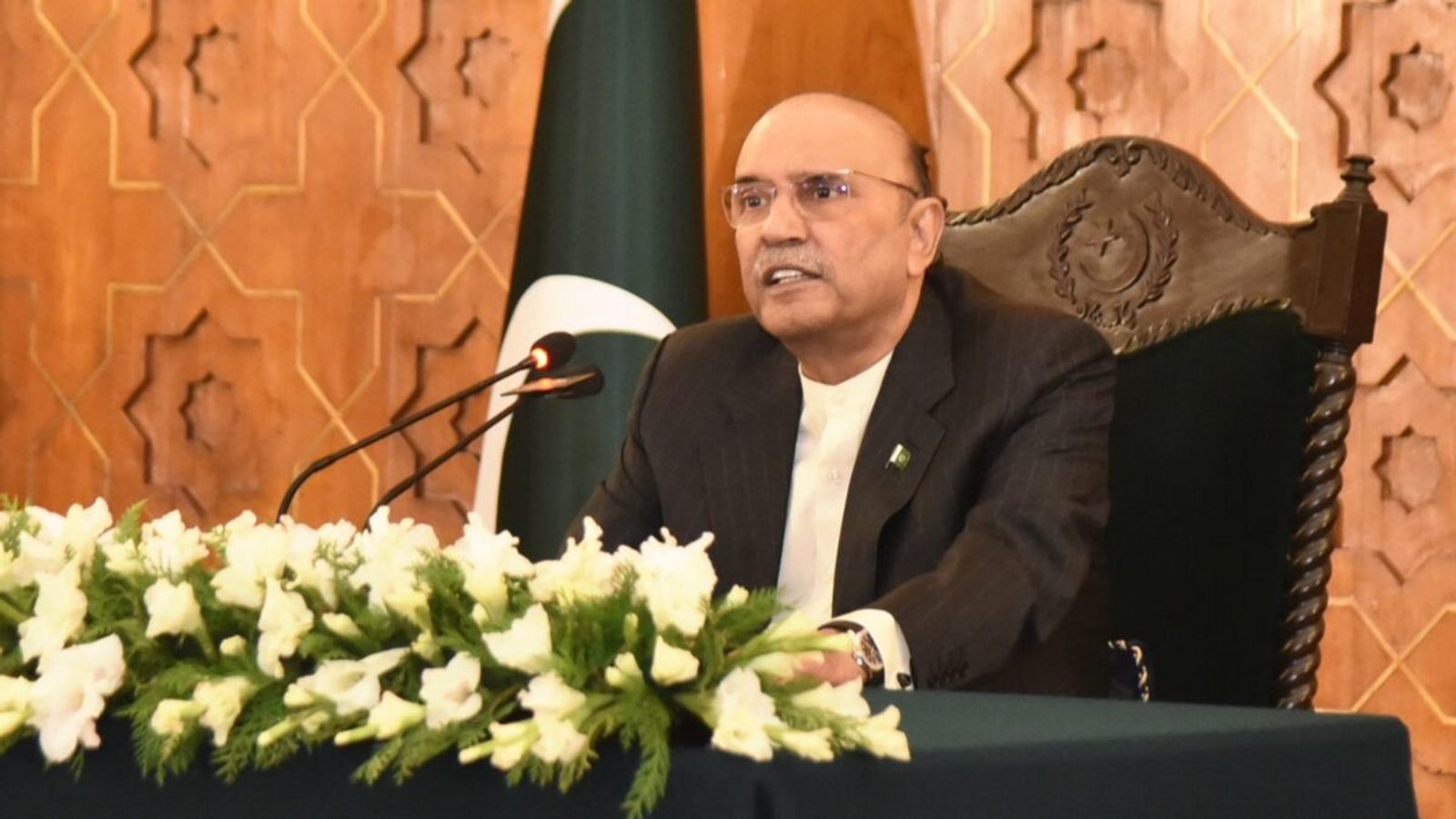
Pakistani President Asif Ali Zardari on World Water Day called on India to resume full implementation of the 1960 Indus Waters Treaty, strongly condemning its unilateral suspension as the "deliberate use of shared water resources as a weapon."
In a message issued Sunday, Zardari warned that India's action undermines regional mechanisms and endangers the food and economic security of millions dependent on the Indus basin. He noted that the suspension threatens livelihoods and could have widespread consequences for transboundary water management.
India suspended its commitments under the treaty in April 2025 following a deadly attack on tourists in Kashmir's Pahalgam region, an action Pakistan deems baseless. The Permanent Court of Arbitration ruled in June that India cannot unilaterally suspend the treaty.
The Indus Waters Treaty, signed between India and Pakistan with World Bank mediation, allocates the waters of six rivers: the western rivers -- Indus, Jhelum and Chenab -- mainly to Pakistan, and the eastern rivers -- Ravi, Beas and Sutlej -- to India.
Zardari also addressed this year's World Water Day theme, highlighting the disproportionate impact of water scarcity on women and girls. He said women in many areas of Pakistan spend long hours collecting water, affecting their education, health and daily lives.
The president emphasized that access to clean water is a fundamental right that must be prioritized in national policies. He called for improved water resource management, investment in infrastructure, greater participation of women in decision-making, and citizen actions such as rainwater harvesting and responsible water use, amid pressures from population growth and climate change.
Read the original reporting at Amu TV →
Reliability assessment
Single source with direct, on-record attribution to named official President Asif Ali Zardari, including quotes, specific dates (World Water Day, April 2025 suspension, June PCA ruling), and checkable details on the treaty.
The source language reads straight.
Independent web corroboration
A separate web search returned 8 matching reports. A selection:
President Asif Ali Zardari on Sunday called on India to immediately restore full implementation of the Indus Waters Treaty (IWT) in accordance with international obligations. In a message on World Water Day, President Zardari reiterated Pakistan’s ...
President Asif Ali Zardari called on India to immediately restore full implementation of the Indus Waters Treaty in accordance with international obligations.
- On World Water Day, Pakistan calls on India to restore Indus Waters Treaty | Arab News PKarabnews.pk
Pakistan President Asif Ali Zardari on Sunday called on India to immediately restore the Indus Waters Treaty (IWT) in accordance with international obligations on the occasion of World Water Day.
- Zardari urges India to fully restore IWT, warns against ‘weaponisation’ of water | The Express Tribunetribune.com.pk
President Asif Ali Zardari called on India to immediately restore the full implementation of the Indus Waters Treaty (IWT) in accordance with international obligations. In a message on World Water Day, he reiterated Pakistan’s strong condemnation ...
Across the newsrooms
Filed by
Amu TV
Originating
Reported straight
Reported straight
Filed under
International — Asif Ali Zardari, Indus Waters Treaty, Pakistan, India, World Water Day
Reader supported
Keep Ehtebar running
Every published story uses paid tools to translate reporting, compare sources, extract claims, and produce a clearer read on Afghanistan. Reader support helps keep that work independent.
€5
helps cover daily verification runs
€15
supports a week of source comparison
€50
keeps independent analysis moving