
SOCIETY — March 22, 2026
Shortage of Schools and Teachers Deprives Hundreds of Children of Education in Ghazni's Khogyani District
In Ghazni's Khogyani district, only four formal schools serve around 120 villages, leading to overcrowded classes and depriving hundreds of children of education, residents and officials say. Authorities acknowledge the shortages and plan to hire up to 25 new teachers next year, with 15 UNICEF-supported community classes already operating.
The Ehtebar Desk — originates with Pajhwok — 2 min read
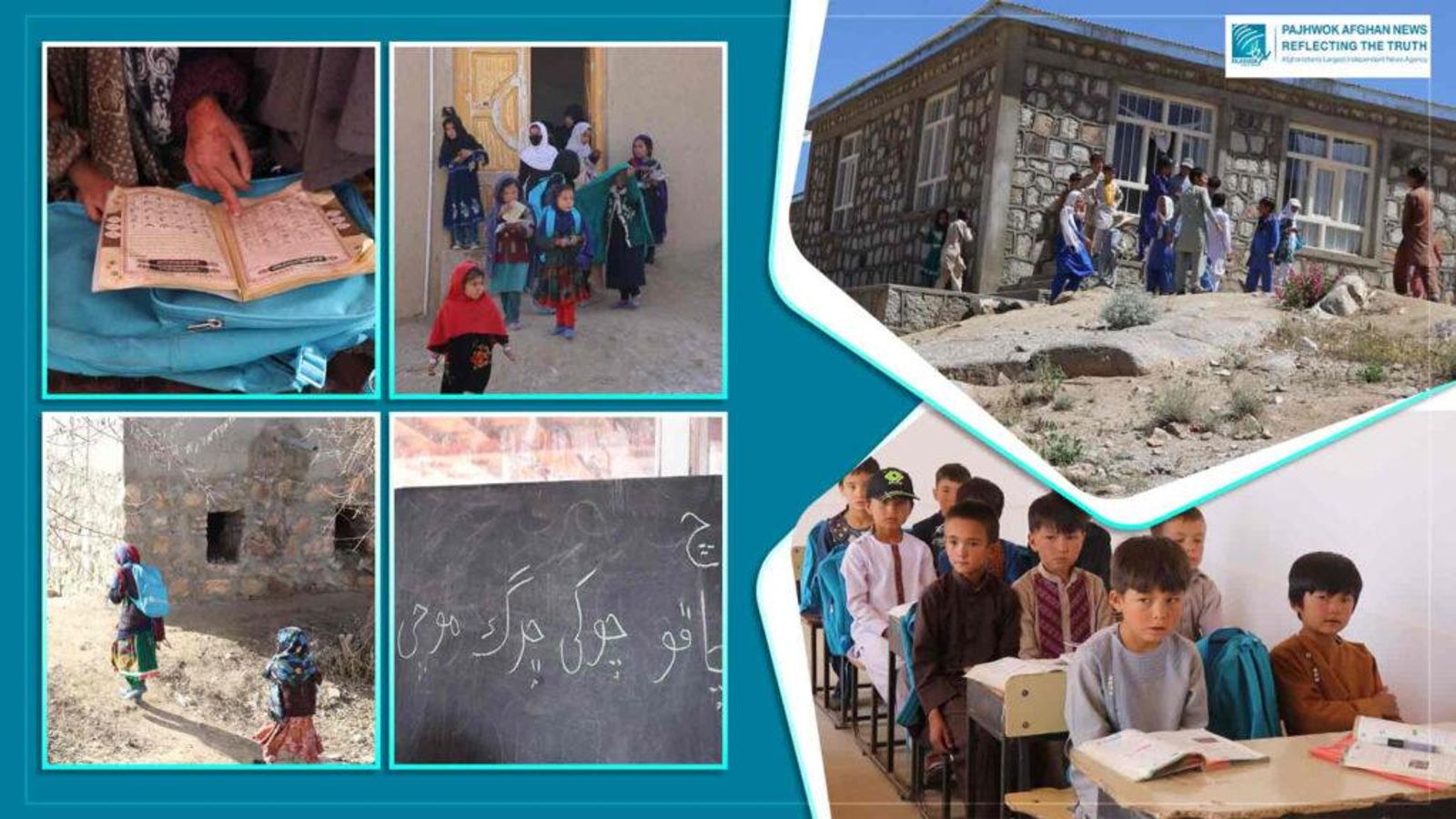
Residents of Khogyani district in southern Ghazni province report that shortages of schools and teachers are depriving hundreds of children of education amid difficult mountainous terrain spanning around 120 villages.
Tribal elder Haji Rozi Gul said only four formal schools operate in the district, forcing many students to travel long distances over challenging routes, with some families unable to send their children. Tribal elder Mohammad Arif noted that classes are overcrowded, with more than 100 students per classroom taught by a single teacher, which reduces education quality. Social affairs analyst Abdul Mateen Ghaznavi called for establishing small community classes in remote areas alongside primary and middle schools to improve access and learning conditions.
District governor Mullah Mohammad Naeem acknowledged the shortages, stating the four schools lack boundary walls, toilets, water, books and other basic facilities. He said around 50 teachers are currently employed, which is insufficient, and areas such as Sheikh Agha, Khairabad and Sayedan have no schools at all.
Mawlawi Nasir Ahmad Hossaini, head of the Education Department, confirmed that besides the four formal schools, 15 community-based classes operate with UNICEF support, along with rural madrasas. He described the teacher shortage as a serious challenge and said plans are underway to recruit up to 25 new teachers next year to address students' needs partially.
Khogyani, one of Ghazni's mountainous districts, has long faced limited educational facilities.
Read the original reporting at Pajhwok →
Reliability assessment
Single source (Pajhwok) provides direct, on-record attribution with concrete, checkable details from named officials (district governor Mullah Mohammad Naeem, Education Department head Mawlawi Nasir Ahmad Hossaini, tribal elders) including specific numbers (4 schools, 50 teachers, 15 community classes, 25 planned hires), locations (Sheikh Agha, Khairabad, Sayedan), confirming the core event of education shortages.
The source language reads straight.
Across the newsrooms
Filed by
Pajhwok
Originating
Reported straight
Reported straight
Filed under
Society — Ghazni, Khogyani district, education shortage, schools, teachers
Reader supported
Keep Ehtebar running
Every published story uses paid tools to translate reporting, compare sources, extract claims, and produce a clearer read on Afghanistan. Reader support helps keep that work independent.
€5
helps cover daily verification runs
€15
supports a week of source comparison
€50
keeps independent analysis moving
More in Society
Health Officials and Experts Discuss Rise in Black Jaundice Cases in Afghanistan
— Reliable
Discussion on Agricultural Products and Health Services in Samangan Province
— Reliable
WHO Report Cites Taliban Restrictions and Funding Shortfalls as Threats to Health Services in Afghanistan
— Reliable
Afghan officials report returns of families from Pakistan and Iran alongside releases from Pakistani prisons
— Reliable