
SOCIETY — May 4, 2026
UNICEF Reports Millions of Afghan Children Received Healthcare Services Last Year
UNICEF reported that 5.6 million Afghan children received healthcare services last year, alongside millions accessing nutrition, education, and sanitation programs. The agency warned that restrictions on women and girls continue to threaten long-term recovery and service sustainability.
The Ehtebar Desk — originates with Khaama Press — corroborated by Hasht-e Subh, Amu TV, Ariana News and 1 more — 2 min read
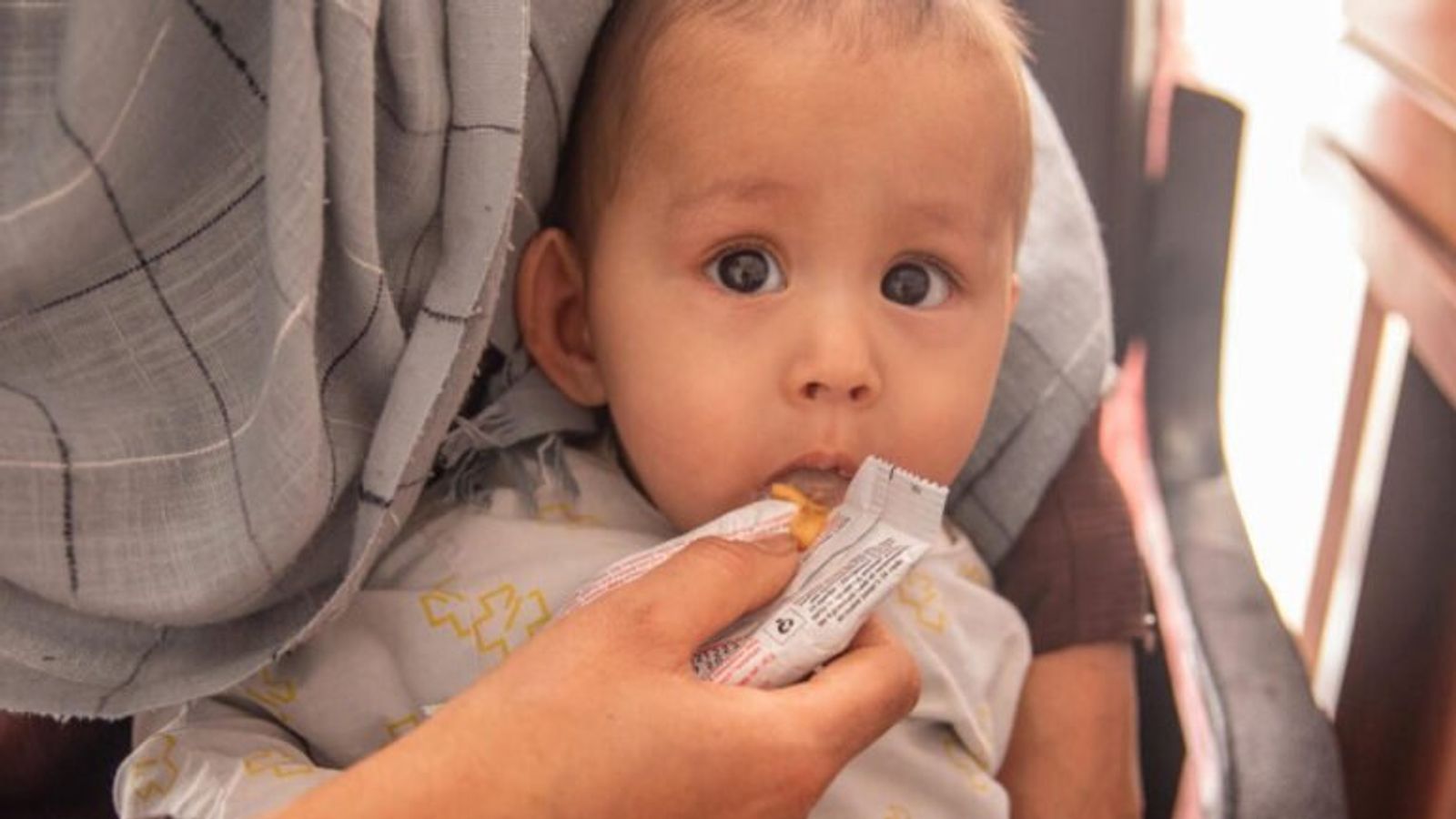
The United Nations Children’s Fund (UNICEF) reported that 5.6 million children in Afghanistan, including 1.4 million infants, received healthcare services over the past year. The agency stated that more than 20 million people accessed primary healthcare during the same period, with women accounting for approximately 60 percent of those reached.
According to the report, humanitarian programs delivered essential nutrition services to roughly 10 million children and mothers, while education initiatives supported 4 million children. Emergency water, sanitation, and hygiene services were also expanded, reaching 2.7 million individuals across the country.
Looking ahead, UNICEF outlined plans to treat more than one million children suffering from severe acute malnutrition in 2026. The agency emphasized that these efforts are taking place amid a prolonged humanitarian crisis marked by economic contraction and widespread displacement.
UNICEF officials warned that ongoing restrictions on women’s and girls’ education and employment continue to hinder the delivery of essential services. The agency noted that these limitations pose significant challenges to long-term economic resilience and the sustainability of humanitarian programs. Despite the operational difficulties, the organization reaffirmed its commitment to scaling up health, nutrition, and education interventions to meet the needs of vulnerable populations across Afghanistan. The report highlighted the critical role of international funding and local partnerships in maintaining service delivery amid persistent structural challenges.
Read the original reporting at Khaama Press →
Reliability assessment
Multiple independent outlets corroborate the UNICEF report containing specific statistics on healthcare, nutrition, and education services in Afghanistan. The core claim is directly attributable to a named international organization with concrete, on-record data, and there are no conflicting reports regarding the existence of the announcement.
The source language reads straight.
Independent web corroboration
An independent web search turned up no separate corroborating reports. Treat the account as single-sourced until more outlets pick it up.
Across the newsrooms
Filed by 5 outlets
Khaama Press
Originating
Reported straight
Reported straight
Hasht-e Subh
Reported straight
Reported straight
Amu TV
Reported straight
Reported straight
Ariana News
Hasht-e Subh
Reported straight
Reported straight
Filed under
Society — UNICEF, Humanitarian Aid, Public Health, Women's Rights, Afghanistan
Reader supported
Keep Ehtebar running
Every published story uses paid tools to translate reporting, compare sources, extract claims, and produce a clearer read on Afghanistan. Reader support helps keep that work independent.
€5
helps cover daily verification runs
€15
supports a week of source comparison
€50
keeps independent analysis moving
More in Society
Health Officials and Experts Discuss Rise in Black Jaundice Cases in Afghanistan
— Reliable
Discussion on Agricultural Products and Health Services in Samangan Province
— Reliable
WHO Report Cites Taliban Restrictions and Funding Shortfalls as Threats to Health Services in Afghanistan
— Reliable
Afghan officials report returns of families from Pakistan and Iran alongside releases from Pakistani prisons
— Reliable