
ECONOMY — May 2, 2026
Afghan Electricity Chief Meets Turkish Firm Head to Review Power Projects
Afghan electricity officials and representatives from a Turkish firm met to review progress on national power projects, including a 40-megawatt solar plant in Nangarhar. Both sides pledged to strengthen cooperation to resolve technical challenges and accelerate implementation.
The Ehtebar Desk — originates with RTA — corroborated by Bakhtar News — 2 min read
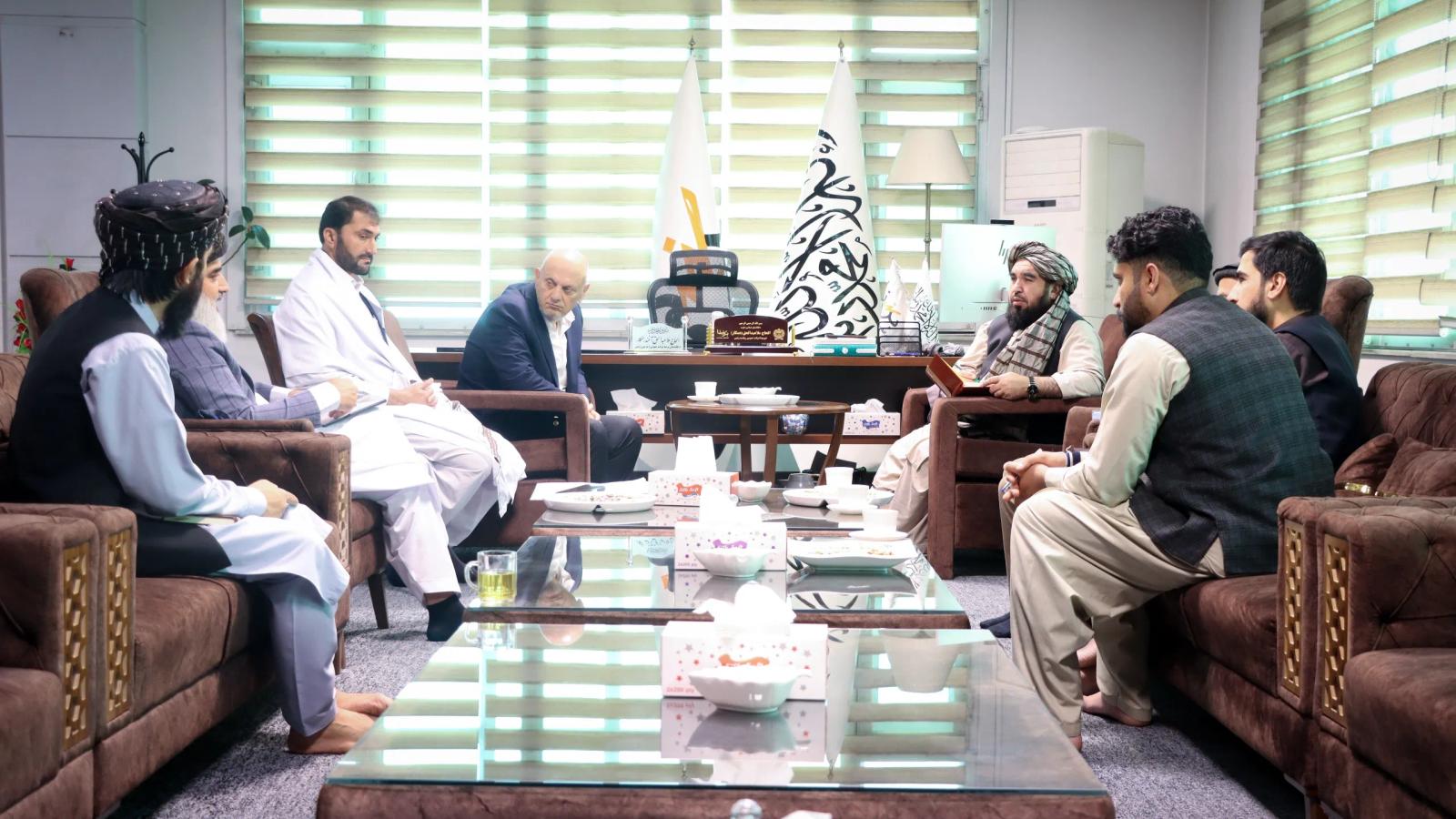
Mullah Abdul Haq Hamkar, Director General of the Afghanistan Electricity Company, held a working meeting with Suleyman Julyo, head of the Turkish '77' Company, to assess the status of ongoing national power infrastructure initiatives. The discussion centered on technical progress, implementation timelines, and operational challenges across several energy sector projects currently underway in the country.
Officials specifically reviewed developments at the 40-megawatt Sheikh Misri solar power facility in Nangarhar province. Representatives from both sides examined engineering updates and addressed logistical hurdles affecting the construction and deployment of the renewable energy plant. The discussions also covered broader strategies for integrating new generation capacity into the existing transmission network.
According to participants, both parties expressed satisfaction with the current trajectory of the energy initiatives. They committed to strengthening institutional cooperation to systematically resolve implementation bottlenecks and accelerate project delivery. The Afghan electricity authority and the Turkish firm agreed to maintain regular technical consultations to ensure that upcoming milestones are met efficiently. The collaboration reflects ongoing efforts to expand domestic power generation capacity and stabilize the national electricity grid through targeted infrastructure investments.
Read the original reporting at RTA →
Reliability assessment
Two independent state-affiliated outlets corroborate the core event, including the identities of the participants, the meeting's agenda, and the specific infrastructure project discussed. The reporting is direct, on-record, and contains concrete, checkable details (named officials, specific 40MW project location and capacity). Minor transliteration differences do not undermine the corroboration.
The source language reads straight.
Across the newsrooms
Where reports agree
- A high-level meeting occurred between the Director General of Afghanistan's national electricity authority and the head of the Turkish '77' Company.
- The agenda covered progress updates, technical implementation, and challenges across national power projects.
- The 40-megawatt Sheikh Misri solar project in Nangarhar was explicitly highlighted as a key discussion point.
- Both sides pledged continued cooperation and systematic problem-solving to accelerate project implementation.
Where reports differ
- No substantive factual disagreements exist between the sources. Minor variations are limited to transliteration of the Turkish executive's name (Julyo vs. Julio) and slight differences in the English rendering of the Afghan official's title (Director General vs. Executive Director General), which do not affect the core facts.
Filed by 2 outlets
RTA
Originating
Reported straight
Reported straight
Bakhtar News
Reported straight
Reported straight
Filed under
Economy — Afghanistan Electricity Company, Turkish 77 Company, Sheikh Misri Solar Project, Nangarhar, Energy Infrastructure
Reader supported
Keep Ehtebar running
Every published story uses paid tools to translate reporting, compare sources, extract claims, and produce a clearer read on Afghanistan. Reader support helps keep that work independent.
€5
helps cover daily verification runs
€15
supports a week of source comparison
€50
keeps independent analysis moving
More in Economy
Economic Commission Approves 37 Domestic Standards and 12 Testing Methods
— Reliable

Taliban Governor Says Around 700 Mines Under Extraction in Panjshir
— Reliable
Daily Production at Baghlan's Ghori Cement Factory Increases to 700 Tons
— Reliable
Two Irrigation and Flood-Prevention Projects Completed in Zabul
— Reliable