
SOCIETY — February 13, 2026
Afghanistan Journalists Center: Employees of Four Radios Threatened or Detained in Past Year
Afghanistan Journalists Center reports heightened Taliban restrictions on radios, including threats, detentions, and closures affecting four stations in the past year, amid 24 media decrees over four years. Radio remains a key accessible medium despite challenges.
The Ehtebar Desk — originates with Amu TV — 2 min read
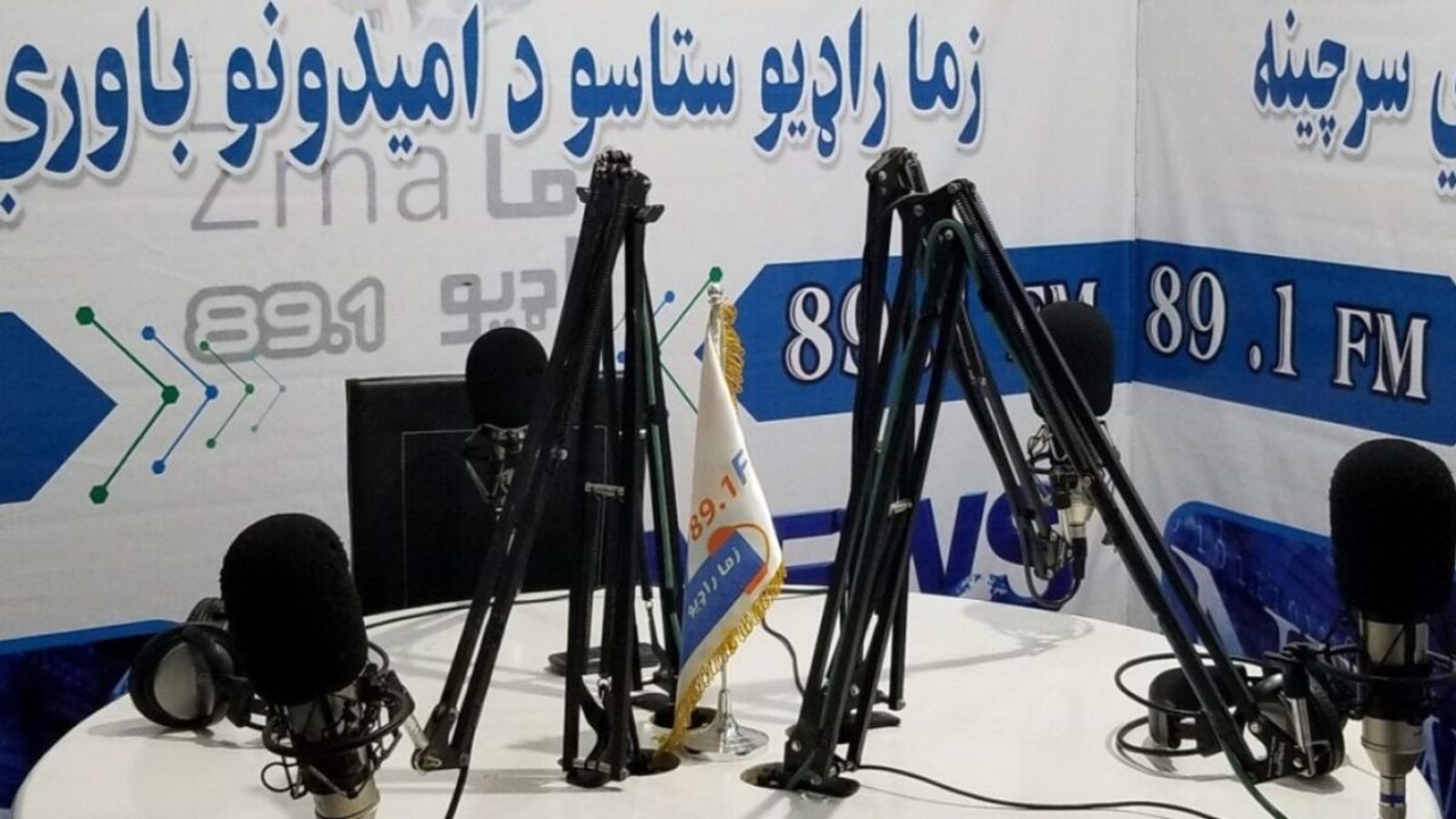
The Afghanistan Journalists Center stated on World Radio Day that restrictions on radio activities in the country have increased dramatically. In the past year, employees of two radios received direct threats, while employees of two others were imprisoned.
The center said the Taliban have issued at least 24 guidelines and decrees restricting media over the past four years, directly impacting radio operations. It noted that several radios have been threatened or closed, with multiple radio journalists summoned or jailed.
Specific restrictions include bans on women working in state media such as Radio Milli, gender-segregated workplaces, prohibitions on interviews between men and women, requirements for specific hijab attire, limits on women's participation in press conferences or field reporting, and bans on women's voices in advertisements, announcements, or phone calls in some provinces. These measures, along with general pressures on independent reporting, have made the work environment extremely difficult for radio staff.
The center reported that managers and journalists ignoring these orders have been threatened or imprisoned, with media facing closures or confiscations. In the past 12 months, at least two local women-only radios received direct threats that may prevent them from operating, while two others were closed for airing programs disliked by local authorities, leading to staff detentions. One radio manager was detained for three months over social and economic coverage. Reporters have also been arrested for working during the call to prayer, publishing photos of women in reports, or having short beards.
The Taliban create obstacles in renewing radio licenses, particularly for women-owned stations, pressuring them to appoint male managers. Advertising revenues, the main funding source, have sharply declined, while taxes on radio activities have increased. Approximately 200 radio stations remain active nationwide, operating full-time, part-time, or limited hours.
The European Union delegation in Afghanistan praised radio as a vital source of information and education, accessible even in remote areas, and expressed support for independent media, particularly benefiting women and girls.
Read the original reporting at Amu TV →
Reliability assessment
Single source with direct attribution to named organization (Afghanistan Journalists Center) statement, providing concrete, checkable details (e.g., 24 decrees, 4 radios affected, 200 stations, specific incidents) on media restrictions; not an unverified ground event.
Across the newsrooms
Filed by
Amu TV
Originating
Filed under
Society — Taliban, media restrictions, radio stations, journalists, Afghanistan Journalists Center
Reader supported
Keep Ehtebar running
Every published story uses paid tools to translate reporting, compare sources, extract claims, and produce a clearer read on Afghanistan. Reader support helps keep that work independent.
€5
helps cover daily verification runs
€15
supports a week of source comparison
€50
keeps independent analysis moving
More in Society

Health Officials and Experts Discuss Rise in Black Jaundice Cases in Afghanistan
— Reliable
Discussion on Agricultural Products and Health Services in Samangan Province
— Reliable
WHO Report Cites Taliban Restrictions and Funding Shortfalls as Threats to Health Services in Afghanistan
— Reliable
Afghan officials report returns of families from Pakistan and Iran alongside releases from Pakistani prisons
— Reliable