
CULTURE — April 26, 2026
Flash Floods Unearth Historical Artifacts in Ghazni Province
Flash floods in Ghazni province have uncovered a collection of historical artifacts, including ceramic water pipes and a fragmented stone inscription, which provincial officials have secured and transferred to a local museum.
The Ehtebar Desk — originates with Pajhwok — corroborated by Hurriyat — 2 min read
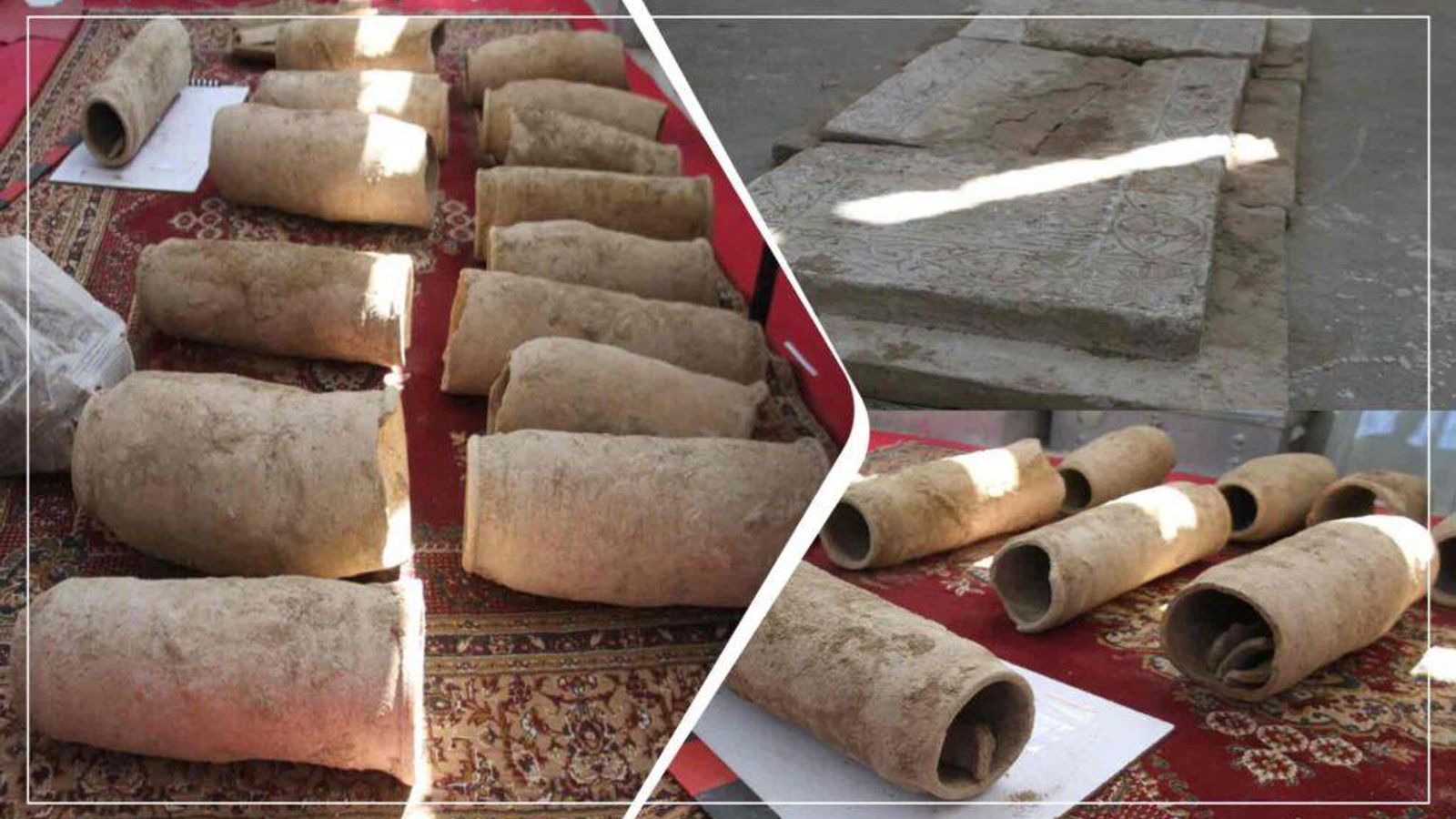
Recent flash floods in the Asfandi area of Ghazni province have exposed a collection of historical artifacts, provincial officials reported. Staff from the provincial Information and Culture Department recovered the items and transferred them to the Ghazni provincial museum for preservation.
According to department head Hamidullah Nisar, the recovered collection includes ceramic objects shaped like water pipes and a stone inscription that was broken into several fragments. The artifacts were uncovered by floodwaters that washed away soil in the area, bringing the historical pieces to the surface.
Officials stated that all recovered items have been secured and cataloged at the local museum, which already houses numerous archaeological finds from the region. The department is continuing to monitor the area for additional discoveries as floodwaters recede and soil erosion continues.
While both reports confirm the recovery of two dozen artifacts, Hurriyat lists 23 clay pipe-shaped objects alongside a single stone inscription, whereas Pajhwok describes 24 ceramic pieces in addition to the separate stone fragment. Regardless of the precise count, authorities emphasized that the discovery adds to Ghazni’s documented archaeological record and highlights the impact of seasonal weather on exposed historical sites.
The provincial Information and Culture Department has urged local residents to report any further uncovered items to authorities rather than removing them from the site.
Read the original reporting at Pajhwok →
Reliability assessment
Two independent outlets corroborate the core event of an archaeological discovery in Ghazni following flash floods, directly attributing the information to the provincial Information and Culture Department. Pajhwok provides a named official (Hamidullah Nisar). Minor discrepancies regarding the exact item count and specific recovery zones do not undermine the verified occurrence of the event.
The source language reads straight.
Across the newsrooms
Where reports agree
- 24 historical artifacts were discovered in Ghazni following recent flash floods.
- The finds consist of pipe-like clay/ceramic objects and a fragmented stone inscription.
- Provincial Information and Culture Department officials recovered and transferred the items to the local museum.
- The primary discovery site is the Asfandi area of Ghazni city.
Where reports differ
- Item count breakdown: Hurriyat reports 23 clay pipes plus 1 stone inscription (totaling 24), while Pajhwok states 24 ceramic pipes plus a separate stone inscription (implying 25 total or a counting discrepancy).
- Location specificity: Hurriyat places the stone inscription in the 'First Security Zone area,' whereas Pajhwok does not specify a separate location for it.
- Official attribution: Pajhwok names the department head as Hamidullah Nisar, while Hurriyat refers to him only by title.
Filed by 2 outlets
Pajhwok
Originating
Reported straight
Reported straight
Hurriyat
Reported straight
Reported straight
Filed under
Culture — Ghazni, Information and Culture Department, Hamidullah Nisar, Archaeology, Flash Floods
Reader supported
Keep Ehtebar running
Every published story uses paid tools to translate reporting, compare sources, extract claims, and produce a clearer read on Afghanistan. Reader support helps keep that work independent.
€5
helps cover daily verification runs
€15
supports a week of source comparison
€50
keeps independent analysis moving
More in Culture

Premier Pahlawani League Final to Crown First Champion Tonight in Kabul
— Reliable
Three-Day Tourism Capacity-Building Seminar Concludes in Herat
— Reliable
Deputy Minister of Culture and Art Says Efforts to Protect Historical Sites Will Continue
— Reliable

Traditional Gul-e-Zard Poetry Gathering Held in Kapisa
— Reliable