
SOCIETY — February 17, 2026
Herat Residents Report Public Transport Shortage After Rickshaw Ban
Herat residents face long waits and high costs for public transport after a ban on rickshaws in central roads, despite officials introducing hundreds of replacement vehicles including 1,000 taxis. Experts urge more minibuses and multifaceted solutions to address poverty-related challenges.
The Ehtebar Desk — originates with ToloNews — 2 min read
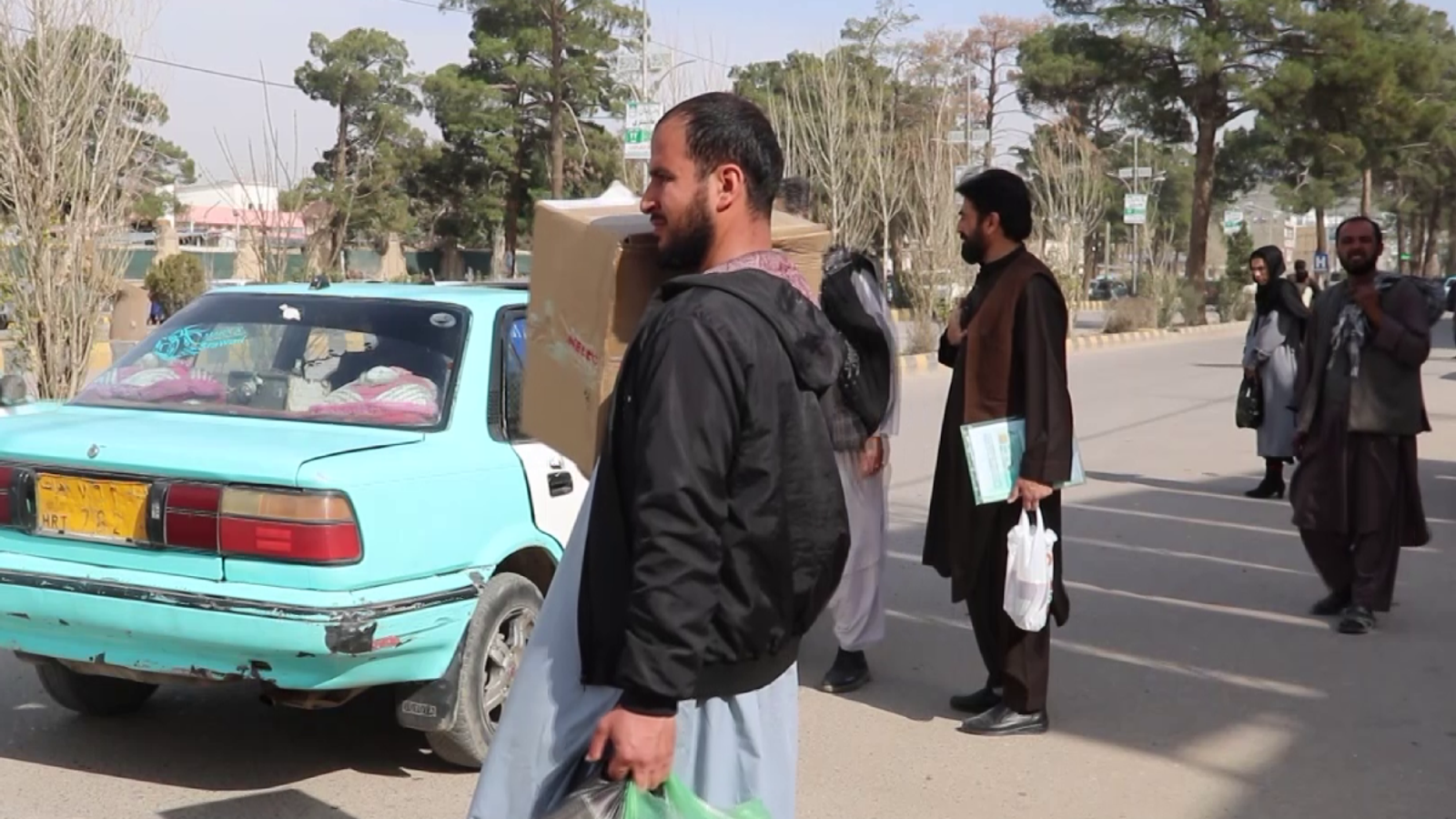
Residents of Herat city say a shortage of public passenger vehicles has become a serious challenge, forcing them to wait extended periods to travel between city sections.
Fazl Ahmad Yarizada, a Herat resident, said: "After the rickshaws were collected from the city, the Islamic Emirate should have replaced them with new minibuses, and taxis should transport people in a standard way."
Yasser, another resident, said: "I've been waiting here for more than half an hour, but there's no taxi to take me to Shindand. On one hand, roads are being built and congesting the city, and on the other hand, there are not enough passenger vehicles to transport people. Rickshaws were a good facility for poor people."
The Herat Road Transport Department states that after banning rickshaws on main roads, hundreds of urban passenger vehicles have been introduced as replacements. Mohammad Asif Asif, head of the department, said: "Minibuses, Tonus and Flankoch vehicles are operating in the city. In total, one thousand taxis operate on urban routes, and a large part of people's needs are met by these vehicles."
Department officials say they are working to address transportation challenges in Herat. However, residents describe the number of urban passenger vehicles as insufficient, with high taxi fares making travel difficult for the poor.
Fazl Ahmad Ahmadi, a social expert, said: "If the number of minibuses for transporting people in the city increases, given the poverty and neediness, it can be good help to citizens; but alone it is not sufficient and needs several simultaneous approaches to fundamentally solve people's problems."
About one and a half months ago, Herat Traffic Management banned rickshaws on main roads to reduce congestion and disorder. Rickshaws had played a key role in providing cheap transport across the city, and residents now call for standard minibuses.
Read the original reporting at ToloNews →
Reliability assessment
Single ToloNews source provides direct, on-record quotes from named official (Mohammad Asif Asif, head of Road Transport) with concrete details (1,000 taxis, hundreds of replacements, one-and-a-half-month timeline) and resident/expert testimony; topic is low-stakes local issue, not volatile or high-risk.
Across the newsrooms
Filed by
ToloNews
Originating
Filed under
Society — Herat, public transport, rickshaws, Islamic Emirate
Reader supported
Keep Ehtebar running
Every published story uses paid tools to translate reporting, compare sources, extract claims, and produce a clearer read on Afghanistan. Reader support helps keep that work independent.
€5
helps cover daily verification runs
€15
supports a week of source comparison
€50
keeps independent analysis moving
More in Society

Health Officials and Experts Discuss Rise in Black Jaundice Cases in Afghanistan
— Reliable

Discussion on Agricultural Products and Health Services in Samangan Province
— Reliable

WHO Report Cites Taliban Restrictions and Funding Shortfalls as Threats to Health Services in Afghanistan
— Reliable
Afghan officials report returns of families from Pakistan and Iran alongside releases from Pakistani prisons
— Reliable