
SOCIETY — May 7, 2026
Islamic Emirate Health Minister and UNICEF Representative Discuss Expansion of Medical Services
Afghanistan’s Minister of Public Health and the UNICEF country representative met in Kabul to discuss expanding healthcare access in remote areas and strengthening the national health system. Both sides reaffirmed their commitment to ongoing cooperation on vaccination, maternal and child health, and emergency medical services.
The Ehtebar Desk — originates with Pajhwok — corroborated by Omid Radio, Bakhtar News and RTA — 2 min read
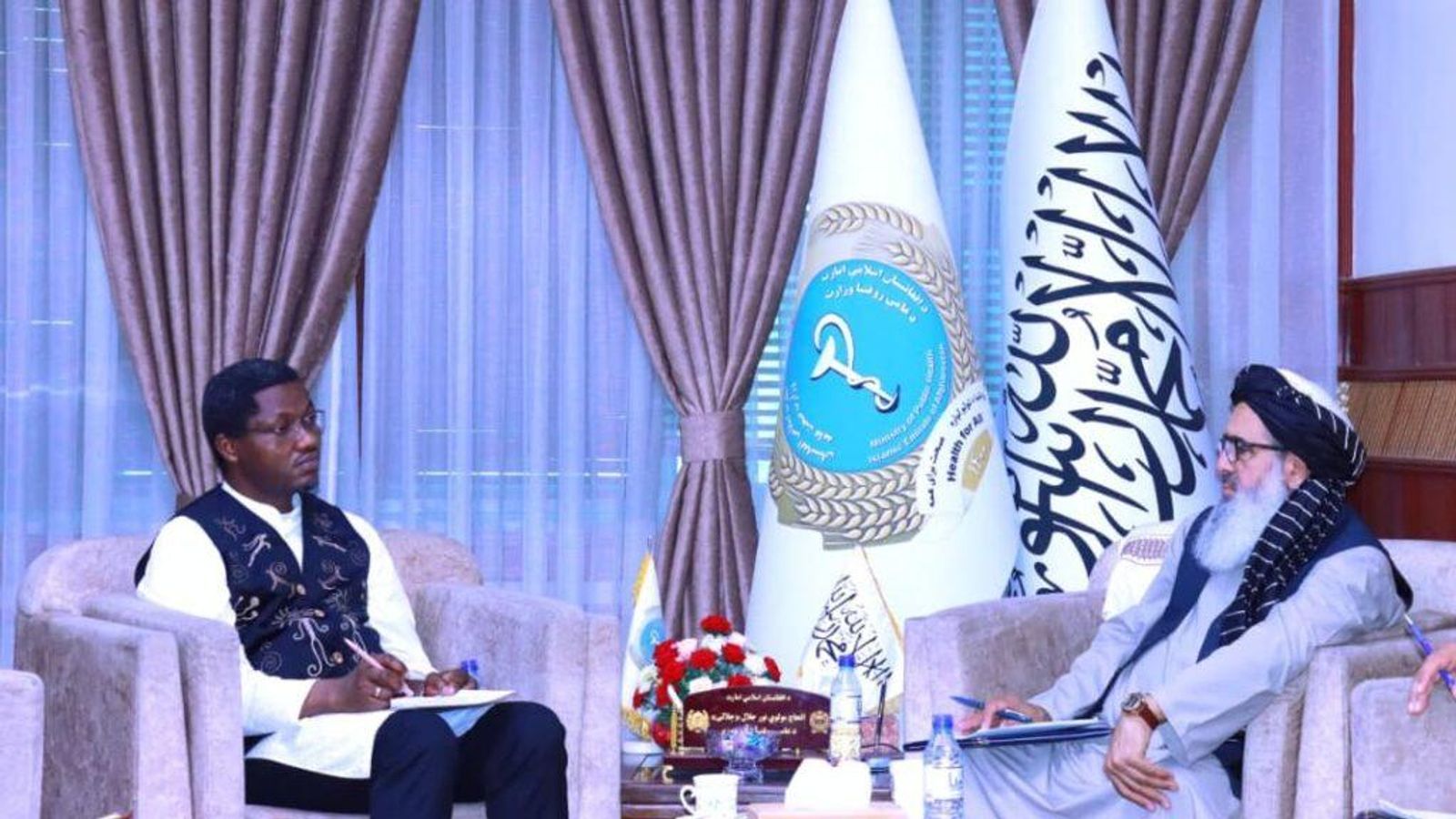
Afghanistan’s Minister of Public Health, Mawlawi Noor Jalal Jalali, met with the United Nations Children’s Fund country representative in Kabul to discuss strategies for expanding healthcare access and strengthening national medical infrastructure. Both officials reaffirmed their commitment to improving public health services, with a particular focus on underserved and remote regions.
During the meeting, the minister emphasized that reinforcing the national health system remains a central priority for the Islamic Emirate. He outlined the government’s objectives to enhance facility coverage, ensure consistent delivery of essential medical supplies, and improve service quality across all provinces. The discussion also covered joint monitoring mechanisms and long-term technical cooperation to sustain health sector development.
The UNICEF representative pledged continued operational and financial support for key public health initiatives. According to statements from both sides, the partnership will prioritize maternal and child healthcare, nationwide vaccination campaigns, nutritional programs, and emergency medical response. Officials noted that expanding access to these services in hard-to-reach areas is critical for reducing preventable illnesses and improving overall community health outcomes.
Both parties agreed to maintain regular coordination to track progress and address emerging challenges within the health sector. The meeting concluded with a mutual commitment to advancing technical assistance and ensuring that essential medical services reach populations in need across the country.
Read the original reporting at Pajhwok →
Reliability assessment
Four independent outlets (Pajhwok, Omid Radio, Bakhtar News, RTA) corroborate the meeting between Afghanistan's Minister of Public Health and the UNICEF country representative in Kabul. The core event is consistently reported with direct attribution to named officials, confirming the discussion on healthcare expansion and system strengthening.
The source language reads straight.
Across the newsrooms
Where reports agree
- A meeting took place between the Afghan Minister of Public Health and the UNICEF head in Afghanistan.
- Both sides discussed expanding health services to remote and underserved areas.
- Vaccination, maternal/child health, nutrition, and emergency services were highlighted as key cooperation areas.
- The Islamic Emirate prioritizes strengthening the national health system.
- UNICEF committed to continuing its support and technical assistance.
Where reports differ
- Minor transliteration differences in the UNICEF representative's surname across sources (Awila, Oyewale, Oyla). No substantive factual conflicts exist.
Filed by 4 outlets
Pajhwok
Originating
Reported straight
Reported straight
Omid Radio
Reported straight
Reported straight
Bakhtar News
Reported straight
Reported straight
RTA
Reported straight
Reported straight
Filed under
Society — Ministry of Public Health, UNICEF, Healthcare, Mawlawi Noor Jalal Jalali, Islamic Emirate
Reader supported
Keep Ehtebar running
Every published story uses paid tools to translate reporting, compare sources, extract claims, and produce a clearer read on Afghanistan. Reader support helps keep that work independent.
€5
helps cover daily verification runs
€15
supports a week of source comparison
€50
keeps independent analysis moving
More in Society
Health Officials and Experts Discuss Rise in Black Jaundice Cases in Afghanistan
— Reliable
Discussion on Agricultural Products and Health Services in Samangan Province
— Reliable
WHO Report Cites Taliban Restrictions and Funding Shortfalls as Threats to Health Services in Afghanistan
— Reliable
Afghan officials report returns of families from Pakistan and Iran alongside releases from Pakistani prisons
— Reliable