
SOCIETY — March 23, 2026
Nearly 80% of Kabul Residents Rely on Wells Amid Worsening Water Crisis: UNAMA
UNAMA reports that nearly 80 percent of Kabul residents depend on wells for water, with half dried up amid declining groundwater levels due to drought, climate change, urban growth and poor management. Access to safe water is increasingly costly, affecting the entire city, while UNICEF notes gains in national water access and an economic commission approves a Panjshir water transfer project.
The Ehtebar Desk — originates with Pajhwok — corroborated by Khaama Press and Hasht-e Subh — 2 min read
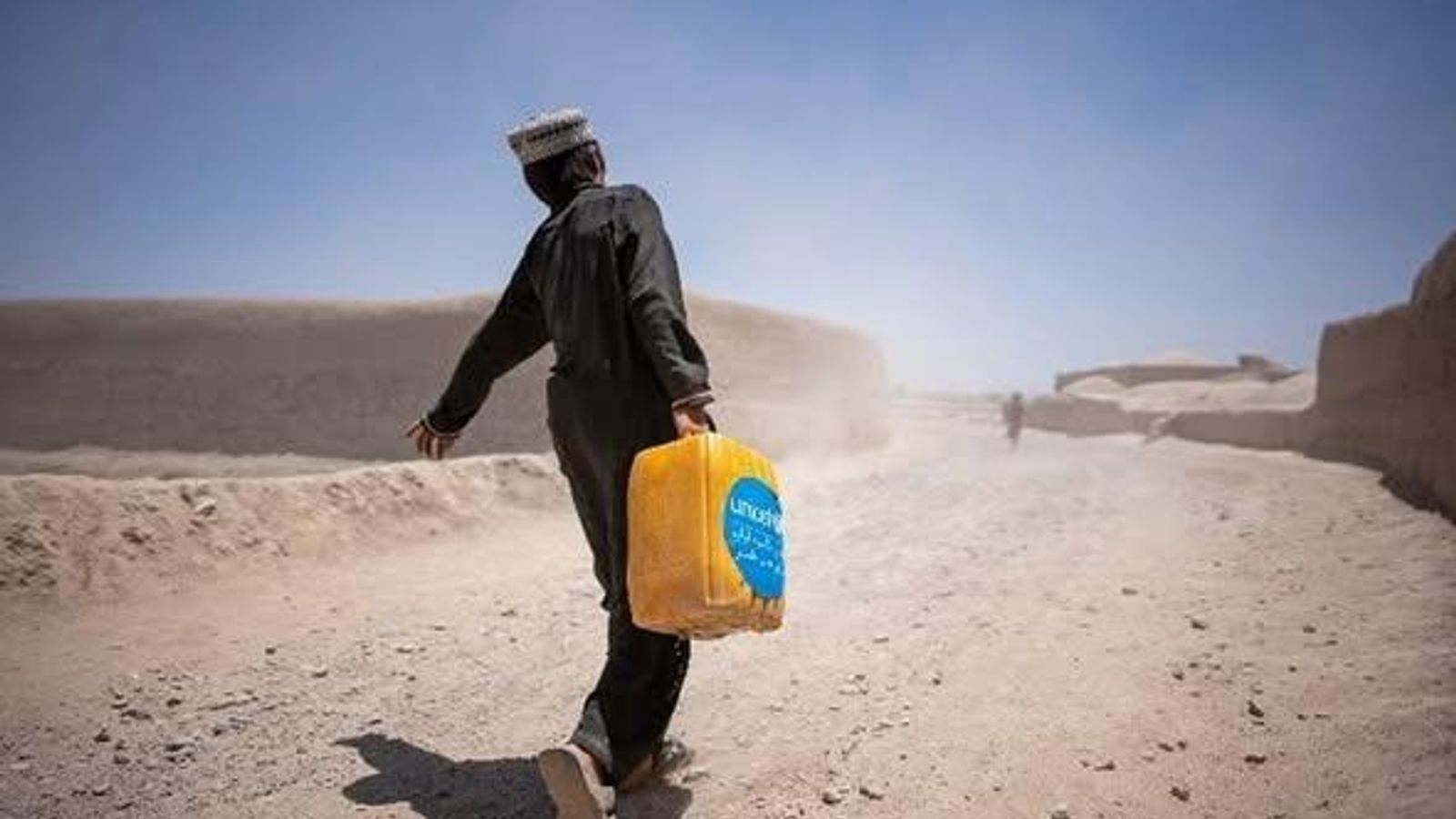
KABUL (Afghan Verified) -- The United Nations Assistance Mission in Afghanistan (UNAMA) says nearly 80 percent of Kabul residents rely on wells for their daily water needs, but almost half of these wells have dried up as groundwater levels decline yearly.
In a statement marking World Water Day on March 22, UNAMA highlighted Kabul's growing water crisis amid severe drought affecting much of the country. The mission noted that access to safe water has become difficult and costly, with some households spending up to 30 percent of their monthly income on water. Women and children often stand in queues for hours or travel long distances to fetch it, a problem that was once confined to the city's outskirts but now affects the entire population.
UNAMA attributed the crisis to climate change, prolonged drought, rapid and unplanned urban growth, and poor water management, pushing the situation to a critical point. "World Water Day is a reminder that access to safe water is a fundamental human right, yet for many Kabul residents, accessing this right is becoming harder each day," the statement said.
The United Nations Children's Fund (UNICEF) head in Afghanistan said 2.1 million people in the country gained access to safe water last year.
Separately, an economic commission approved plans to identify new revenue opportunities expected to add around 60 billion afghanis to the national budget in the long term. The meeting also endorsed a project to transfer water from Panjshir to Kabul to address the city's shortages.
Read the original reporting at Pajhwok →
Reliability assessment
Multiple outlets (Pajhwok, Khaama Press, Hasht-e Subh) corroborate UNAMA's on-record statement on World Water Day regarding nearly 80% of Kabul residents relying on wells, with half dried up due to declining groundwater.
The source language reads straight.
Independent web corroboration
An independent web search turned up no separate corroborating reports. Treat the account as single-sourced until more outlets pick it up.
Across the newsrooms
Where reports agree
- UNAMA states nearly 80% of Kabul residents rely on wells, with half dried up and declining groundwater
- UNAMA attributes Kabul water crisis to drought, climate change, urban growth, poor management
- Households spend up to 30% income on water; women/children face long queues/distances
- UNICEF: 2.1 million gained safe water access last year
- Approval of Panjshir-Kabul water project and new revenue plans
Filed by 3 outlets
Pajhwok
Originating
Reported straight
Reported straight
Khaama Press
Reported straight
Reported straight
Hasht-e Subh
Reported straight
Reported straight
Filed under
Society — Kabul, UNAMA, UNICEF, water crisis, drought, Panjshir
Reader supported
Keep Ehtebar running
Every published story uses paid tools to translate reporting, compare sources, extract claims, and produce a clearer read on Afghanistan. Reader support helps keep that work independent.
€5
helps cover daily verification runs
€15
supports a week of source comparison
€50
keeps independent analysis moving
More in Society
Health Officials and Experts Discuss Rise in Black Jaundice Cases in Afghanistan
— Reliable

Discussion on Agricultural Products and Health Services in Samangan Province
— Reliable
WHO Report Cites Taliban Restrictions and Funding Shortfalls as Threats to Health Services in Afghanistan
— Reliable
Afghan officials report returns of families from Pakistan and Iran alongside releases from Pakistani prisons
— Reliable