INTERNATIONAL — February 16, 2026
Pakistan UN Envoy Urges Taliban to Choose Peace Over Isolation After Sanctions Monitoring Team Extension
Pakistan's UN envoy urged the Taliban to choose peace and prosperity over isolation following the UN Security Council's unanimous extension of the Taliban sanctions monitoring team's mandate. China, Russia, and the U.S. also reacted, stressing counter-terrorism and criticizing Taliban hostage tactics.
The Ehtebar Desk — originates with Amu TV — 2 min read
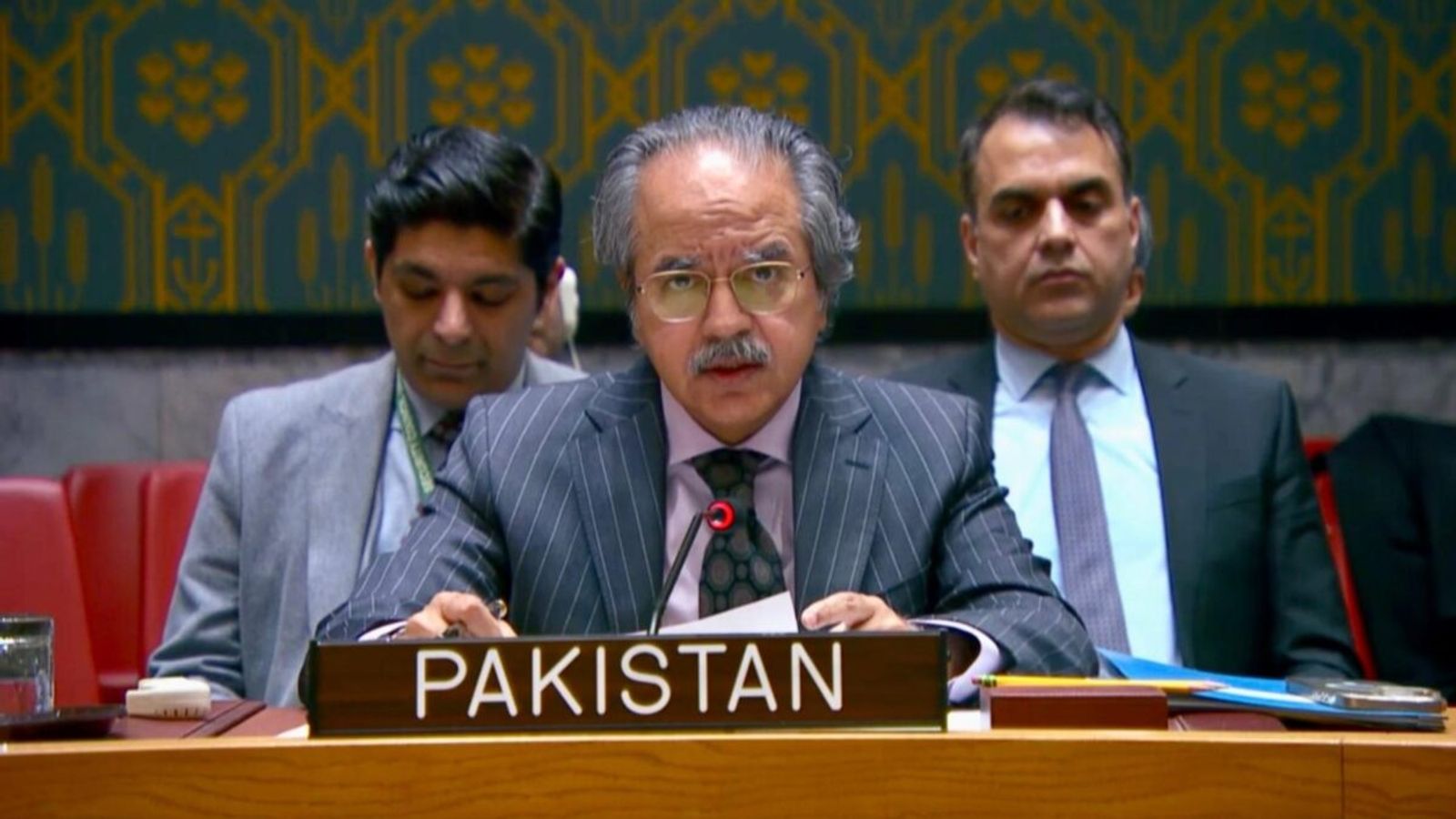
Asim Iftikhar Ahmad, Pakistan's permanent representative to the United Nations, stated that the Taliban must decide between a path of isolation or one of peace and prosperity for Afghanistan.
Ahmad welcomed the UN Security Council's extension of the mandate of the 1988 Taliban Sanctions Monitoring Team, describing it as a "clear and unambiguous message" to the Taliban that Afghanistan should not be used to threaten or attack any country. He expressed hope that the team would continue its determined efforts to report preventively and support the Taliban Sanctions Committee in line with its UN Security Council mandate. The council extended the team's mission last week through a unanimous resolution (15-0 in favor), with the draft prepared by the United States.
The Afghanistan Sanctions Committee, established in June 2011 by Resolution 1988, monitors UN sanctions including asset freezes, travel bans, and an arms embargo against Taliban-related individuals and entities.
Taliban spokesperson Zabiullah Mujahid described the policy of "pressure and sanctions" as "unsuccessful" in an interview with Radio Hurriyat, a Taliban-affiliated outlet, calling for a review of Western countries' approach and stating that such measures do not help solve problems.
China, Russia, and Pakistan welcomed the extension, emphasizing the need to counter terrorism. U.S. Deputy Permanent Representative Temy Bruce called Taliban tactics "repugnant," accusing them of using detainees as leverage in negotiations, including demanding the release of an al-Qaida member from Guantanamo Bay in exchange for American citizens. Bruce said the Taliban must end all forms of hostage-taking and arbitrary detentions, adding that the 1988 sanctions regime and monitoring team remain vital tools to hold the Taliban accountable.
China's Permanent Representative Fu Cong urged the Taliban to decisively combat ISIS and al-Qaida to prevent Afghanistan from becoming a regional security threat, noting counter-terrorism as the primary goal of the 1988 sanctions regime.
Russia's Deputy Permanent Representative Anna Ostignyeva welcomed the resolution's focus on ISIS and other terrorist groups but warned that excessive emphasis on human rights over terrorism and drug trafficking could undermine effective sanctions implementation.
Read the original reporting at Amu TV →
Reliability assessment
Single source with direct, on-record quotes from named officials (Pakistan's Asim Iftikhar Ahmad, Taliban spokesperson Zabiullah Mujahid, U.S. Temy Bruce, China's Fu Cong, Russia's Anna Ostignyeva) and concrete details (unanimous UNSC vote on U.S.-drafted resolution extending 1988 sanctions monitoring team).
Across the newsrooms
Filed by
Amu TV
Originating
Filed under
International — UN Security Council, Taliban, Pakistan, Sanctions, Counter-terrorism
Reader supported
Keep Ehtebar running
Every published story uses paid tools to translate reporting, compare sources, extract claims, and produce a clearer read on Afghanistan. Reader support helps keep that work independent.
€5
helps cover daily verification runs
€15
supports a week of source comparison
€50
keeps independent analysis moving