
POLITICS — April 23, 2026
Protests Erupt in Faryab Over Compulsory Tazkera Distribution
Residents in Faryab province are protesting what they describe as the compulsory distribution of national ID cards by Taliban authorities, alleging the process violates legal procedures and favors recently settled Kuchi communities. The demonstrations follow the reported detention of a local civil registry official who refused to issue the documents outside standard protocols.
The Ehtebar Desk — originates with Hasht-e Subh — 2 min read
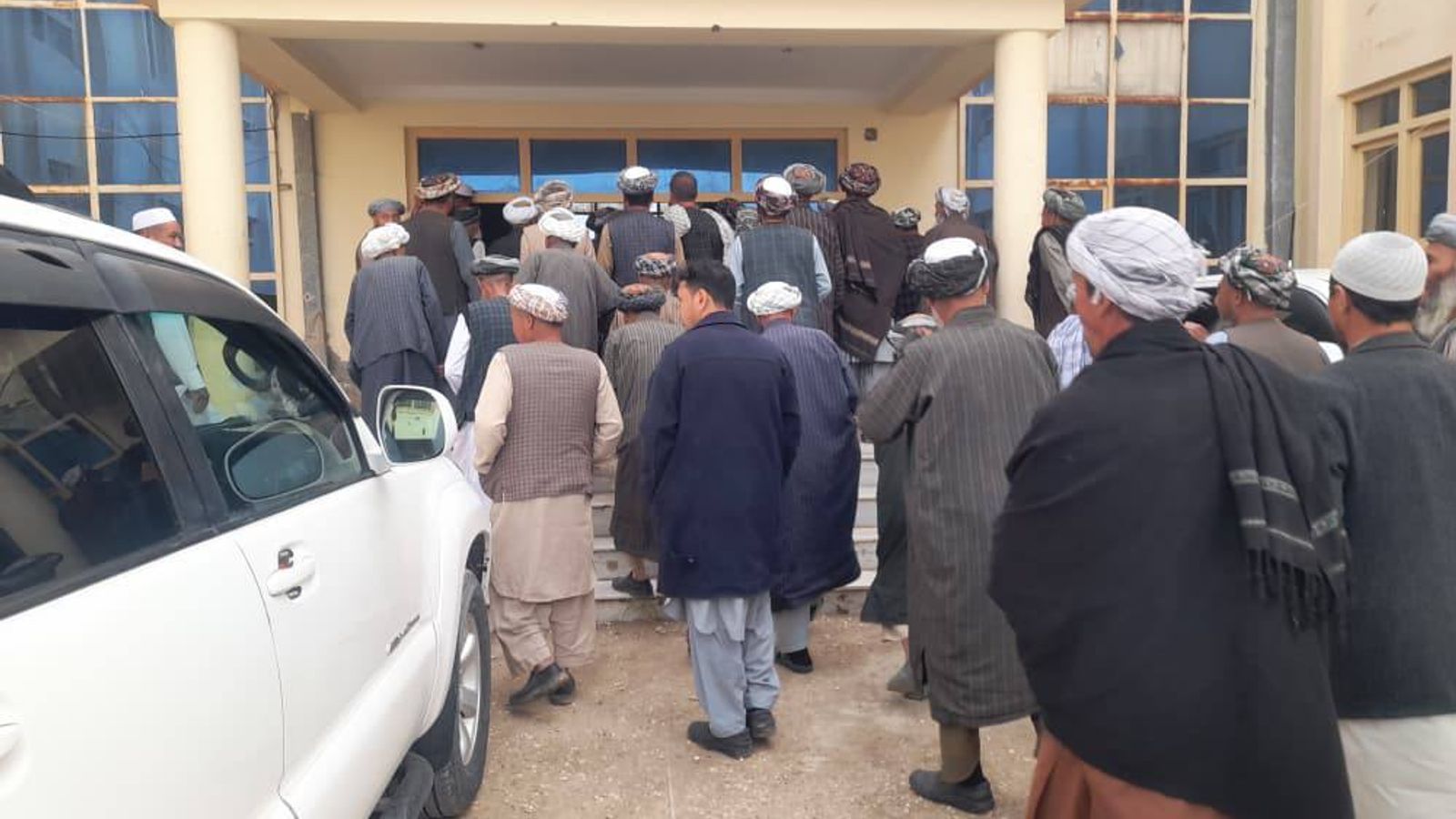
Residents in Faryab province have staged protests against what they describe as the compulsory distribution of national identification cards, or tazkeras, by Taliban authorities. The demonstrations are centered in the Andkhoy district, where locals allege the registration drive bypasses standard legal procedures.
According to local reports, the head of the civil registry in Qormqul district was summoned to the provincial capital of Maimana and detained by Taliban fighters. The detention reportedly followed the official’s refusal to issue identification documents outside established legal frameworks, an action allegedly carried out on the orders of the provincial governor.
Community members claim that the expedited process primarily benefits recently settled Kuchi populations, a practice they consider unlawful. Protests have reportedly expanded across four districts within Andkhoy, with demonstrators demanding an immediate halt to the registration drive and calling for a transparent investigation into the administrative directives.
The civil registry system has historically been a sensitive administrative matter in the region. Local sources indicate that tensions remain ongoing as residents continue to gather, urging provincial authorities to suspend the current distribution method and address documentation grievances through established legal channels. Officials have not yet issued a public statement regarding the detention or the ongoing demonstrations.
Read the original reporting at Hasht-e Subh →
Reliability assessment
Single-source report relying entirely on unnamed local sources without on-record statements from named officials or independent verification. While specific locations and administrative details are provided, the core event lacks direct attribution or corroboration, fitting the developing status per sourcing guidelines for entirely second-hand/anonymous attribution.
The source language mixes facts with framing or advocacy wording. Hasht-e Subh: The article concludes with editorializing language, stating the Taliban have "made living conditions more difficult for the country's citizens by imposing strict laws against Afghanistan's ethnic groups and religions." These phrases introduce a broad, negative value judgment and advocacy framing that extends beyond the neutral reporting of the specific ID distribution incident.
Independent web corroboration
An independent web search turned up no separate corroborating reports. Treat the account as single-sourced until more outlets pick it up.
Across the newsrooms
Filed by
Hasht-e Subh
Originating
Framed
Framed
Filed under
Politics — Faryab, Taliban Administration, Tazkera, Civil Registry, Andkhoy
Reader supported
Keep Ehtebar running
Every published story uses paid tools to translate reporting, compare sources, extract claims, and produce a clearer read on Afghanistan. Reader support helps keep that work independent.
€5
helps cover daily verification runs
€15
supports a week of source comparison
€50
keeps independent analysis moving
More in Politics

Islamic Emirate Leader Orders 21 New Appointments Across Government Posts
— Reliable

Discussion Held on Presenting Achievements of Government Program in Media
— Reliable

Supreme Court of the Islamic Emirate of Afghanistan Outlines Judicial Reforms and Achievements
— Unverified

Ministry of Information and Culture of the Islamic Emirate of Afghanistan Announces Annual Activities and Achievements
— Reliable