
SOCIETY — May 5, 2026
Study Highlights Midwife Shortage and Educational Barriers Threatening Maternal Health in Afghanistan
A new study warns that midwife shortages and restrictions on women’s education are threatening maternal health services in Afghanistan, with UN agencies projecting a loss of thousands of female health workers by 2035. Despite a decline in maternal mortality since 2000, rural healthcare access remains critically low.
The Ehtebar Desk — originates with Amu TV — 2 min read
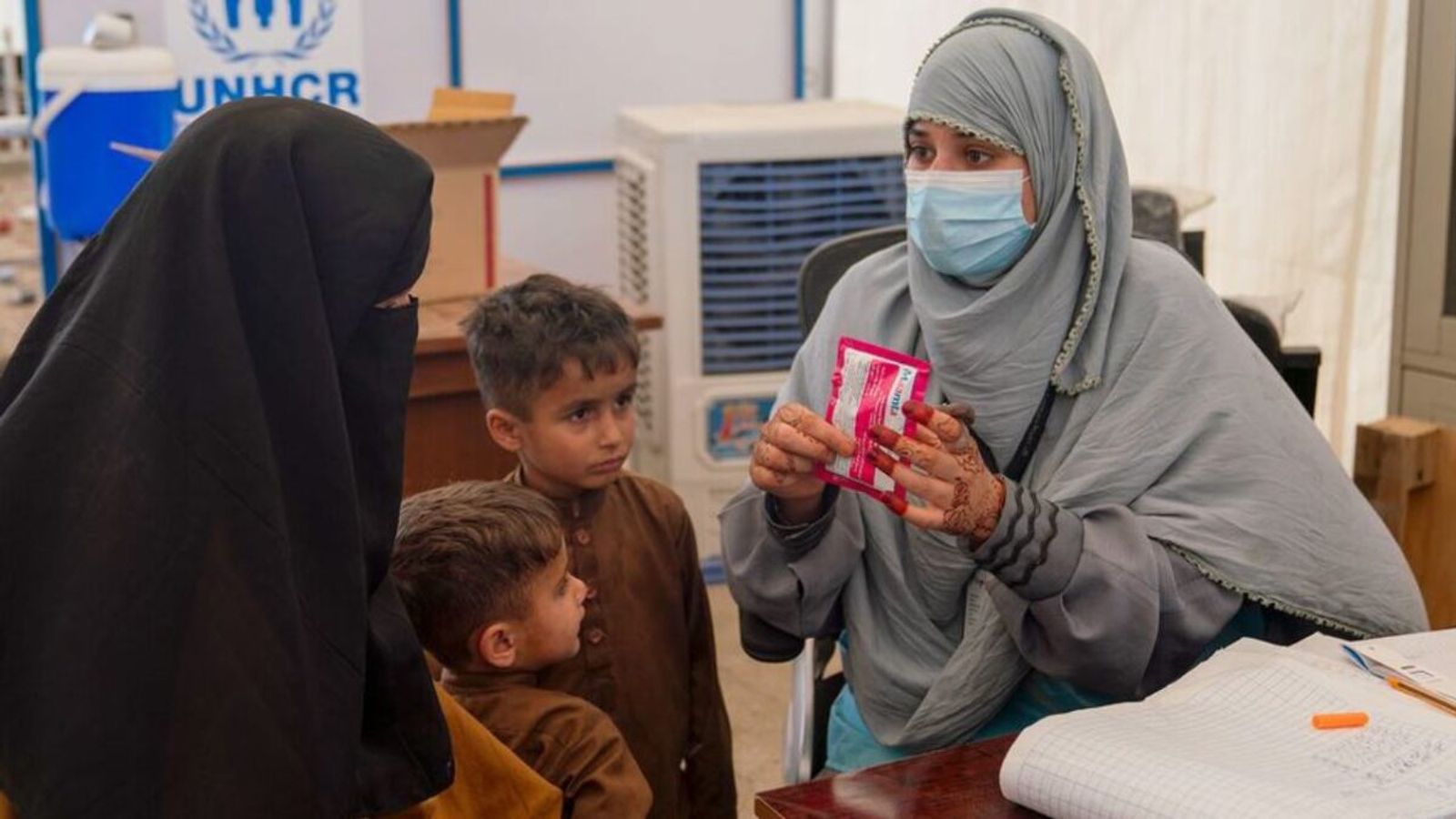
A new study published by researcher Meysam Najafizadeh indicates that a critical shortage of midwives, combined with restrictions on women’s education, is severely threatening maternal health services across Afghanistan. The research highlights a pronounced divide between urban and rural healthcare access, noting that postnatal care coverage and facility availability remain critically low outside major cities.
According to 2023 data cited in the report, approximately 8,094 midwives are currently active in the country. This results in a health personnel density of 10.3 per 10,000 residents, a figure that falls significantly short of the World Health Organization benchmark of 44.5. While United Nations data shows that maternal mortality has declined from 1,372 deaths per 100,000 live births in 2000 to roughly 521 in recent years, the rate remains classified as high-risk.
International agencies have raised concerns about the long-term impact of current educational policies on the healthcare workforce. A UNICEF analysis referenced in the study warns that ongoing bans on female education could lead to the loss of approximately 5,400 female health workers by 2030, with the shortfall projected to reach nearly 9,600 by 2035. The United Nations Human Rights Office has similarly cautioned that limiting women’s access to schooling disrupts the entire pipeline for training and deploying female medical professionals.
The findings underscore the compounding challenges facing Afghanistan’s public health sector. Despite measurable progress in reducing maternal deaths over the past two decades, experts stress that sustained access to education and targeted recruitment of midwives are essential to maintaining and expanding essential healthcare services nationwide.
Read the original reporting at Amu TV →
Reliability assessment
Single-source report citing a named researcher (Meysam Najafizadeh) and specific UN/UNICEF data with concrete, checkable statistics on maternal health, midwife distribution, and the impact of educational restrictions. The core event (publication of the study and its findings) is directly attributable and detailed, meeting the single-source reliable threshold.
The source language reads straight.
Across the newsrooms
Filed by
Amu TV
Originating
Reported straight
Reported straight
Filed under
Society — Maternal Health, Midwives, Women's Education, UNICEF, Afghanistan
Reader supported
Keep Ehtebar running
Every published story uses paid tools to translate reporting, compare sources, extract claims, and produce a clearer read on Afghanistan. Reader support helps keep that work independent.
€5
helps cover daily verification runs
€15
supports a week of source comparison
€50
keeps independent analysis moving
More in Society
Health Officials and Experts Discuss Rise in Black Jaundice Cases in Afghanistan
— Reliable
Discussion on Agricultural Products and Health Services in Samangan Province
— Reliable
WHO Report Cites Taliban Restrictions and Funding Shortfalls as Threats to Health Services in Afghanistan
— Reliable
Afghan officials report returns of families from Pakistan and Iran alongside releases from Pakistani prisons
— Reliable