
POLITICS — March 22, 2026
Taliban Faces Governance Challenges Amid Border Closures, Insurgencies and Economic Pressures
The Taliban struggles to govern Afghanistan amid closed Pakistan borders, internal attacks, ISIS-K threats, Middle East tensions and soaring prices, as reported by UN, World Bank and others. Economic deficits and security spending strain resources while civilians bear heavy costs.
The Ehtebar Desk — originates with Afghanistan International — 2 min read
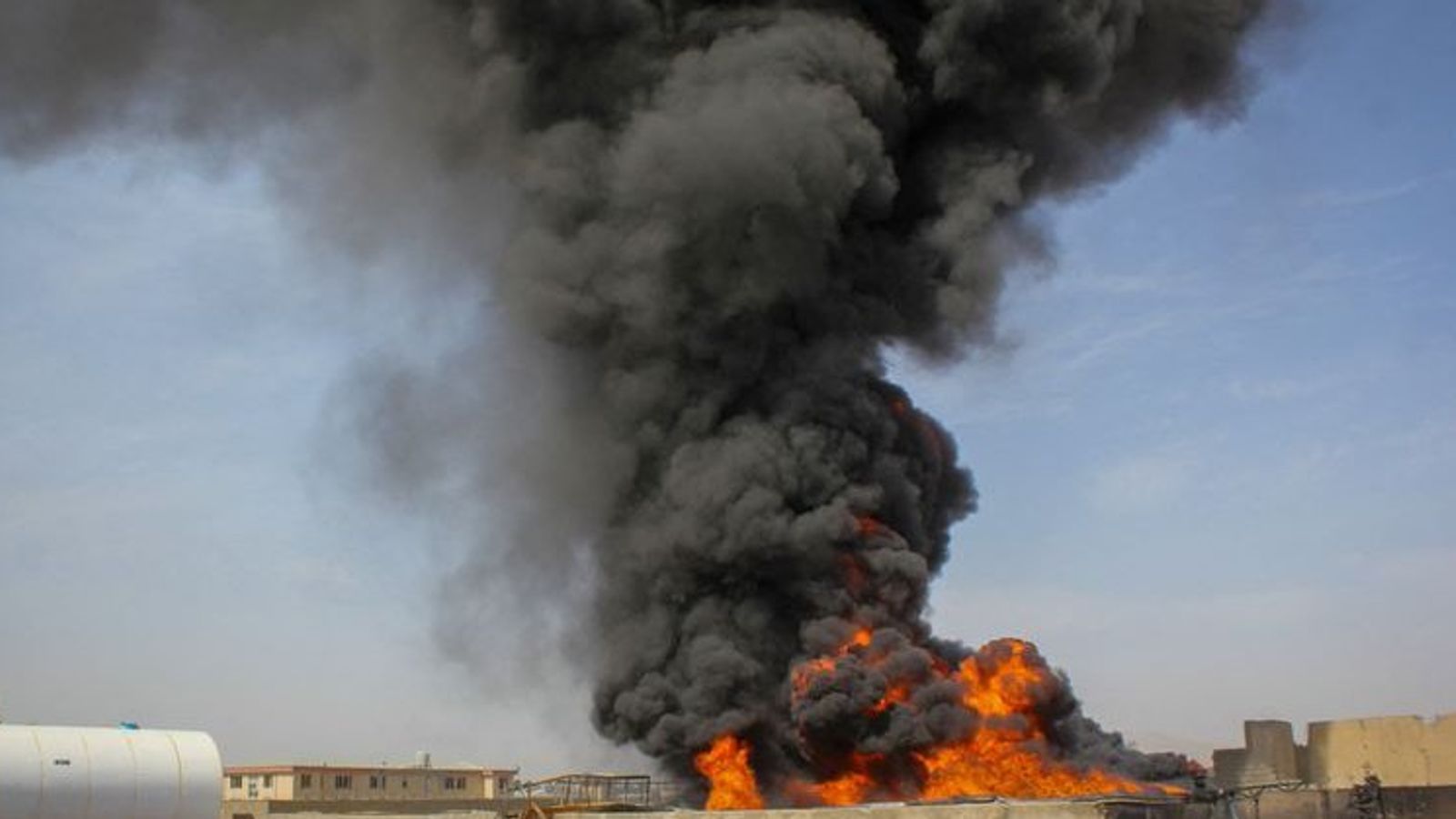
The Taliban is grappling with significant hurdles in governing Afghanistan, a nation heavily reliant on imports and international aid, as multiple conflicts and crises exacerbate economic instability and place burdens on civilians.
Border crossings with Pakistan have been closed since the month of Miizan last year, according to the World Bank, driving up transport costs through alternative routes via Iran and Central Asia, which are more expensive and slower. This has widened the trade deficit and raised prices for medicine and health services. Food prices have also surged, with potatoes reaching 50 afghanis per kilogram amid harsh cold seasons when imports are critical. Petroleum product prices have nearly doubled in the past three weeks.
The United Nations has confirmed that clashes between the Taliban and Pakistan have inflicted heavy human and economic costs, particularly on Afghanistan. The Financial Times reported 1,000 people killed in three weeks of fighting between the two sides.
Internally, the Taliban faces ongoing insurgencies. The UN reported that from 13 Dalu to 10 Saur 1404, the National Resistance Front carried out 56 attacks, the Freedom Front 16 and the Freedom Movement three, totaling 75 attacks. In another three-month period earlier in 1404, opponents conducted 91 attacks.
External threats persist, with the U.S. Intelligence Community's 2026 Threat Assessment noting ISIS-Khorasan's regional foothold and plans for cross-border attacks. The Global Terrorism Index highlighted concerns in northern Afghanistan for neighbors like Tajikistan.
The Middle East conflict, including Israeli and U.S. strikes on Iran, has further strained Afghanistan's economy through disrupted trade, energy prices and migration routes. With Pakistan borders closed, imports increasingly rely on Iran, raising risks if those routes are affected. A wave of returning migrants adds to the pressures.
The World Bank noted that in the first nine months of fiscal year 2025, nearly half of Afghanistan's expenditures went to the security sector, leaving limited funds for development.
Read the original reporting at Afghanistan International →
Reliability assessment
Single source citing reputable organizations (UN, World Bank, Financial Times) with concrete, checkable details including specific numbers, dates, and periods for economic data, attack statistics, and casualty figures.
The source language mixes facts with framing or advocacy wording. Afghanistan International: 'skyrocketing prices' (قیمت سرسامآور) and 'main burden of economic instability on the shoulders of the people' (بار اصلی بیثباتی اقتصادی را بر دوش مردم میگذارد) use emotional framing to emphasize civilian suffering; 'the Taliban's hand was already tight' (دست حکومت طالبان از پیش هم تنگ بود) and 'the Taliban has the lower hand' (طالبان در برابر پاکستان دست پایین دارد) convey opinionated assessments of vulnerability.
Across the newsrooms
Filed by
Afghanistan International
Originating
Framed
Framed
Filed under
Politics — Taliban, Pakistan, Afghan economy, border closures, internal resistance
Reader supported
Keep Ehtebar running
Every published story uses paid tools to translate reporting, compare sources, extract claims, and produce a clearer read on Afghanistan. Reader support helps keep that work independent.
€5
helps cover daily verification runs
€15
supports a week of source comparison
€50
keeps independent analysis moving
More in Politics

Islamic Emirate Leader Orders 21 New Appointments Across Government Posts
— Reliable
Discussion Held on Presenting Achievements of Government Program in Media
— Reliable
Supreme Court of the Islamic Emirate of Afghanistan Outlines Judicial Reforms and Achievements
— Unverified
Ministry of Information and Culture of the Islamic Emirate of Afghanistan Announces Annual Activities and Achievements
— Reliable