INTERNATIONAL — March 12, 2026
Taliban spokesperson says US inclusion of Afghanistan on hostage-taker list is pretext for future actions
Taliban spokesperson Zabiullah Mujahid dismissed U.S. claims of three detained Americans as exaggerated, calling the hostage-taker designation a pretext, while affirming only two are held for legal violations. He warned against U.S. pressures amid regional tensions involving Iran.
The Ehtebar Desk — originates with Afghanistan International — 2 min read
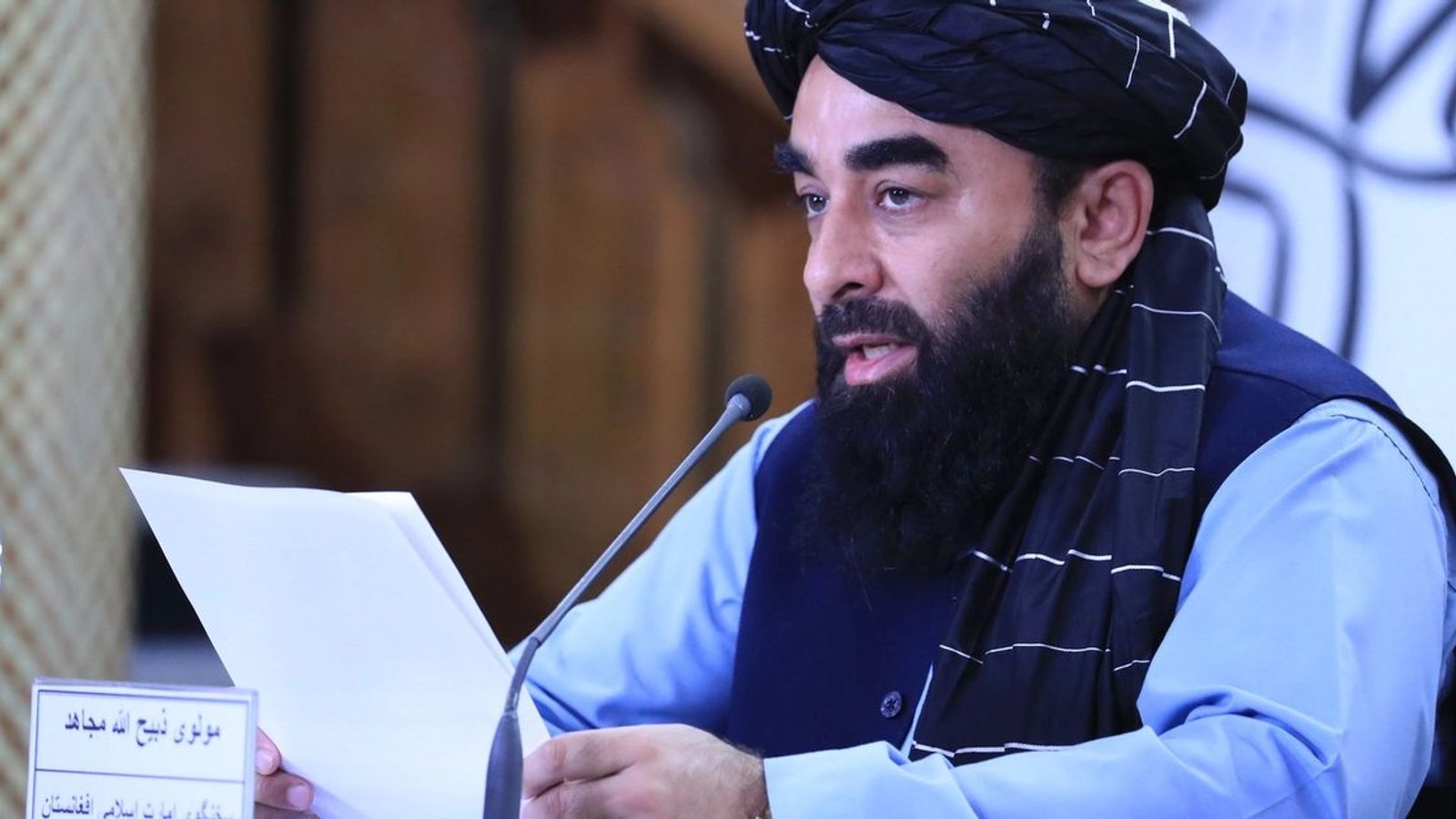
Zabiullah Mujahid, spokesperson for the Taliban, stated that the United States' decision to add Afghanistan to its list of "hostage-taking" countries is a pretext for future scenarios against the group.
Mujahid, in an interview with ToloNews, described the issue of detained Americans in Afghanistan as "not complicated or serious," saying they would be released through judicial processes or bilateral negotiations. He emphasized that only two U.S. citizens are in Taliban custody and denied the detention of Mahmud Shah Habibi, an Afghan-American.
The U.S. State Department has stated that three U.S. citizens, including Habibi, are detained by the Taliban. U.S. Secretary of State Antony Blinken said the Taliban uses American citizens as political leverage. Mujahid rejected these claims, asserting that there have been no illegal detentions and that the individuals were held for violating Afghan laws. He added that pressure and threats are not a solution.
Mujahid reiterated that the U.S. move and the amplification of the detainee issue amount to pretext-making for unspecified "future scenarios." Adam Boehler, the U.S. president's special envoy for hostages, warned that failure to release the detainees could lead to consequences similar to those faced by Iran, which is under heavy U.S. airstrikes.
Mujahid criticized U.S. policy toward the Taliban as reminiscent of wartime approaches, citing sanctions, blacklists, and alleged use of Pakistani generals to destabilize the region. On regional developments, he said the "Islamic Republic regime" in Iran will not fall, given its strong army and past experiences. The Taliban will not intervene in any U.S.-Israel conflict with Iran but expressed concern over its impact, stating "war is no solution."
Amid heightened U.S.-Iran tensions, American officials including President Donald Trump, the secretaries of state and defense, the U.N. ambassador, and senators have commented on the U.S. withdrawal from Afghanistan and the "Bagram airbase escape." The U.S. ambassador to the U.N. said Bagram, if still under U.S. control, would have been used for strikes on Iran.
Read the original reporting at Afghanistan International →
Reliability assessment
Direct, on-record quotes from Taliban spokesperson Zabiullah Mujahid in a ToloNews interview, with concrete details including detainee numbers (Taliban claims 2, US claims 3) and named U.S. officials' statements.
The source language reads straight.
Across the newsrooms
Filed by
Afghanistan International
Originating
Filed under
International — Taliban, Zabiullah Mujahid, United States, American detainees, Iran tensions
Reader supported
Keep Ehtebar running
Every published story uses paid tools to translate reporting, compare sources, extract claims, and produce a clearer read on Afghanistan. Reader support helps keep that work independent.
€5
helps cover daily verification runs
€15
supports a week of source comparison
€50
keeps independent analysis moving