INTERNATIONAL — May 2, 2026
U.S. Announces New Sanctions on Strait of Hormuz Transit Fees to Pressure Iran
The United States has announced new sanctions targeting transit fees for the Strait of Hormuz to increase economic pressure on Iran. Iranian President Masoud Pezeshkian condemned the measures as unjust, while analysts warn of potential regional escalation.
The Ehtebar Desk — originates with Khaama Press — 2 min read
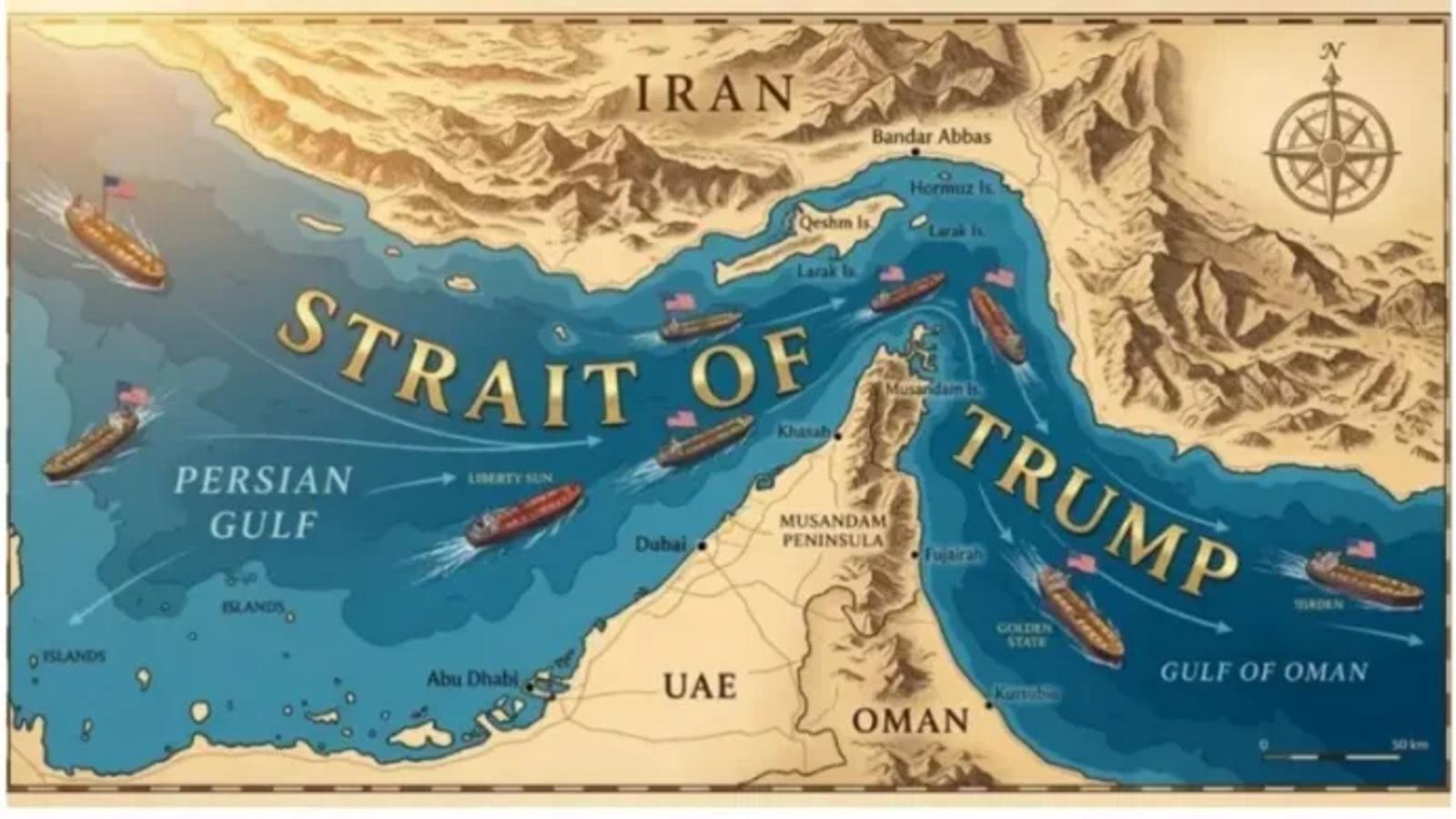
The United States has announced a new round of economic sanctions targeting entities that pay transit fees for passage through the Strait of Hormuz. The measures are part of an intensified campaign aimed at increasing economic pressure on Iran.
U.S. President Donald Trump stated that the new restrictions will focus on financial networks facilitating payments for maritime transit through the strategic waterway. The U.S. Department of the Treasury confirmed the directive, noting that the sanctions will specifically target organizations and intermediaries involved in collecting or processing these transit fees. U.S. officials have indicated that the strategy is designed to expand Washington’s leverage over Tehran by restricting revenue streams tied to the vital shipping corridor.
In response, Iranian President Masoud Pezeshkian condemned the newly announced measures. He characterized the U.S. naval pressure and accompanying economic restrictions as unjust, arguing that they undermine regional stability and freedom of navigation.
Analysts monitoring the situation have cautioned that the expanded sanctions regime could heighten tensions in the Persian Gulf. While U.S. policymakers maintain that the financial restrictions will compel diplomatic concessions, regional observers warn that further economic isolation could prompt retaliatory measures or disrupt commercial shipping routes. The Strait of Hormuz remains one of the world’s most critical maritime chokepoints, with a significant portion of global oil and liquefied natural gas shipments passing through the narrow passage daily.
The U.S. Treasury has not yet released a detailed list of the specific entities or financial institutions that will be subject to the new restrictions. Implementation details and enforcement mechanisms are expected to be outlined in forthcoming regulatory guidance.
Read the original reporting at Khaama Press →
Reliability assessment
Single source provides direct, on-record attribution with concrete, checkable details (named officials: Donald Trump, Masoud Pezeshkian, U.S. Treasury). The core event is clearly reported with attributable statements, meeting the threshold for reliable despite being a single-source report.
The source language reads straight.
Across the newsrooms
Filed by
Khaama Press
Originating
Reported straight
Reported straight
Filed under
International — Donald Trump, Iran, Strait of Hormuz, U.S. Treasury, Masoud Pezeshkian
Reader supported
Keep Ehtebar running
Every published story uses paid tools to translate reporting, compare sources, extract claims, and produce a clearer read on Afghanistan. Reader support helps keep that work independent.
€5
helps cover daily verification runs
€15
supports a week of source comparison
€50
keeps independent analysis moving