
SOCIETY — July 30, 2026
WHO Report Cites Taliban Restrictions and Funding Shortfalls as Threats to Health Services in Afghanistan
The closures deprived nearly 294,000 people of basic services amid ongoing crises including disease outbreaks and migrant returns. The organization continued operations across all provinces with extensive vaccination and treatment programs.
The Ehtebar Desk — originates with Amu TV — corroborated by Afghanistan International — 2 min read
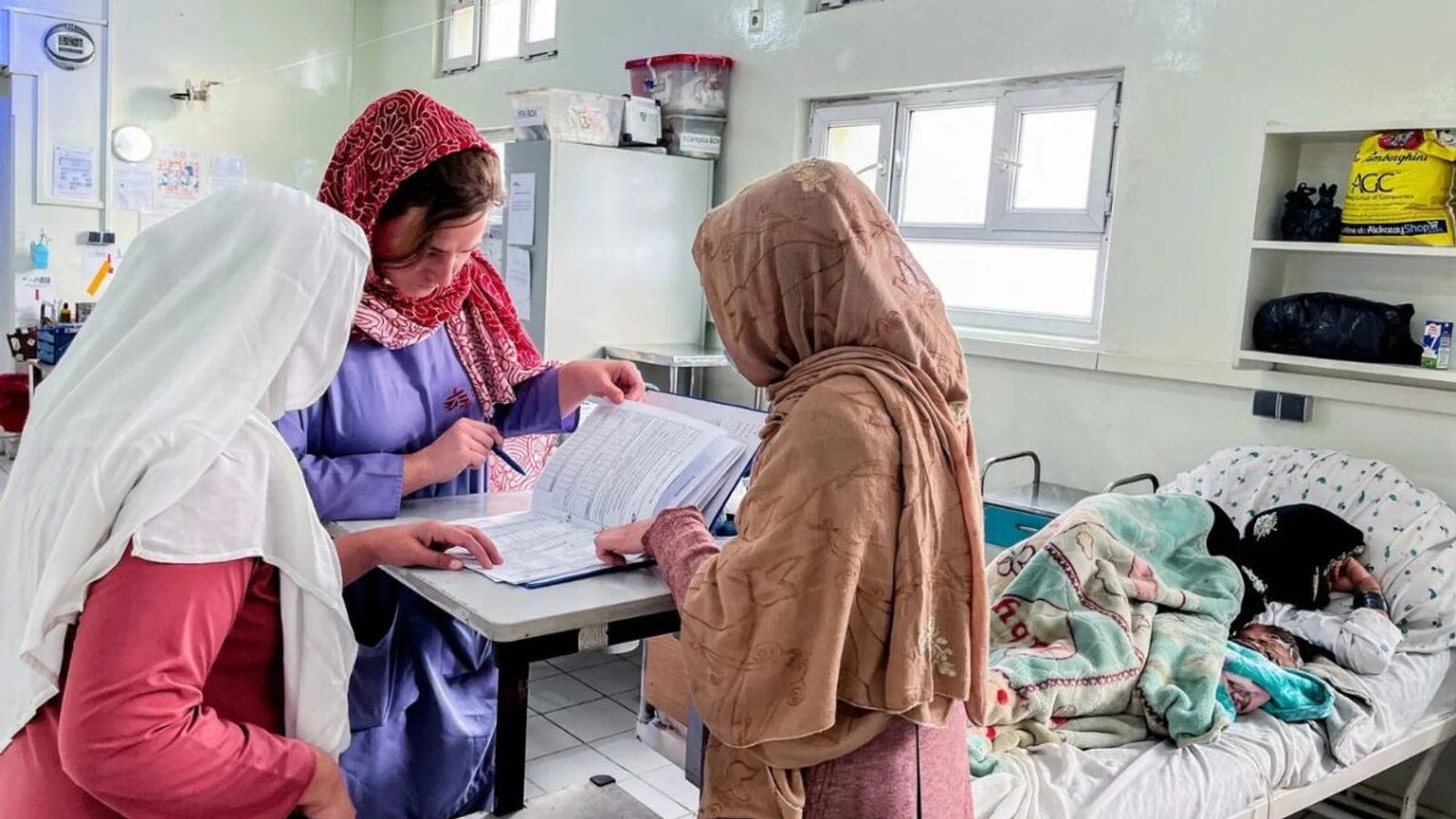
The World Health Organization's 2025 report states that Taliban restrictions on female health workers' travel, education, and employment, combined with severe funding shortfalls, have disrupted community health services, disease surveillance, and care for women and children in Afghanistan.
These pressures contributed to the closure of 27 primary health centers, limiting access for nearly 294,000 people. Additional strains came from natural disasters, disease outbreaks, and the return of more than 2.7 million migrants from neighboring countries.
The humanitarian needs plan received only 45.3 percent of required funding in 2025. Despite the challenges, the WHO supported health services across all 34 provinces, including 1.86 million outpatient visits, medicine distribution to 3.8 million beneficiaries, treatment for severe malnutrition in 56,400 children, and vaccinations for millions against measles and polio.
The report indicates that lifting restrictions on women workers and securing stable funding are needed for the sustainability of services.
Read the original reporting at Amu TV →
Reliability assessment
Both independent outlets corroborate core claims from the named WHO report including center closures, funding shortfalls, restrictions, and migrant returns; positive metrics in one source do not conflict with the other
The source language mixes facts with framing or advocacy wording. Afghanistan International: "restrictions on female employees have caused severe disruption", "severely weakened the quality of health services and ... access to critical care", "extraordinary pressure on Afghanistan's weak health system" — these phrases use strong negative qualifiers and imply direct blame on the restrictions without neutral framing.
Across the newsrooms
Where reports agree
- WHO 2025 report documents severe health system strain due to funding shortages and restrictions on female workers
- 27 primary health centers closed, affecting approximately 294,000 people
- Over 2.7 million migrant returns added pressure alongside disasters and outbreaks
- WHO maintained operations and service delivery in all 34 Afghan provinces despite challenges
Where reports differ
- Afghanistan International emphasizes negative impacts and polio risks from bans; Amu TV adds extensive positive metrics on vaccinations, screenings, and treatments without contradiction
Filed by 2 outlets
Amu TV
Originating
Reported straight
Reported straight
Afghanistan International
Framed
Framed
Filed under
Society — WHO, Afghanistan health, Taliban restrictions, funding shortages, polio vaccination
Reader supported
Keep Ehtebar running
Every published story uses paid tools to translate reporting, compare sources, extract claims, and produce a clearer read on Afghanistan. Reader support helps keep that work independent.
€5
helps cover daily verification runs
€15
supports a week of source comparison
€50
keeps independent analysis moving
More in Society
Health Officials and Experts Discuss Rise in Black Jaundice Cases in Afghanistan
— Reliable
Discussion on Agricultural Products and Health Services in Samangan Province
— Reliable
Afghan officials report returns of families from Pakistan and Iran alongside releases from Pakistani prisons
— Reliable
Afghan Sports Official Meets Iranian Wrestling Referees to Discuss Training Cooperation
— Reliable