
ECONOMY — April 17, 2026
Afghanistan Moving Toward Self-Sufficiency in Bottle Production
Afghanistan is advancing toward self-sufficiency in bottle production, with officials predicting full self-sufficiency by the end of the year, an increase in the number of factories to 20 and expanded exports to Gulf and European countries under the Islamic Emirate.
The Ehtebar Desk — originates with Ariana News — 2 min read
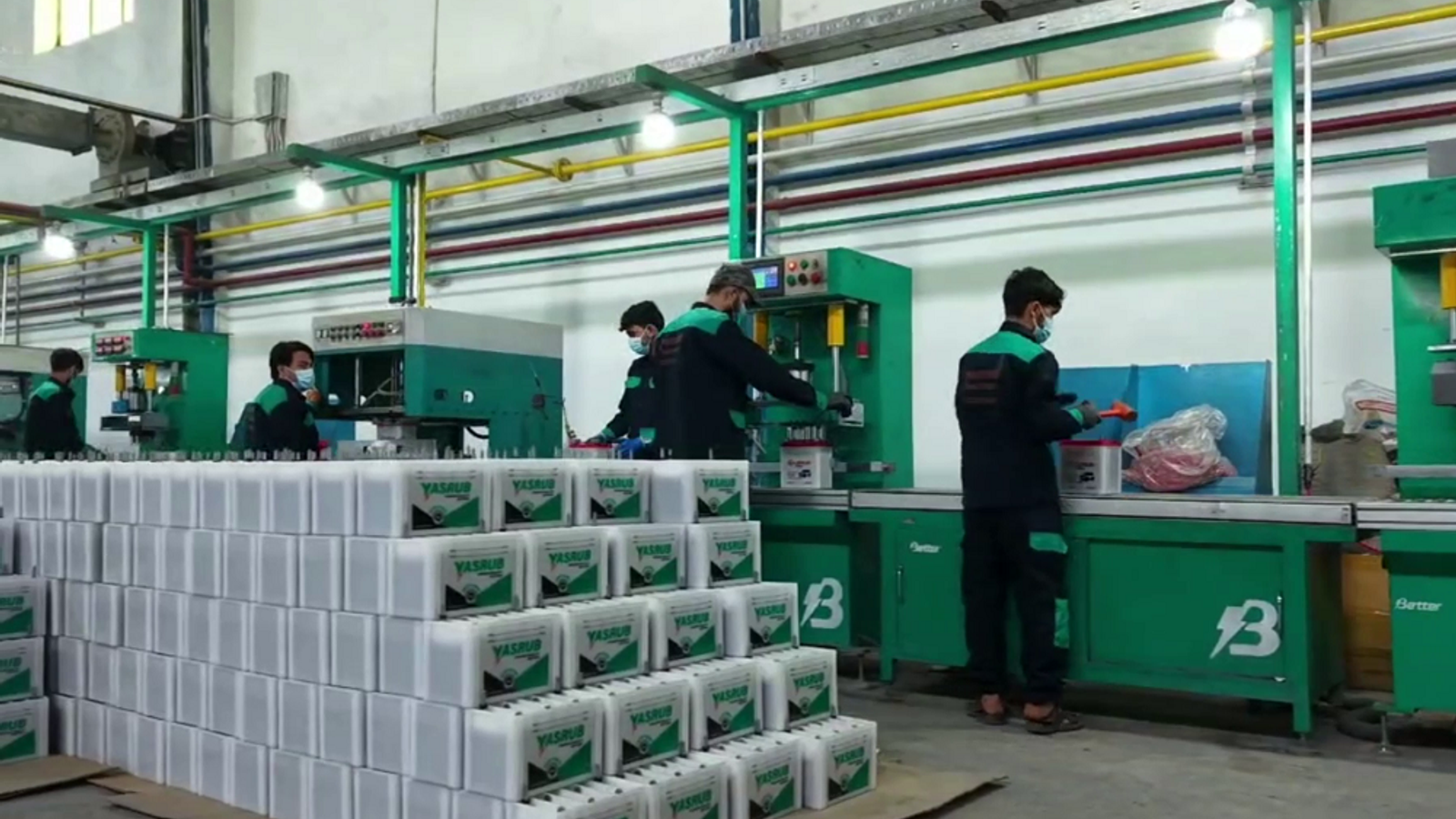
Afghanistan is progressing toward self-sufficiency in bottle production, with domestic factories now meeting most of the country's internal demand, industry and government officials said.
Abdul Matin Qalandari of the Chamber of Industries and Mines stated that with proper support from the relevant ministries, the country will reach 100 percent domestic fulfillment of its bottle needs by the end of the current year. He added that Afghanistan exported bottles for the first time in its history last year.
This year, the country plans to export hundreds of containers of bottles to Gulf countries and parts of Europe, Qalandari said. The number of bottle production factories is expected to reach 20 by the end of the current year, while current annual production stands at 38,000 tons with capacity for further growth.
Bottles were previously imported from Pakistan, Iran, Thailand and China, but such imports have significantly decreased as local production has increased.
Abdul Salam Jawad Akhundzada of the Ministry of Industry and Commerce and Abdul Latif Nazari of the Ministry of Economy said the development of domestic industries and providing a suitable investment environment are priorities of the Islamic Emirate of Afghanistan. The officials expressed confidence that the sector would see significant expansion in both production and exports by the end of the year.
Read the original reporting at Ariana News →
Reliability assessment
Single source with direct on-record attribution and quotes from multiple named officials (Abdul Matin Qalandari of Chamber of Industries and Mines, Abdul Salam Jawad Akhundzada of Ministry of Industry and Commerce, Abdul Latif Nazari of Ministry of Economy) plus concrete details including specific production tonnage, factory count, export volumes and timelines.
The source language reads straight.
Independent web corroboration
An independent web search turned up no separate corroborating reports. Treat the account as single-sourced until more outlets pick it up.
Across the newsrooms
Filed by
Ariana News
Originating
Reported straight
Reported straight
Filed under
Economy — Bottle Production, Self-Sufficiency, Industrial Exports, Chamber of Industries and Mines, Economic Development
Reader supported
Keep Ehtebar running
Every published story uses paid tools to translate reporting, compare sources, extract claims, and produce a clearer read on Afghanistan. Reader support helps keep that work independent.
€5
helps cover daily verification runs
€15
supports a week of source comparison
€50
keeps independent analysis moving
More in Economy
Economic Commission Approves 37 Domestic Standards and 12 Testing Methods
— Reliable

Taliban Governor Says Around 700 Mines Under Extraction in Panjshir
— Reliable
Daily Production at Baghlan's Ghori Cement Factory Increases to 700 Tons
— Reliable

Two Irrigation and Flood-Prevention Projects Completed in Zabul
— Reliable