
POLITICS — March 16, 2026
Fawzia Koofi Calls on EU to Pressure Taliban to End Human Rights Violations
Fawzia Koofi urged the European Union to pressure the Taliban to end human rights violations, including 'gender apartheid' against women, at a meeting of Taliban opponents in the European Parliament. Zalmay Nishat highlighted the democratic opposition's capacity to restore rights amid security threats from continued Taliban rule.
The Ehtebar Desk — originates with Afghanistan International — 2 min read
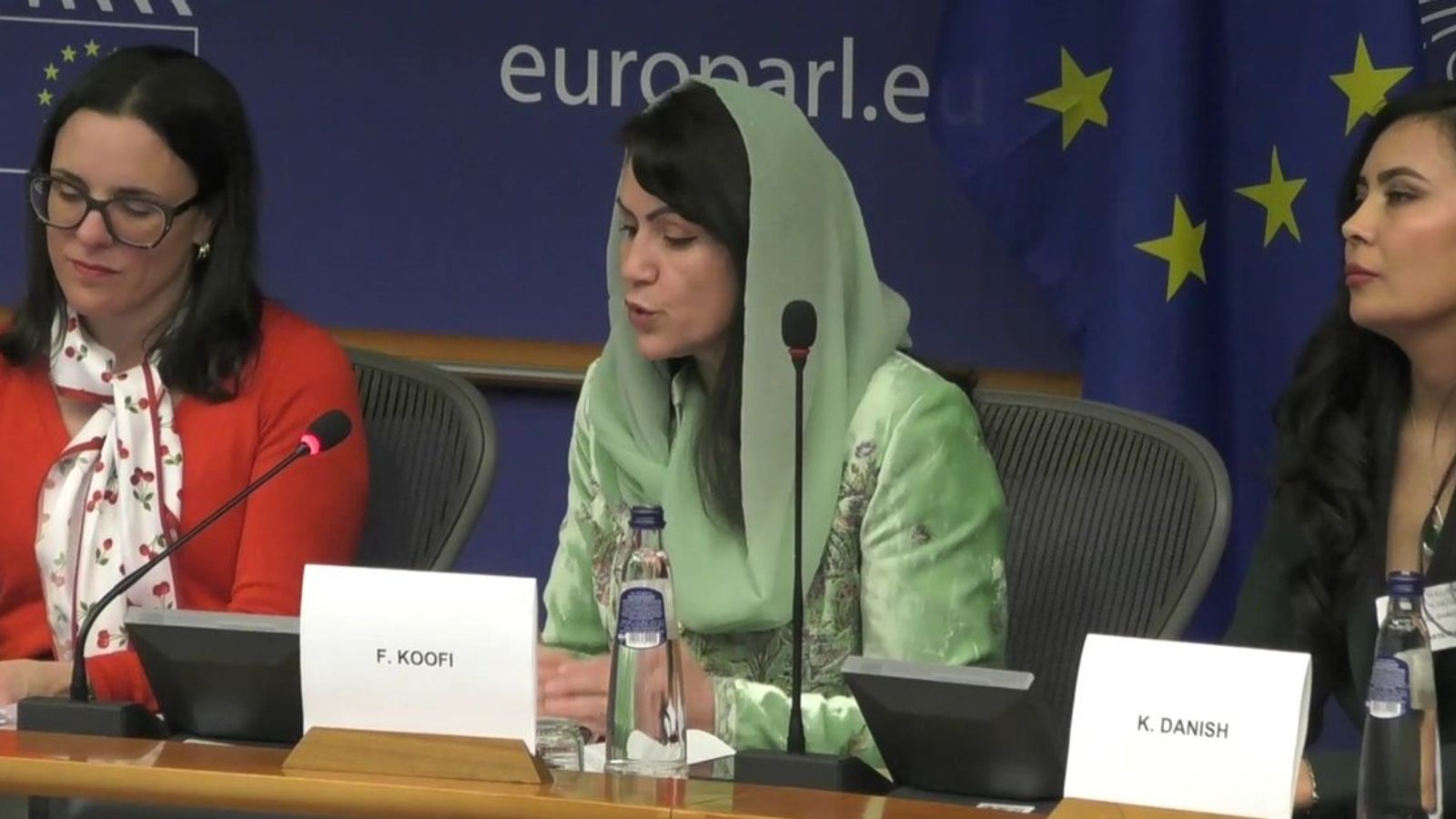
Fawzia Koofi, a former member of the Afghan parliament, urged the European Union to pressure the Taliban to end human rights violations and hold violators accountable. Speaking at a two-day meeting of Taliban opponents in the European Parliament that began on Monday, Koofi described the situation for women under Taliban rule as a "gradual death" and accused the group of establishing "gender apartheid."
Koofi said the Taliban have turned Afghanistan into a center for extremist violent groups, contrary to their commitments in the Doha negotiations. She stated that the Taliban have systematically eliminated women from public life through repressive policies and launched a "war against women and anyone who has views opposing theirs." Koofi described the Taliban government as "by the Taliban and for the Taliban," warning that it has made Afghanistan an unreliable partner for the world and unsafe for its citizens.
She called for women's rights, human rights and the formation of an inclusive government to be top priorities in European diplomatic visits to Kabul. Koofi also urged the international community not to strengthen the Taliban if it is not supporting the Afghan people, and advocated accelerating Afghanistan's cases at the International Court of Justice while recognizing "gender apartheid" at the International Criminal Court. She highlighted emerging dialogues among Afghans to form a native narrative for change.
Zalmay Nishat, another speaker, said the Afghan democratic opposition has the capacity to restore human rights and democracy. He warned that the situation threatens Europe's security and stability through increased migration, growth of extremist networks and regional tensions. Nishat emphasized unity among political actors and women's organizations, stating that women's and girls' education is a non-negotiable fundamental Islamic principle with no religious basis for deprivation.
Read the original reporting at Afghanistan International →
Reliability assessment
Single source provides direct, on-record attribution with concrete, checkable details: named speakers (Fawzia Koofi, Zalmay Nishat) at a specific event (Taliban opponents' meeting in European Parliament starting Monday ~2026-03-16), including direct quotes and positions; not high-stakes/volatile as it reports attributable statements.
The source language mixes facts with framing or advocacy wording. Afghanistan International: 'gradual death' of women – emotional framing of women's oppression; 'gender apartheid' – strong advocacy term equating policies to systemic racial segregation; 'war against women' – hyperbolic depiction of Taliban actions as deliberate aggression.
Across the newsrooms
Filed by
Afghanistan International
Originating
Framed
Framed
Filed under
Politics — Fawzia Koofi, Zalmay Nishat, Taliban, European Parliament, gender apartheid
Reader supported
Keep Ehtebar running
Every published story uses paid tools to translate reporting, compare sources, extract claims, and produce a clearer read on Afghanistan. Reader support helps keep that work independent.
€5
helps cover daily verification runs
€15
supports a week of source comparison
€50
keeps independent analysis moving
More in Politics

Islamic Emirate Leader Orders 21 New Appointments Across Government Posts
— Reliable
Discussion Held on Presenting Achievements of Government Program in Media
— Reliable
Supreme Court of the Islamic Emirate of Afghanistan Outlines Judicial Reforms and Achievements
— Unverified
Ministry of Information and Culture of the Islamic Emirate of Afghanistan Announces Annual Activities and Achievements
— Reliable