
SOCIETY — April 19, 2026
Health Minister Announces Specialist Quotas for Deprived Provinces at Kabul Workshop
The Minister of Public Health announced the allocation of specialist quotas to deprived provinces and renewed efforts to eradicate polio at the start of a four-day coordination workshop for provincial health officials in Kabul attended by UNICEF and WHO representatives.
The Ehtebar Desk — originates with Bakhtar News — corroborated by Pajhwok and RTA — 2 min read
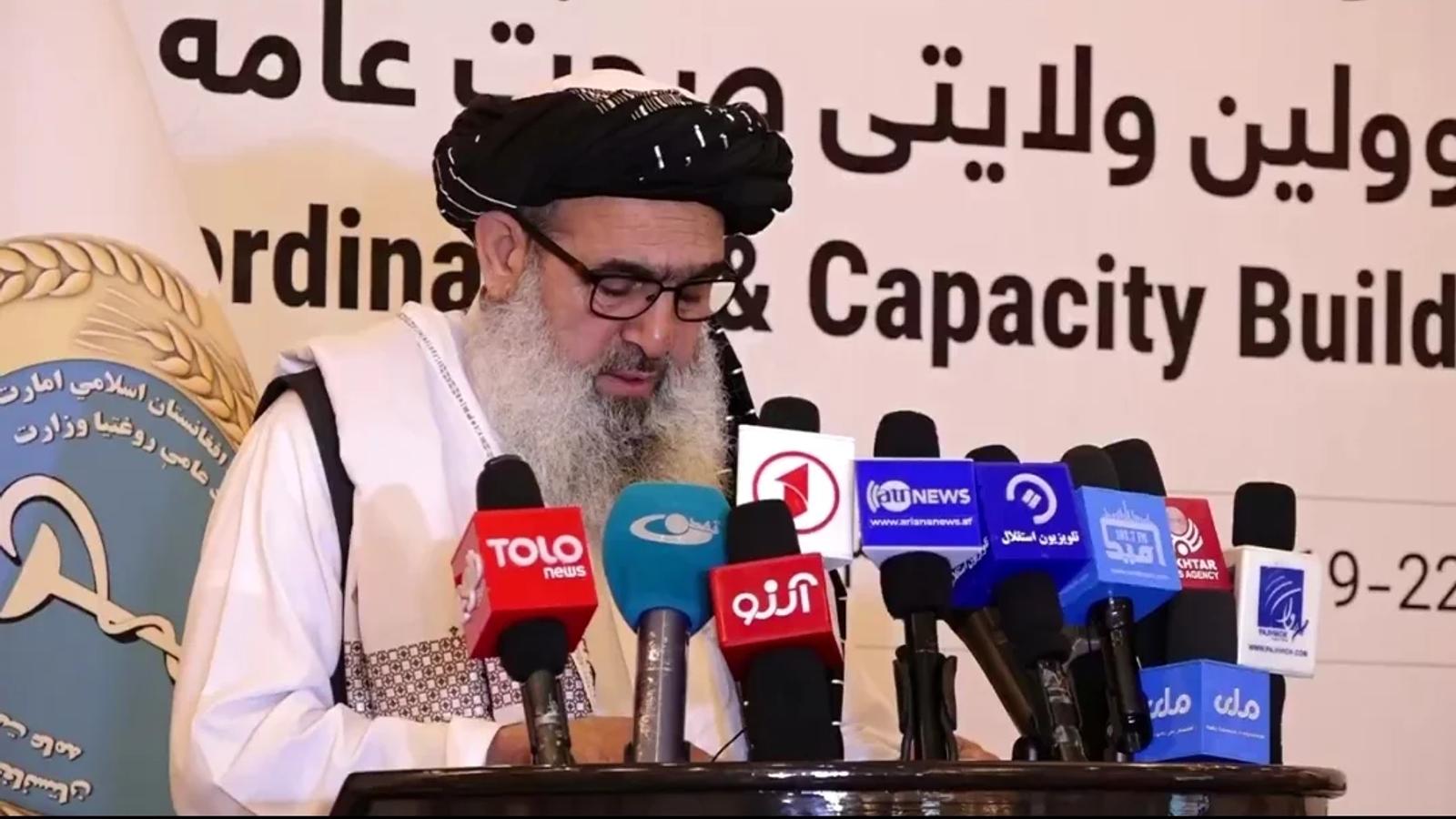
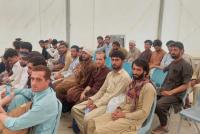
The Ministry of Public Health has initiated a four-day workshop in Kabul focused on enhancing coordination and building the capacity of provincial public health officials.
In his speech at the opening of the event, Maulvi Noor Jalal Jalali, the Minister of Public Health in the Islamic Emirate of Afghanistan, announced that a special quota of specialist positions will be allocated specifically to deprived provinces. Additionally, he stated that those who take the specialization exams must commit to serving for two years at district health centers.
Jalali underscored the necessity for the health sector to achieve self-sufficiency, improve the quality of primary, secondary and tertiary health services and ensure that all projects are in line with the real needs of the population. He called on all stakeholders to make serious and coordinated efforts, in cooperation with the public, to eradicate polio once and for all, noting that Afghanistan and Pakistan are among the last countries with ongoing cases.
Representatives of UNICEF and WHO participated in the workshop. They described polio eradication as a top priority and reaffirmed their commitment to supporting the Ministry. The representatives highlighted the current challenges, pointing to 21 polio cases registered in 2025 and three cases reported so far this year.
Jalali also mentioned that the contracts of organizations that fail to perform adequately will be terminated. He emphasized the importance of strict monitoring of their activities to make sure that assistance effectively reaches the intended recipients.
Read the original reporting at Bakhtar News →
Reliability assessment
All three sources (including state-affiliated outlets) independently corroborate the core event of the workshop/meeting occurring in Kabul with the named Minister delivering key policy statements on polio eradication, health reforms, and capacity building. Detail variations are normal in multi-source coverage of the same event and do not undermine confirmation of the underlying occurrence or the verifiable fact that the Minister made these on-record statements.
The source language reads straight.
Across the newsrooms
Where reports agree
- The Ministry of Public Health held a coordination workshop/meeting in Kabul for provincial officials, opened by Minister Maulvi Noor Jalal Jalali.
- The event addressed key health sector issues, developments, challenges, and solutions.
- Strong emphasis across sources on the need for intensified efforts to eradicate polio, as Afghanistan remains one of the last countries with cases.
- International partners (UNICEF, WHO) are involved and committed to supporting Afghanistan's health sector.
- The ministry is implementing reforms to improve health services, training, and accountability of partners.
Where reports differ
- Bakhtar News focuses on self-sufficiency, reducing aid dependency, and reforms in primary/secondary/tertiary services; Pajhwok and RTA highlight specialist post quotas and mandatory district service instead.
- Only Pajhwok reports specific polio case numbers (21 in 2025, 3 in 2026); other sources mention ongoing cases without figures.
- Pajhwok details plans to cancel underperforming contracts and monitor NGOs; this is not covered in the other two sources.
- RTA briefly describes it as a 'coordination meeting' on 30 Hamal without mentioning it as a four-day workshop.
- Bakhtar mentions speeches by Deputy Minister Maulvi Abdul Wali Haqqani and references to measles; not reported in other sources.
Filed by 3 outlets
Bakhtar News
Originating
Reported straight
Reported straight
Pajhwok
Reported straight
Reported straight
RTA
Reported straight
Reported straight
Filed under
Society — Public Health, Polio Eradication, Ministry of Public Health, Maulvi Noor Jalal Jalali, Health Workshop
Reader supported
Keep Ehtebar running
Every published story uses paid tools to translate reporting, compare sources, extract claims, and produce a clearer read on Afghanistan. Reader support helps keep that work independent.
€5
helps cover daily verification runs
€15
supports a week of source comparison
€50
keeps independent analysis moving
More in Society
Health Officials and Experts Discuss Rise in Black Jaundice Cases in Afghanistan
— Reliable
Discussion on Agricultural Products and Health Services in Samangan Province
— Reliable
WHO Report Cites Taliban Restrictions and Funding Shortfalls as Threats to Health Services in Afghanistan
— Reliable
Afghan officials report returns of families from Pakistan and Iran alongside releases from Pakistani prisons
— Reliable