
ECONOMY — February 26, 2026
Impact of India-Europe Free Trade Agreement on Afghanistan and Central Asia
India and the EU signed a free trade agreement on January 27, 2026, which could boost transit trade and investments in Afghanistan and Central Asia if infrastructure and political conditions improve. The pact eliminates most tariffs and links major markets, with potential benefits for regional economies.
The Ehtebar Desk — originates with Hasht-e Subh — 2 min read
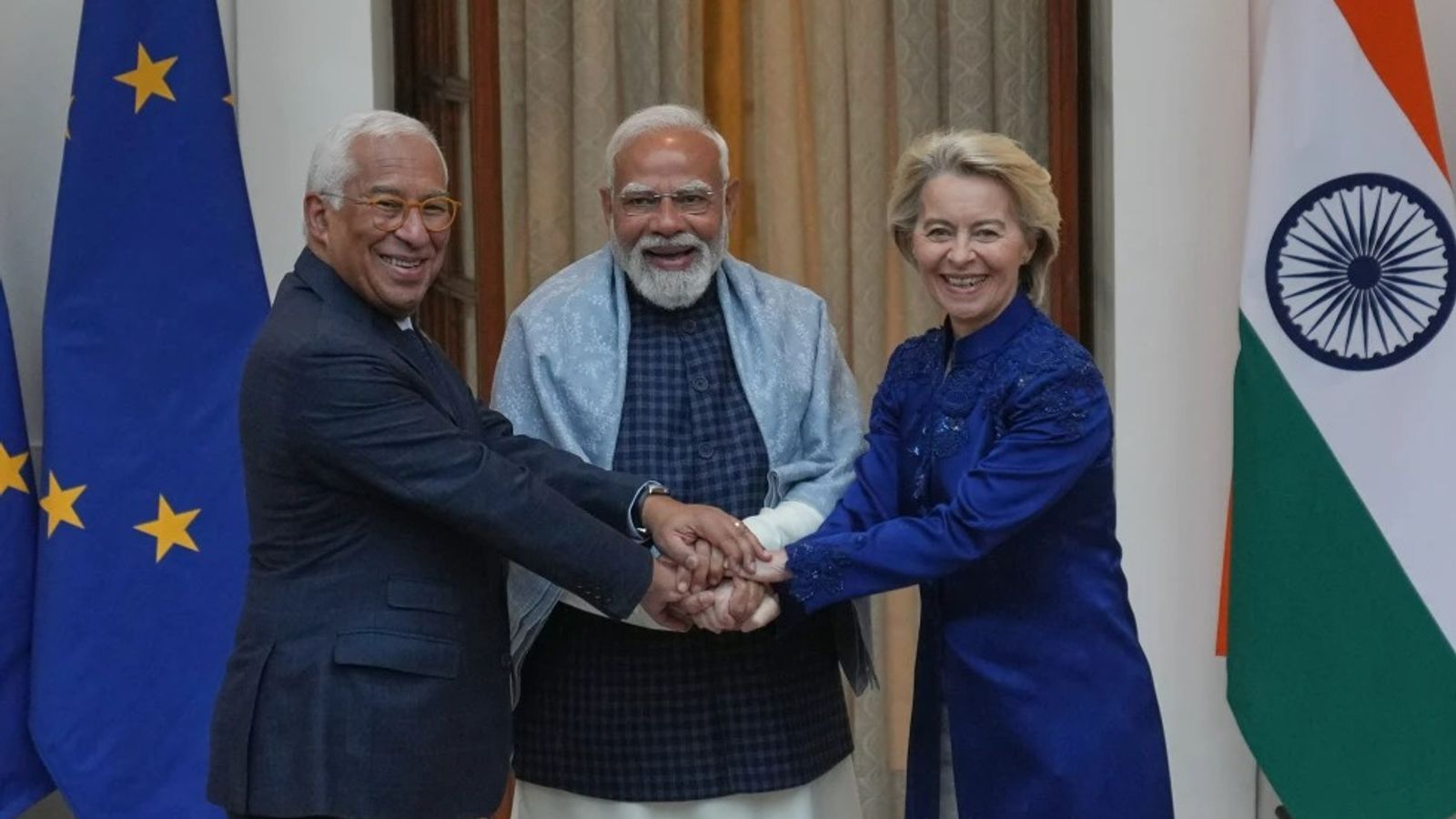
A free trade agreement between India and the European Union, signed on January 27, 2026, during the India-EU Trade Conference by the EU Commission President and Indian Prime Minister, is expected to have significant effects on Afghanistan and Central Asian countries.
Indian Prime Minister described the deal as the "biggest historical agreement," while the EU Commission President called it the "mother of all agreements." The pact links India's growing economy to the EU's market, valued at over 23 trillion euros, encompassing around two billion people and more than 25% of global GDP. Current bilateral trade stands at about 130 billion dollars, below its potential.
The agreement eliminates tariffs on more than 90% of tariff lines, covering 91% of trade value for the EU, and 86% of lines (93% by value) for India. Both sides will gradually liberalize additional lines, reaching overall liberalization of 96.6% for India and 99.3% for the EU.
Afghanistan and Central Asian nations, serving as key transit routes between India and Europe, stand to benefit through increased trade volumes, higher transit and transport revenues, and job creation, provided transportation infrastructure improves and Afghanistan's political situation stabilizes. The deal is also anticipated to attract foreign direct investments from Indian and European companies into sectors such as agriculture, energy, infrastructure, mining, and technology.
Joint investments could enhance regional infrastructure, particularly transport corridors, facilitating faster goods transit. The agreement carries geopolitical implications, influenced by pressures from Washington and Beijing, potentially shifting power balances and increasing India's regional influence.
Read the original reporting at Hasht-e Subh →
Reliability assessment
Single source provides concrete, checkable details including signing date (January 27, 2026), event (India-EU Trade Conference), attributions to named roles (Indian Prime Minister, EU Commission President), specific trade figures (130 billion USD, tariff percentages), and economic projections tied to verifiable transit roles.
The source language reads straight.
Across the newsrooms
Filed by
Hasht-e Subh
Originating
Filed under
Economy — India, European Union, Afghanistan, Central Asia, Free Trade Agreement
Reader supported
Keep Ehtebar running
Every published story uses paid tools to translate reporting, compare sources, extract claims, and produce a clearer read on Afghanistan. Reader support helps keep that work independent.
€5
helps cover daily verification runs
€15
supports a week of source comparison
€50
keeps independent analysis moving
More in Economy

Economic Commission Approves 37 Domestic Standards and 12 Testing Methods
— Reliable

Taliban Governor Says Around 700 Mines Under Extraction in Panjshir
— Reliable

Daily Production at Baghlan's Ghori Cement Factory Increases to 700 Tons
— Reliable

Two Irrigation and Flood-Prevention Projects Completed in Zabul
— Reliable