
POLITICS — February 16, 2026
Interim Leader Muhammad Yunus Hands Power to Elected Government in Bangladesh
Muhammad Yunus resigned as Bangladesh's interim leader on Monday, transferring authority to the elected government headed by Tarique Rahman's BNP-led alliance, which won 212 parliamentary seats. A national referendum also endorsed the 'July Charter' democratic reforms.
The Ehtebar Desk — originates with Amu TV — 2 min read
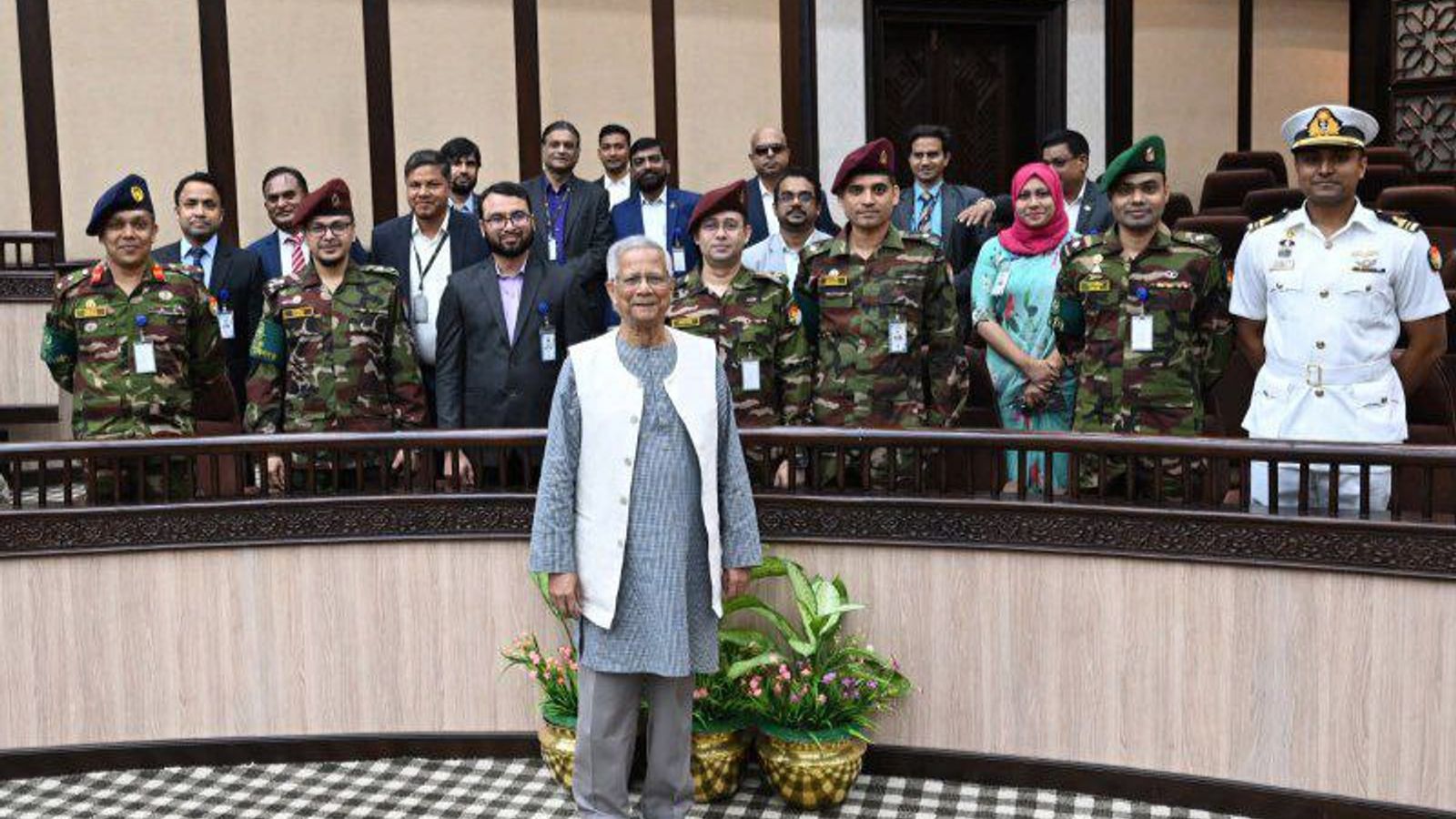
Muhammad Yunus, leader of Bangladesh's interim government, stepped down on Monday in a farewell message to the nation, handing over power to the elected government.
The 85-year-old Nobel Peace Prize laureate stated: "Today, the interim government is stepping down. But the process of democracy, freedom of expression, and fundamental rights that has begun must not stop."
Yunus had returned from self-imposed exile in August 2024 to lead the interim government following the overthrow of Sheikh Hasina's administration amid a student-led uprising. He described that event as "a day of great freedom, with people around the world shedding tears of joy."
The Election Commission announced that the alliance led by the Bangladesh Nationalist Party secured 212 seats in the elections. Tarique Rahman, the 60-year-old party leader, is expected to become prime minister of the South Asian nation of 170 million people.
The alliance led by Bangladesh Jamaat-e-Islami obtained 77 seats. Shafiqur Rahman, the party's leader, said it would serve as a "vigilant, principled, and peace-loving opposition."
Voters simultaneously approved the "July Charter" in a national referendum, a package of democratic reforms including limits on prime ministerial terms, creation of an upper house of parliament, expanded presidential powers, and greater judicial independence. Final implementation requires approval by the new parliament.
Reports indicated that political clashes during the election campaign resulted in five deaths and over 600 injuries. Despite weeks of pre-voting tension, the elections proceeded without widespread unrest in a relatively calm atmosphere.
Newly elected representatives are expected to take their oaths on Tuesday, after which Tarique Rahman will be formally introduced as the new prime minister.
Read the original reporting at Amu TV →
Reliability assessment
Single source (Amu TV) provides direct quotes from named individuals (Yunus, Shafiqur Rahman), concrete details from Election Commission (seat counts), specific dates, numbers (casualties), and checkable events without volatility or contradiction.
Across the newsrooms
Filed by
Amu TV
Originating
Filed under
Politics — Bangladesh, Muhammad Yunus, Tarique Rahman, Bangladesh Nationalist Party, Jamaat-e-Islami
Reader supported
Keep Ehtebar running
Every published story uses paid tools to translate reporting, compare sources, extract claims, and produce a clearer read on Afghanistan. Reader support helps keep that work independent.
€5
helps cover daily verification runs
€15
supports a week of source comparison
€50
keeps independent analysis moving
More in Politics

Islamic Emirate Leader Orders 21 New Appointments Across Government Posts
— Reliable

Discussion Held on Presenting Achievements of Government Program in Media
— Reliable
Supreme Court of the Islamic Emirate of Afghanistan Outlines Judicial Reforms and Achievements
— Unverified
Ministry of Information and Culture of the Islamic Emirate of Afghanistan Announces Annual Activities and Achievements
— Reliable