INTERNATIONAL — April 26, 2026
Iran Refuses US Negotiations Under Blockade and Pressure, President Says
Iranian President Masoud Pezeshkian stated that Tehran will not negotiate with the United States until Washington lifts its maritime blockade and ends coercive measures. The remarks were made during a phone call with Pakistani Prime Minister Shehbaz Sharif, who described the dialogue as constructive.
The Ehtebar Desk — originates with Amu TV — corroborated by Pajhwok — 2 min read
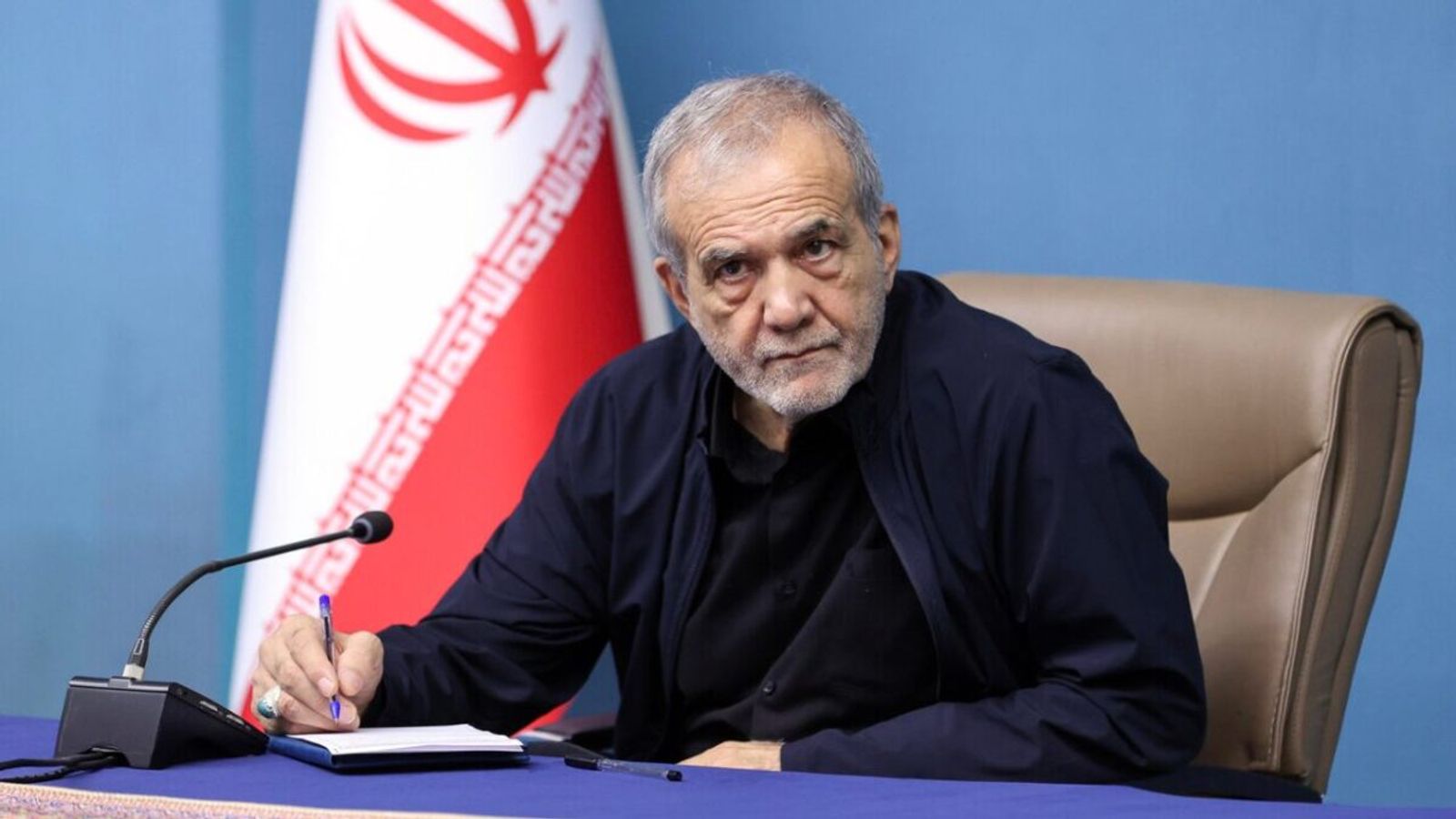
Iranian President Masoud Pezeshkian has stated that Tehran will not resume negotiations with the United States until Washington lifts its maritime blockade and removes operational obstacles to diplomacy. The remarks came during a telephone conversation with Pakistani Prime Minister Shehbaz Sharif, as regional diplomatic efforts face renewed strain.
During the call, Pezeshkian emphasized that Iran would not engage in talks under pressure or threats. He characterized recent American military actions and maritime restrictions as violations of existing ceasefire understandings and the United Nations Charter, noting that these measures have significantly undermined diplomatic trust. The Iranian president also reiterated that Tehran did not initiate the recent conflict and does not seek to expand regional instability.
Prime Minister Sharif described the phone conversation as constructive, reflecting ongoing coordination between Islamabad and Tehran amid shifting diplomatic dynamics. The discussion follows a recent visit to Islamabad by Iranian Foreign Minister Abbas Araghchi, who held meetings with Pakistani government and military leadership to discuss regional security and bilateral ties.
Diplomatic channels have faced setbacks in recent weeks, including the cancellation of a planned visit by envoys from the Trump administration to Pakistan. Iranian officials maintain that any future dialogue with Washington must be conducted without preconditions or coercive measures. Both sides continue to monitor developments in the region as diplomatic posturing intensifies.
Read the original reporting at Amu TV →
Reliability assessment
Two independent outlets corroborate the core diplomatic event and statements. Attribution is direct, on-record, and cites specific named officials (Pezeshkian, Sharif) and state news agencies (ISNA, Tasnim). The verifiable fact is that these officials made these statements, which is consistently reported. Supplementary details vary but do not conflict, meeting the threshold for reliable.
The source language reads straight.
Independent web corroboration
A separate web search returned 8 matching reports. A selection:
The additional US blockade, as well as threats and breach of commitments are main obstacles to talks, said Iran's president Masoud Pezeshk...
- US president cancels envoy trip to Pakistan for ceasefire talks – as it happened | US-Israel war on Iran | The Guardiantheguardian.com
Pezeshkian said the US should first remove “operational obstacles”, including its blockade on Iranian ports, before negotiators can lay any groundwork to resolve the conflict.
- Trump Calls Off Witkoff and Kushner’s Travel to Pakistan for Peace Talks - The New York Timesnytimes.com
Masoud Pezeshkian, the Iranian president, told the Pakistani leader that Iran would not enter negotiations “under pressure, threats and blockade,” the reports in state media said.
Iran’s President Masoud Pezeshkian has reiterated that his country won’t negotiate while the United States imposes a blockade on its ports, according to Iranian semiofficial media.
Across the newsrooms
Where reports agree
- Iranian President Masoud Pezeshkian publicly refused to negotiate with the US under blockade or pressure.
- Pezeshkian held a phone call with Pakistani Prime Minister Shehbaz Sharif.
- PM Sharif characterized the dialogue as constructive.
- Both outlets cite ISNA and attribute statements directly to named officials.
Where reports differ
- No direct contradictions exist between the sources. They provide complementary details: Amu TV adds context on FM Araghchi's visit, a cancelled US envoy trip, and UN Charter references, while Pajhwok focuses on direct quotes regarding trust-building and Iran's defensive posture.
Filed by 2 outlets
Amu TV
Originating
Reported straight
Reported straight
Pajhwok
Reported straight
Reported straight
Filed under
International — Masoud Pezeshkian, Shehbaz Sharif, Iran-US Relations, Pakistan, Diplomacy
Reader supported
Keep Ehtebar running
Every published story uses paid tools to translate reporting, compare sources, extract claims, and produce a clearer read on Afghanistan. Reader support helps keep that work independent.
€5
helps cover daily verification runs
€15
supports a week of source comparison
€50
keeps independent analysis moving