INTERNATIONAL — April 22, 2026
Iran UN Envoy Conditions Resumption of US Talks on Lifting Naval Blockade
Iran’s UN envoy Amir Saeid Iravani stated that resuming negotiations with the United States requires Washington to lift its naval blockade of Iranian ports. A ceasefire remains in place, though both sides continue to exchange accusations of violations while preparing for talks expected in Islamabad.
The Ehtebar Desk — originates with Khaama Press — corroborated by Hurriyat — 2 min read
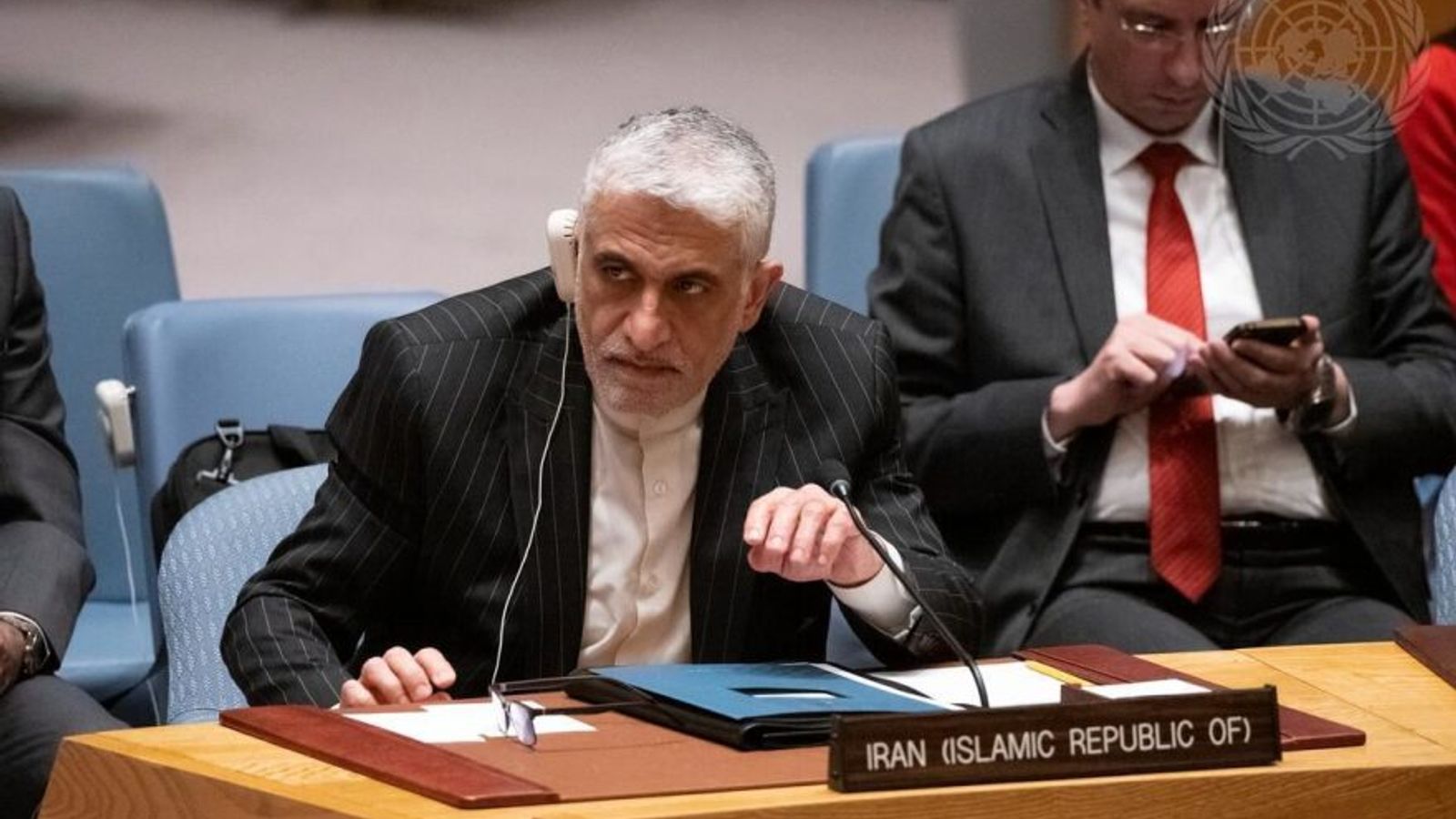
Iran’s United Nations envoy, Amir Saeid Iravani, stated that Tehran is prepared to resume formal negotiations with the United States only if Washington lifts its naval blockade of Iranian ports. The official’s remarks establish the removal of maritime restrictions as a mandatory precondition for advancing bilateral diplomatic talks. The statement was delivered during a recent diplomatic briefing and reflects Tehran’s current negotiating position.
A ceasefire currently remains in effect between the two nations, though U.S. maritime enforcement measures continue to be applied. Hurriyat reported that the U.S. president recently extended the ceasefire period. Despite the ongoing truce, both governments have exchanged public accusations regarding alleged violations, while maintaining military readiness amid what observers describe as fragile diplomatic channels.
Khaama Press reported that the next round of negotiations is expected to be held in Islamabad. Iranian officials have emphasized that Tehran has not initiated offensive military operations but remains prepared to respond if regional tensions escalate further. Analysts indicate that resolving the naval blockade and addressing related economic pressures will be essential for sustaining any long-term diplomatic engagement between Washington and Tehran. While diplomatic contacts remain open, officials stress that meaningful progress is entirely contingent on resolving the maritime dispute and establishing clear communication protocols. Both sides continue to monitor the maritime zone closely as diplomatic teams work to finalize logistical arrangements for the upcoming meeting.
Read the original reporting at Khaama Press →
Reliability assessment
Two independent outlets corroborate the core event: a direct, on-record statement by named UN envoy Amir Saeid Iravani setting conditions for US-Iran negotiations. Per verification guidelines, attributed statements by named public figures are inherently reliable as factual reports of what was said. Minor discrepancies regarding the ceasefire extension specifics and proposed talk location do not undermine the reliability of the core attributed claims.
The source language reads straight.
Independent web corroboration
A separate web search returned 8 matching reports. A selection:
“As soon as Washington ends the naval blockade, I think the next round of negotiations will be held in Islamabad,” Amir Saeid Iravani, Iran’s permanent representative to the UN, told reporters Tuesday at UN headquarters in New York, according ...
- Trump announces extension of Iran ceasefire until ‘discussion concluded’ | US-Israel war on Irantheguardian.com
“We do not accept negotiations ... a major hurdle in arranging a second round of talks. Iran has said the US must end the blockade in order for negotiations to resume....
- Iran talks on hold over Trump's blockadepolitico.com
And the blockade is only one of ... meeting would even take place. Iran’s representative to the United Nations, Amir Saied Iravani,...
Across the newsrooms
Where reports agree
- Iran's UN representative Amir Saeid Iravani publicly conditioned the resumption of US-Iran talks on the lifting of the US naval blockade.
- A ceasefire is currently in effect between the US and Iran.
- The US continues to enforce maritime blockade measures despite the ceasefire.
- Diplomatic channels remain open but are fragile and contingent on the blockade issue.
Where reports differ
- Hurriyat explicitly states the US President recently extended the ceasefire, while Khaama Press only references a 'current ceasefire' and mutual violation accusations without specifying a recent extension.
- Khaama Press identifies Islamabad as the expected location for the next talks; Hurriyat does not mention a location.
- Hurriyat cites analysts linking the condition to broader US sanctions, whereas Khaama Press focuses specifically on the naval blockade and ceasefire violations.
Filed by 2 outlets
Khaama Press
Originating
Reported straight
Reported straight
Hurriyat
Reported straight
Reported straight
Filed under
International — Iran, United States, Amir Saeid Iravani, Naval Blockade, Ceasefire
Reader supported
Keep Ehtebar running
Every published story uses paid tools to translate reporting, compare sources, extract claims, and produce a clearer read on Afghanistan. Reader support helps keep that work independent.
€5
helps cover daily verification runs
€15
supports a week of source comparison
€50
keeps independent analysis moving