
ECONOMY — February 17, 2026
Islamic Emirate Economy Minister Urges Sustained Aid at 2026 Development Framework Meeting
Islamic Emirate Economy Minister Din Mohammad Hanif urged sustained, non-politicized aid at a 2026 development framework meeting with UN and aid groups, citing sanctions and reduced assistance as threats to vulnerable Afghans. UN officials pledged continued alignment with national priorities amid global challenges.
The Ehtebar Desk — originates with ToloNews — corroborated by Ariana News — 2 min read
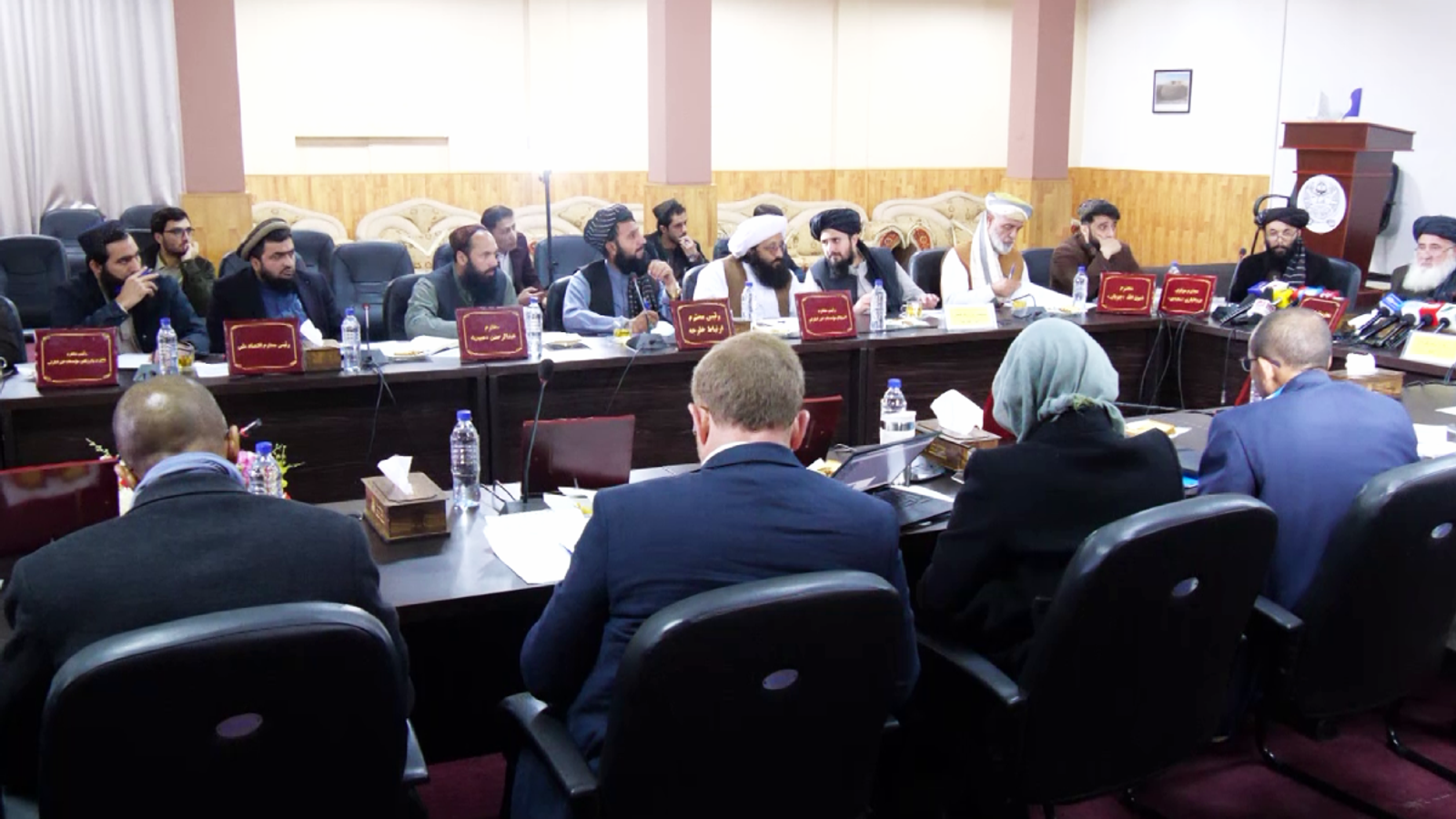
KABUL (Afghan Verified) — Din Mohammad Hanif, Afghanistan's economy minister for the Islamic Emirate of Afghanistan, told a coordination meeting on the 2026 development framework with the United Nations, European Union and aid agencies that ongoing sanctions, frozen foreign reserves and reduced humanitarian assistance have severely impacted vulnerable populations.
Hanif said Afghanistan has faced major challenges since 2021, but the Islamic Emirate has largely preserved economic stability through prudent economic policies, focus on national priorities and implementation of numerous support and development programs. "Despite this situation, the Islamic Emirate has relied on measured economic policymaking and focus on national priorities to design and implement multiple support and development programs and projects," Hanif stated.
He highlighted the UN's important role in humanitarian aid, noting that over $1 billion in global assistance reached Afghanistan last year, with $590 million spent on projects. However, he said aid decreased in 2025 compared to 2024 and urged the UN to continue development cooperation, emphasizing that assistance must be sustained and not politicized. "We ask all heads and representatives of UN agencies and aid administrations to align their programs and projects for 2026 with Afghanistan's development strategy and increase their cooperation," Hanif added.
UN representatives affirmed their commitment to ongoing collaboration and development projects. Andrika Ratwatte, deputy special representative of the UN secretary-general in Afghanistan, said: "Despite global financial challenges and crises from Gaza to Sudan and other conflicts, we will continue supporting and mobilizing resources for programs in Afghanistan for the benefit of its people."
Stephen Rodriguez, UNDP representative in Afghanistan, added: "Our 2026 programs are fully aligned with Afghanistan's national development strategy. They focus on improving the economic situation, reviving the private sector, creating livelihoods and jobs, developing infrastructure and basic services especially in rural areas, renewable energy, climate resilience, and support for youth and women."
The economy ministry emphasized that extensive facilities have been provided for aid organizations and that Afghanistan's economic growth is achievable with UN and international cooperation. The meeting also stressed balancing projects across provinces, reducing agencies' operational expenditures and aligning programs with Afghanistan's development strategy.
Read the original reporting at ToloNews →
Reliability assessment
Key facts corroborated by two independent outlets (ToloNews, Ariana News); direct on-record attribution to named Economy Minister Din Mohammad Hanif at a specific coordination meeting with UN, EU, and aid agencies, including concrete details on his statements about sanctions, aid, and economic stability.
Across the newsrooms
Filed by 2 outlets
ToloNews
Originating
Ariana News
Filed under
Economy — Islamic Emirate of Afghanistan, Din Mohammad Hanif, United Nations, Humanitarian Aid, Development Framework
Reader supported
Keep Ehtebar running
Every published story uses paid tools to translate reporting, compare sources, extract claims, and produce a clearer read on Afghanistan. Reader support helps keep that work independent.
€5
helps cover daily verification runs
€15
supports a week of source comparison
€50
keeps independent analysis moving
More in Economy
Economic Commission Approves 37 Domestic Standards and 12 Testing Methods
— Reliable

Taliban Governor Says Around 700 Mines Under Extraction in Panjshir
— Reliable
Daily Production at Baghlan's Ghori Cement Factory Increases to 700 Tons
— Reliable

Two Irrigation and Flood-Prevention Projects Completed in Zabul
— Reliable