INTERNATIONAL — May 5, 2026
Pentagon Confirms U.S.-Iran Ceasefire Remains in Effect Amid Regional Tensions
The Pentagon confirmed that the April 8 U.S.-Iran ceasefire remains active, though officials warn that recent clashes and regional tensions threaten the agreement. U.S. Secretary of War Pete Hegseth stated that President Trump will make final decisions on any potential violations.
The Ehtebar Desk — originates with Amu TV — 2 min read
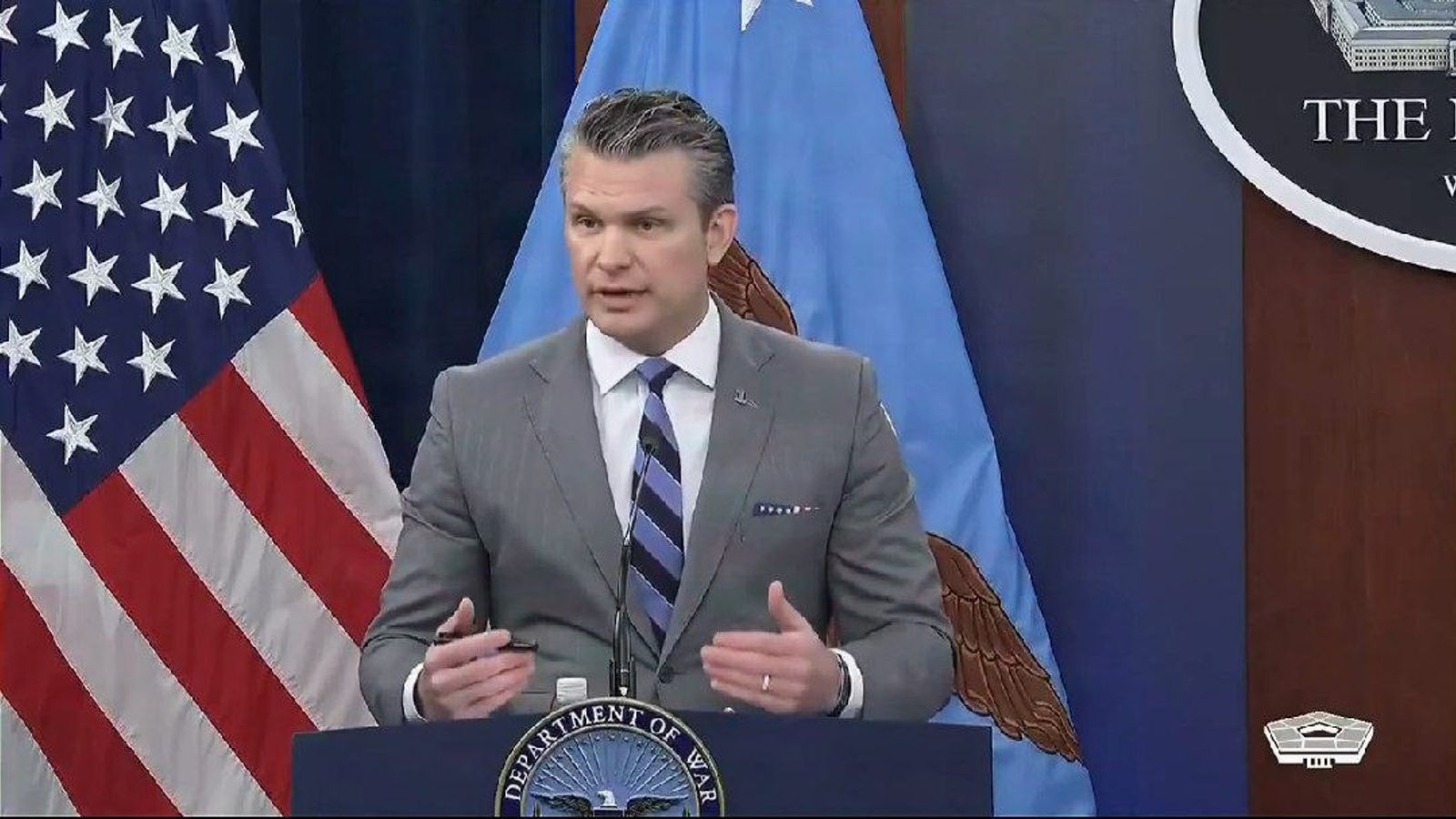
The United States Department of Defense has confirmed that the ceasefire agreement with Iran, established on April 8 through Pakistani mediation, remains in effect. However, officials have cautioned that persistent regional tensions and recent military encounters in the Persian Gulf continue to threaten the stability of the arrangement.
U.S. Secretary of War Pete Hegseth addressed the situation, urging Iranian authorities to exercise restraint. He emphasized that any determination regarding potential violations of the truce will ultimately be decided by President Donald Trump. The Pentagon’s statement comes amid reports of sporadic clashes, including an exchange of fire between U.S. and Iranian forces, as well as ongoing maneuvers related to control of the Strait of Hormuz.
While the formal cessation of hostilities has held since early April, defense officials note that the security environment in the region remains fragile. Military and diplomatic channels continue to monitor the situation closely as both sides navigate unresolved disputes and strategic posturing in the Gulf. The United States maintains that strict adherence to the ceasefire terms is essential for preventing a broader escalation, while acknowledging that the risk of renewed conflict persists until underlying geopolitical tensions are fully addressed. Defense officials emphasized that ongoing diplomatic efforts are focused on de-escalation, but warned that any miscalculation could quickly unravel the current understanding.
Read the original reporting at Amu TV →
Reliability assessment
Single source provides direct, on-record attribution to a named official (U.S. Secretary of War Pete Hegseth) regarding the status of a U.S.-Iran ceasefire. Per verification guidelines, the verifiable fact is the official statement itself, which is concrete and attributable. No cross-source discrepancies exist as only one outlet is provided.
The source language reads straight.
Independent web corroboration
A separate web search returned 8 matching reports. A selection:
“The ceasefire is not over. Ultimately, this is a separate and distinct project, and we expected there would be some churn at the beginning, which happened,” Hegseth told reporters.
Four weeks after the US and Iran first agreed to a ceasefire, tensions in the Strait of Hormuz are escalating... We’ve just heard from US Defense Secretary Pete Hegseth and Joint Chiefs of Staff Chairman Gen. Dan Caine at a Pentagon briefing on the war.
Asked whether the ceasefire with Iran still held, Hegseth said: "No, the ceasefire is not over." "We said we would defend and defend aggressively, and we absolutely have. Iran knows that, and ultimately, the president can make a decision ...
Defense Secretary Pete Hegseth and Joint Chiefs Chairman Dan Caine said Tuesday the ceasefire remains in effect despite some Iran strikes and the ongoing U.S. blockade.
Across the newsrooms
Filed by
Amu TV
Originating
Reported straight
Reported straight
Filed under
International — United States, Iran, Pentagon, Ceasefire, Pete Hegseth
Reader supported
Keep Ehtebar running
Every published story uses paid tools to translate reporting, compare sources, extract claims, and produce a clearer read on Afghanistan. Reader support helps keep that work independent.
€5
helps cover daily verification runs
€15
supports a week of source comparison
€50
keeps independent analysis moving