
POLITICS — March 21, 2026
Russia Only Country to Recognize Taliban in Afghan Solar Year 1404
Russia became the only country to recognize the Taliban in Afghan solar year 1404 amid expanding ties with India and Europe, tensions with Pakistan, U.S. hostage releases without normalization, and ongoing international calls for an inclusive government. UN efforts stayed limited, internal Taliban divisions persisted, and no domestic opposition emerged.
The Ehtebar Desk — originates with Amu TV — 2 min read
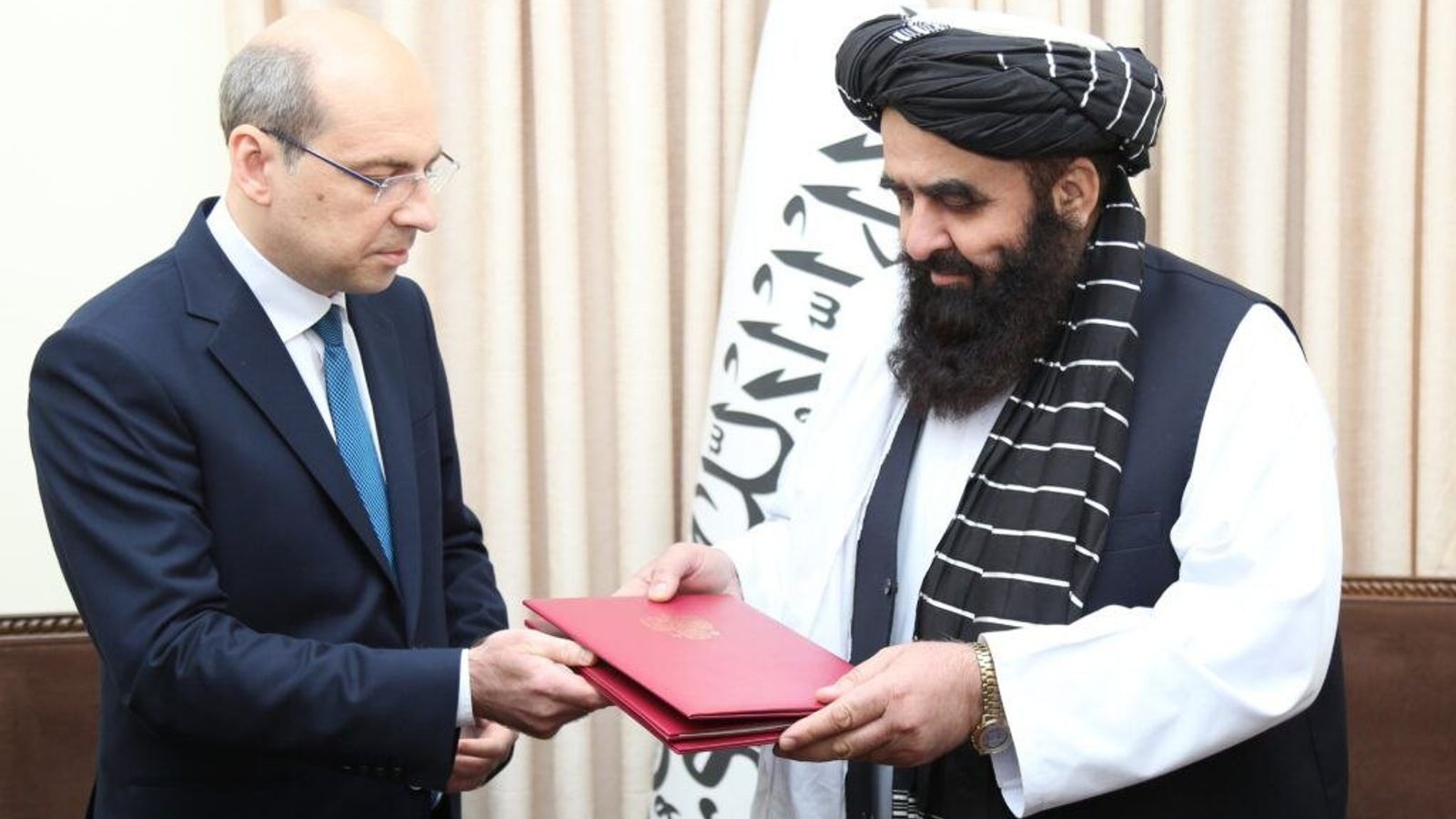
In solar year 1404 of the Hijri Shamsi calendar, Russia became the first and only country to recognize the Taliban, while other nations refrained from doing so.
The Taliban established close relations with India and expanded diplomatic presence in Europe, including Germany. Pakistan, previously a key ally, aligned against the Taliban in enmity. Efforts by Turkey, Saudi Arabia, Qatar, Iran and other regional countries to resolve the dispute failed.
Turkish President Recep Tayyip Erdogan said: "To establish peace and tranquility, and for dialogue and diplomacy to be reactivated, we will mobilize all our capabilities. In this regard, recently with our efforts, it was decided that conflicts between Pakistan and Afghanistan be halted during Eid. At least, we welcome with satisfaction that hands are lifted from triggers between the two brother countries, no bloodshed occurs, and the two brother nations can celebrate Eid in peace."
The United States held talks with the Taliban, mediated by Qatar, resulting in the release of some American hostages. However, Washington did not normalize relations as the Taliban had hoped. The Trump administration criticized countries engaging with the Taliban and listed Afghanistan among nations supporting unfair detentions.
United Nations efforts under the Doha process remained limited to counter-narcotics and the private sector, failing to break Afghanistan's political deadlock.
Reports emerged of internal differences within Taliban leadership, particularly between Hibatullah Akhundzada's circle and the Haqqani network. The Taliban leader emphasized unconditional obedience, with no moves toward internal political legitimacy. No domestic opposition movement formed inside Afghanistan, and external opposition forces remained scattered without influence on internal policymaking.
The international community, including major allies Russia and China, continued to demand an inclusive government, but the Taliban insisted on absolute sovereignty.
Read the original reporting at Amu TV →
Reliability assessment
Single source (Amu TV) provides direct, on-record quote from named official (Erdogan) and references concrete, checkable events (Russian recognition, US actions, named Taliban figures) with specific details.
The source language mixes facts with framing or advocacy wording. Amu TV: "year full of challenges and transformations" (emotional framing of the year's events); "Pakistan, the Taliban's key ally, aligned against them in enmity" (charged portrayal of sudden adversarial shift); "no political opposition movement exists inside Afghanistan" (dismissive absolute statement on opposition).
Independent web corroboration
An independent web search turned up no separate corroborating reports. Treat the account as single-sourced until more outlets pick it up.
Across the newsrooms
Filed by
Amu TV
Originating
Framed
Framed
Filed under
Politics — Taliban, Russia, Pakistan, Erdogan, inclusive government
Reader supported
Keep Ehtebar running
Every published story uses paid tools to translate reporting, compare sources, extract claims, and produce a clearer read on Afghanistan. Reader support helps keep that work independent.
€5
helps cover daily verification runs
€15
supports a week of source comparison
€50
keeps independent analysis moving
More in Politics
Islamic Emirate Leader Orders 21 New Appointments Across Government Posts
— Reliable
Discussion Held on Presenting Achievements of Government Program in Media
— Reliable
Supreme Court of the Islamic Emirate of Afghanistan Outlines Judicial Reforms and Achievements
— Unverified
Ministry of Information and Culture of the Islamic Emirate of Afghanistan Announces Annual Activities and Achievements
— Reliable