
SOCIETY — February 15, 2026
Small Ways to Survive: Reflections on School Days in Afghanistan
A personal essay reflects on nostalgic school memories of girls in black attire and white chadors, singing in courtyards, classroom discussions on strict dress codes, and daily life under restrictive norms.
The Ehtebar Desk — originates with Hasht-e Subh — 4 min read
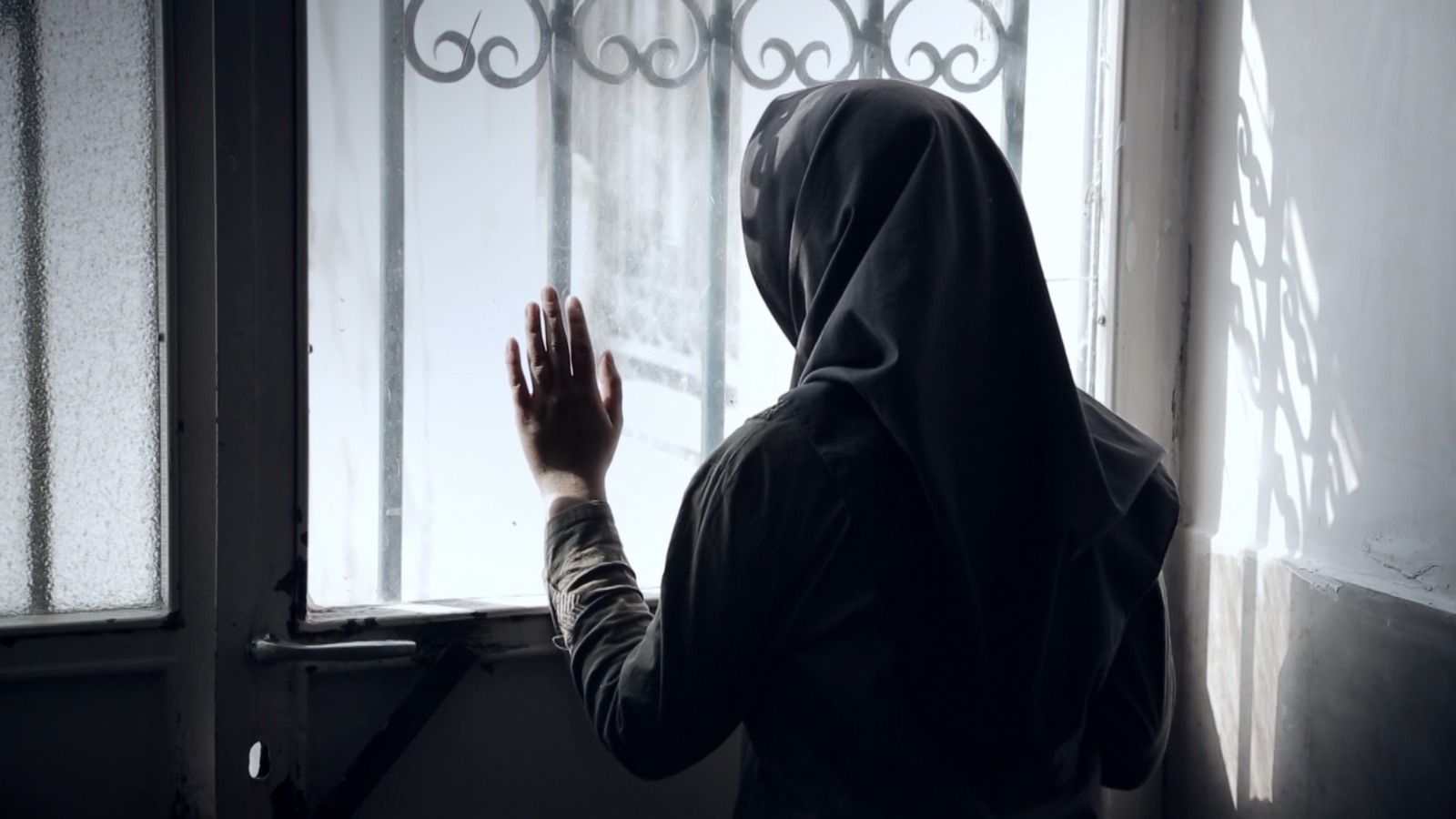
In the corner of our courtyard stood a tree, as large as the one that once shaded our school courtyard. My father used to plant various flowers in the corners of the courtyard at the start of spring and place fruit trees in the middle. Our courtyard resembled a small garden; grapevines made its four sides green and vibrant in summer.
Now sitting in the same corner, it is winter and fierce winds are blowing. The largest tree in the courtyard, standing in the corner, shakes violently. The wind tousles my hair in every direction. This tree suddenly reminds me of that school courtyard. School days were unforgettable. On stormy days, what pleasure it was to hold hands, we girls in black clothes and white chadors—which the wind pulled in every direction—forming large circles and reciting poetry. Sometimes we would murmur dobaytis we had learned from our mothers. We were girls of medium height, and when we sang hand in hand, in the corners of the school courtyard, Baba-ye Maktab (the school guard) would set down his chair and sit. He would stare so intently at that large tree that one could tell he enjoyed our singing and it reminded him of something distant.
We would get so absorbed in singing that suddenly the school bell would ring; the first class period would begin, and we had to hurriedly go to our classrooms. The seats in the school never changed places. Each of us would run and sit at our own seat, open our books, and just then the teacher would enter the class.
One day our math teacher said: 'You must come to terms with the fact that math is a major element of life. When I went to school, my books and notebooks were neatly arranged on the desk before the teacher arrived.' He said this and looked at us with a furrowed face, as if aware of our singing in the courtyard. Then he began writing questions with white chalk on the blackboard. Before he finished writing, the bell for the second period rang; we had biology. The teacher's frown returned, and he said: 'These 40-minute periods! Don't they know math needs time?'
We were happy because we never understood math as the teacher wanted. In the second period, although we had biology, the teacher did not come. Someone brought news that the teacher had gone to a wedding today, and we should quietly study on our own.
We girls voted: study now or leave it for home and sit quietly telling stories for now. Most votes were for storytelling.
Our class was not very large; it fit three rows of desks and chairs. I sat in the first row, but I wanted to be with the girls in the third row; they spent most of their time talking about books. I put my pen and notebook in my bag and went to those three girls. One was tall and wrapped her white chador so tightly around her head that no hair would show. She also wore gloves to keep her hands safe from strangers' eyes. Later they said her father was a mullah. I don't know why mullahs have their daughters cover more than others.
Another had medium height and white skin, always with a book; that day she was reading 'The Forty Rules of Love.' Her clothes were long and worn but always carefully ironed. The third had a fragmented mind; sometimes she spoke like a mullah, sometimes literarily, sometimes politically, and sometimes sat silent and helpless. Her clothes were simple, and she wore her chador so that half her hair showed. These three always talked together, which made me listen to their conversations. I sat in front of them, greeted, and said if I could join them for a moment. All three smiled and said: 'Why not?'
That day we looked at each other's faces and asked: why are we black and white? Truthfully, none of us had a clear answer. Aren't we going to school that we must wear black? We're not corpses; it requires motivation. The girl who always had a book said: 'They raise us so that when we graduate from here, all we have is the black of thick physics and math books, hoping for future days…'
I disagreed: 'No, it's not like that. This is just a habit; they've said we must be black and white. It may take a long time for all this black-and-whiteness of the country to change to another color.' From the other side of the class a voice rose: 'Hey, what are you saying? We haven't even taken a step to change the world, and these conscienceless ones make us wear black.'
The discussion heated up. Everyone talked about why they make us wear black and then send us to school. They spoke of their mothers and nodded in agreement. I stood up and left the class. The mosque was next to the school, and the mosque and school shared a wall.
Read the original reporting at Hasht-e Subh →
Reliability assessment
Single anecdotal personal narrative from one outlet with implied criticism of restrictions; no independent corroboration or checkable facts, presented as reflective essay with biased framing against current norms.
Across the newsrooms
Filed by
Hasht-e Subh
Originating
Filed under
Society — girls education, school life, dress codes, personal memoir
Reader supported
Keep Ehtebar running
Every published story uses paid tools to translate reporting, compare sources, extract claims, and produce a clearer read on Afghanistan. Reader support helps keep that work independent.
€5
helps cover daily verification runs
€15
supports a week of source comparison
€50
keeps independent analysis moving
More in Society
Health Officials and Experts Discuss Rise in Black Jaundice Cases in Afghanistan
— Reliable

Discussion on Agricultural Products and Health Services in Samangan Province
— Reliable
WHO Report Cites Taliban Restrictions and Funding Shortfalls as Threats to Health Services in Afghanistan
— Reliable
Afghan officials report returns of families from Pakistan and Iran alongside releases from Pakistani prisons
— Reliable