
CULTURE — April 23, 2026
Taliban Censorship and Economic Hardship Strain Afghanistan’s Book Market on World Book Day
On World Book Day, Afghanistan’s literary sector faces strict Taliban censorship and economic hardship, with officials reporting dozens of denied publication permits and restricted imports from Iran. While overall readership has reportedly declined, Afghan girls continue to seek out literature despite the constraints.
The Ehtebar Desk — originates with Amu TV — corroborated by Hasht-e Subh — 2 min read
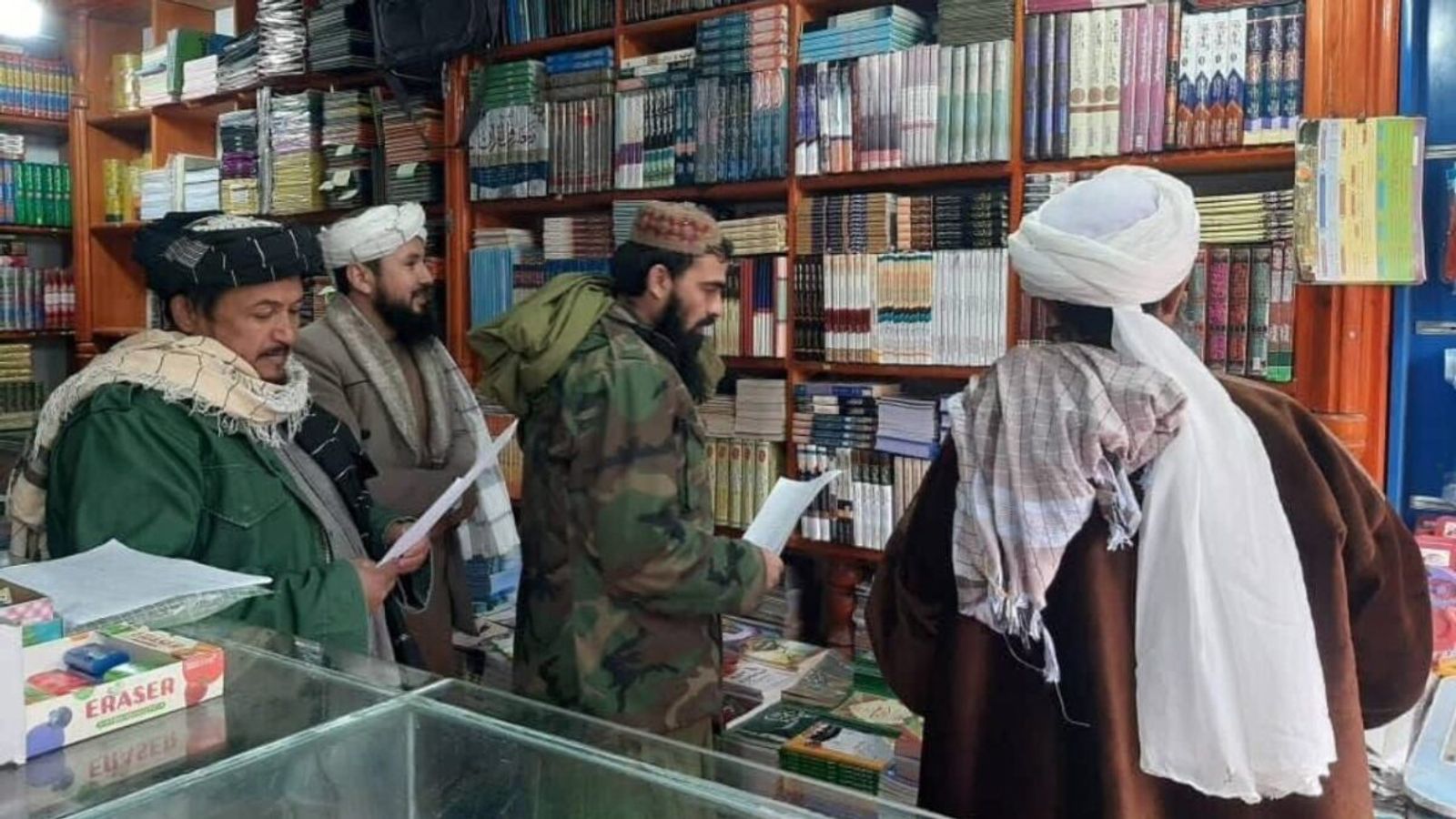
As the world observes World Book Day on April 23, Afghanistan’s publishing sector continues to face significant challenges stemming from ideological restrictions and economic hardship. The Taliban’s Ministry of Information and Culture operates a dedicated evaluation commission that reviews manuscripts before granting publication permits. Over the past year, the ministry assessed 370 titles and denied approval for dozens, citing ideological incompatibility.
Officials state that the commission enforces strict guidelines, prohibiting works authored by women and texts that address democracy or non-Islamic values. In addition to domestic restrictions, authorities closely monitor and limit book imports from Iran, further narrowing the range of available literature.
The publishing constraints coincide with severe financial strain across the country. In Herat, economic pressures have forced many book owners to sell personal libraries at significantly reduced prices, contributing to widespread market stagnation. Booksellers report that declining purchasing power has drastically reduced commercial sales.
Reports on reading habits present differing assessments. Amu TV documents sustained interest among Afghan girls, who continue to seek out literature through borrowing and informal purchases. Conversely, Hasht-e Subh reports that overall reading rates have declined across the country since the Taliban took control.
The combination of state censorship, import limitations, and widespread poverty has reshaped Afghanistan’s literary landscape, leaving publishers, authors, and readers navigating a heavily constrained market.
Read the original reporting at Amu TV →
Reliability assessment
Two independent outlets corroborate the core event of Taliban-imposed book censorship, publication restrictions, and a struggling book market in Afghanistan. Amu TV provides concrete, attributable details from the Taliban's Ministry of Information and Culture regarding a specific evaluation commission and publication permit denials, alongside on-the-ground reporting from Herat. Minor discrepancies regarding overall reading trends do not undermine the corroborated core facts.
The source language reads straight.
Across the newsrooms
Where reports agree
- Both sources confirm the Taliban actively censor books and restrict publications that contradict their ideology.
- Both outlets report that economic hardship is severely impacting Afghanistan's book market and forcing owners to sell collections.
- Both sources note strict monitoring and restrictions on book imports from Iran.
Where reports differ
- Amu TV reports sustained or increased reading interest among girls despite restrictions, while Hasht-e Subh states that overall reading has declined since the Taliban takeover.
- Amu TV cites specific official figures from the Taliban's Ministry of Information and Culture regarding reviewed titles and permits, whereas Hasht-e Subh focuses on broader ideological bans without citing ministry data.
Filed by 2 outlets
Amu TV
Originating
Reported straight
Reported straight
Hasht-e Subh
Reported straight
Reported straight
Filed under
Culture — World Book Day, Taliban, Censorship, Herat, Book Market
Reader supported
Keep Ehtebar running
Every published story uses paid tools to translate reporting, compare sources, extract claims, and produce a clearer read on Afghanistan. Reader support helps keep that work independent.
€5
helps cover daily verification runs
€15
supports a week of source comparison
€50
keeps independent analysis moving
More in Culture

Premier Pahlawani League Final to Crown First Champion Tonight in Kabul
— Reliable
Three-Day Tourism Capacity-Building Seminar Concludes in Herat
— Reliable
Deputy Minister of Culture and Art Says Efforts to Protect Historical Sites Will Continue
— Reliable
Traditional Gul-e-Zard Poetry Gathering Held in Kapisa
— Reliable