
POLITICS — February 12, 2026
Taliban deputy Mullah Baradar says bringing Afghans together in 'unified Islamic and national position'
Taliban deputy Mullah Abdul Ghani Baradar said his administration is uniting Afghans in a 'unified Islamic and national position' while inaugurating the Kabul-Bagram road, amid international calls for an inclusive government.
The Ehtebar Desk — originates with Afghanistan International — 2 min read
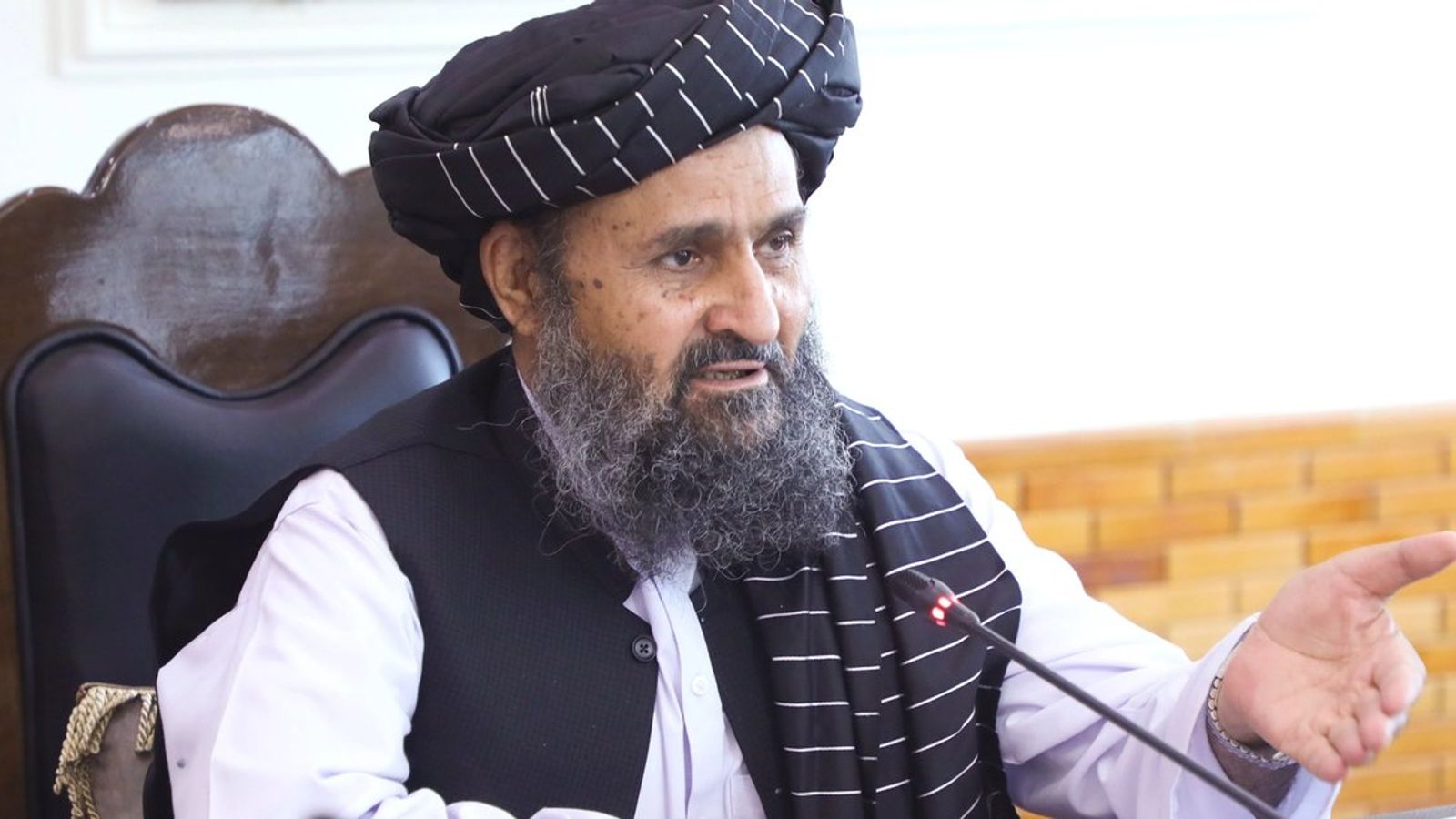
Taliban administration deputy Mullah Abdul Ghani Baradar stated that Afghanistan had previously been divided by political parties, ethnic, positional and linguistic groups, leading to a loss of the large majority in strengthening national commonalities. He said the Taliban administration is bringing Afghans together in a "unified Islamic and national position."
Speaking on Thursday at the inauguration of the Kabul-Bagram road construction, Baradar described these political, ethnic and linguistic divisions as "meaningless divisions" and a "problem," adding that the Taliban administration is working to eliminate them. He noted that, to create this unified position, the administration has standardized the curriculum from school and madrasa up to sixth grade in a fundamental step.
Baradar urged Afghans to abandon "blind imitation" of others, avoid being influenced by them and not misinterpret realities. He emphasized: "We haven't prevented anyone and the Islamic Emirate's capacity isn't so small as to take every individual and minor issue seriously. Afghanistan is the home of Afghans and every individual can live here peacefully and return to the country."
Addressing regional and global countries, Baradar said positive interaction with Afghanistan requires time. He highlighted mutual needs among countries in geography, airspace, labor, raw materials, exports and imports, which would be best met through official relations frameworks beneficial to all.
International organizations accuse the Taliban of creating a "relatively mono-ethnic and mono-gender government." The United Nations, European Union and several countries have called on the Taliban to form an inclusive government comprising various ethnicities, groups and social strata while respecting human rights. UN Special Rapporteur for Afghanistan Richard Bennett stated in a late 2025 report that the Taliban, ignoring complaints, is exacerbating tensions with ethnic, religious and linguistic minorities. UNAMA has confirmed the Taliban cabinet is almost entirely from one ethnic group. The Taliban is also accused of imposing "gender apartheid" by removing women from the public sphere.
The international community conditions engagement on human rights compliance, international laws, inclusive governance and counter-terrorism. Baradar inaugurated the 6.2 km long, 50 meters wide Kabul-Bagram road, costing 455 million Afghanis and built by the Taliban administration. He described it as a key route connecting Kabul to Parwan province and other northern provinces.
Read the original reporting at Afghanistan International →
Reliability assessment
Single source with direct, on-record attribution to named official Mullah Baradar at a specific event (Kabul-Bagram road inauguration on 23 Dalu), including concrete details like road length, width, cost, and verbatim quotes via press release. International criticisms reference named officials (Richard Bennett) and organizations (UNAMA) with checkable reports.
Across the newsrooms
Filed by
Afghanistan International
Originating
Filed under
Politics — Mullah Abdul Ghani Baradar, Taliban, Islamic Emirate of Afghanistan, Kabul-Bagram road, national unity
Reader supported
Keep Ehtebar running
Every published story uses paid tools to translate reporting, compare sources, extract claims, and produce a clearer read on Afghanistan. Reader support helps keep that work independent.
€5
helps cover daily verification runs
€15
supports a week of source comparison
€50
keeps independent analysis moving
More in Politics
Islamic Emirate Leader Orders 21 New Appointments Across Government Posts
— Reliable
Discussion Held on Presenting Achievements of Government Program in Media
— Reliable
Supreme Court of the Islamic Emirate of Afghanistan Outlines Judicial Reforms and Achievements
— Unverified
Ministry of Information and Culture of the Islamic Emirate of Afghanistan Announces Annual Activities and Achievements
— Reliable