
ECONOMY — February 17, 2026
Taliban Economy Minister Acknowledges Negative Impact of Reduced Foreign Aid on Meeting People's Needs
Taliban Economy Minister Din Mohammad Hanif admitted that cuts in foreign aid have hindered efforts to meet Afghans' needs amid sanctions and other pressures, while claiming successes in economic management. He spoke at a meeting with UN and EU representatives, citing shortfalls in pledged humanitarian funding.
The Ehtebar Desk — originates with Afghanistan International — 2 min read
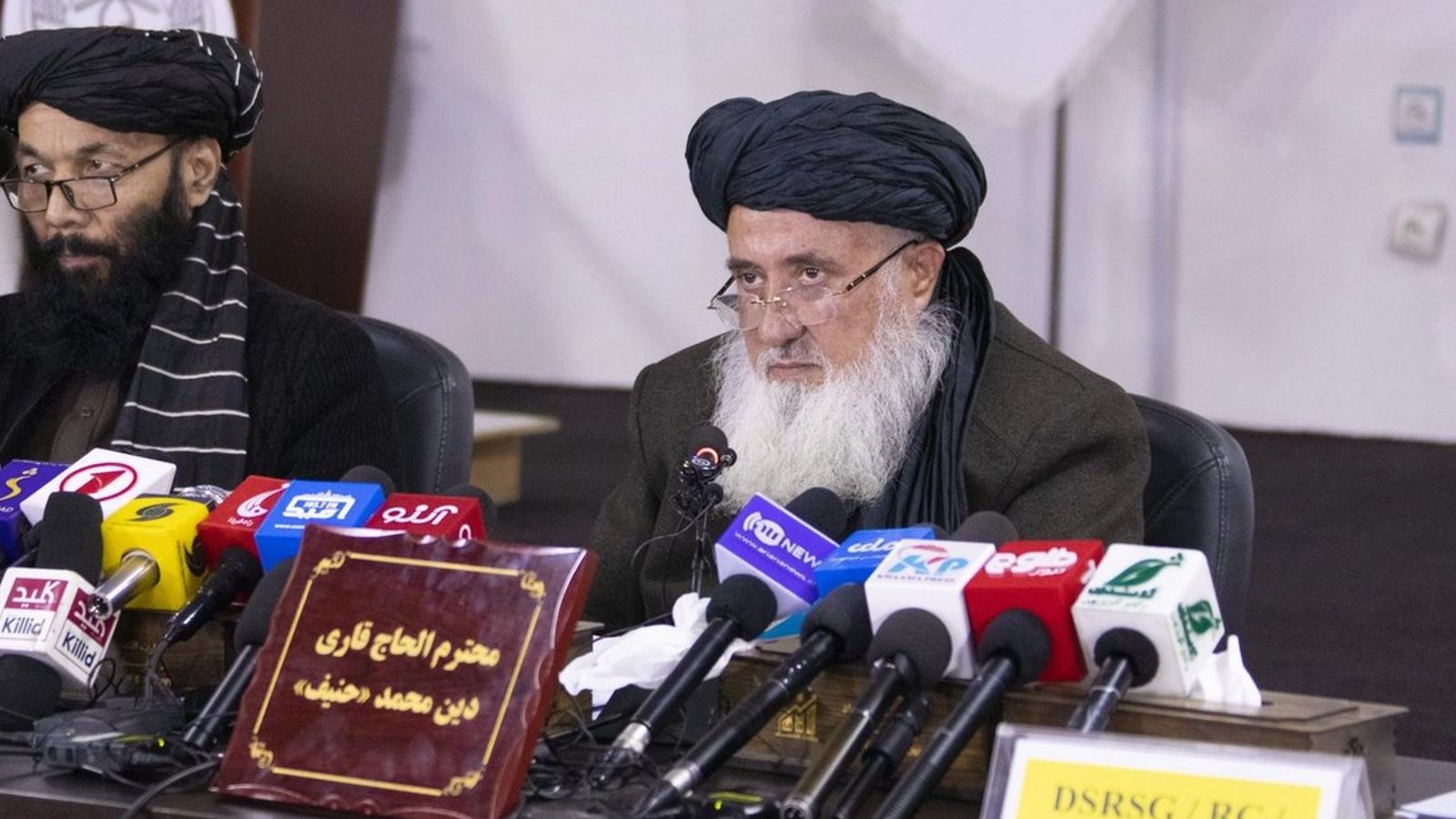
Taliban Economy Minister Din Mohammad Hanif stated that the unprecedented reduction in humanitarian aid from the United States and other countries has negatively affected the group's ability to address the needs of the Afghan people.
Speaking to foreign aid organizations in Kabul, Hanif said the aid cuts have impacted people's lives and that international sanctions have pressured the Taliban administration. He made these remarks on Tuesday during a meeting titled "2026 Development Framework Coordination," attended by heads of UN offices in Afghanistan, European Union representatives, and officials from various international organizations. Hanif thanked the attendees and referenced UN statistics, noting that of $2.4 billion pledged by countries, only $870 million has been provided to aid institutions in Afghanistan so far.
Hanif highlighted multiple pressures on Afghanistan, including natural disasters, global sanctions, sharp declines in aid, and the expulsion of millions of migrants. Previously, the deputy economy minister had claimed the Taliban does not depend on foreign aid and meets needs through domestic revenues.
The United States was the largest donor to Afghanistan under the Biden administration. However, the Trump administration, which designates the Taliban as a terrorist group, cut aid over concerns of misuse. Several other countries have also reduced or halted assistance in response to alleged human rights violations, support for terrorism, and the Taliban's failure to adhere to international commitments and conventions.
Despite these challenges, Hanif emphasized the Taliban's success in managing the economy, stabilizing the national currency, and implementing infrastructure projects. He said over $1 billion was allocated last year, with $590 million spent on projects and the remainder on salaries, benefits, administrative costs, and equipment.
Hanif added: "We believe sustainable economic stability can only be achieved through self-reliance, a growth-oriented economy, and constructive cooperation with the international community."
Read the original reporting at Afghanistan International →
Reliability assessment
Single source with direct, on-record attribution to named official (Din Mohammad Hanif) at a specific, titled meeting with concrete, checkable details including exact funding figures, dates, and attendees.
Across the newsrooms
Filed by
Afghanistan International
Originating
Filed under
Economy — Taliban, Din Mohammad Hanif, Afghanistan aid, UN, EU
Reader supported
Keep Ehtebar running
Every published story uses paid tools to translate reporting, compare sources, extract claims, and produce a clearer read on Afghanistan. Reader support helps keep that work independent.
€5
helps cover daily verification runs
€15
supports a week of source comparison
€50
keeps independent analysis moving
More in Economy
Economic Commission Approves 37 Domestic Standards and 12 Testing Methods
— Reliable

Taliban Governor Says Around 700 Mines Under Extraction in Panjshir
— Reliable
Daily Production at Baghlan's Ghori Cement Factory Increases to 700 Tons
— Reliable

Two Irrigation and Flood-Prevention Projects Completed in Zabul
— Reliable