
POLITICS — February 25, 2026
The Big Lie: Promises of Freedom in Afghan History
Hasht-e Subh's article 'The Big Lie' posits that assurances of freedom in Afghan history, from Abdul Rahman Khan to the 2021 republic collapse, concealed external control rather than enabling true sovereignty.
The Ehtebar Desk — originates with Hasht-e Subh — 2 min read
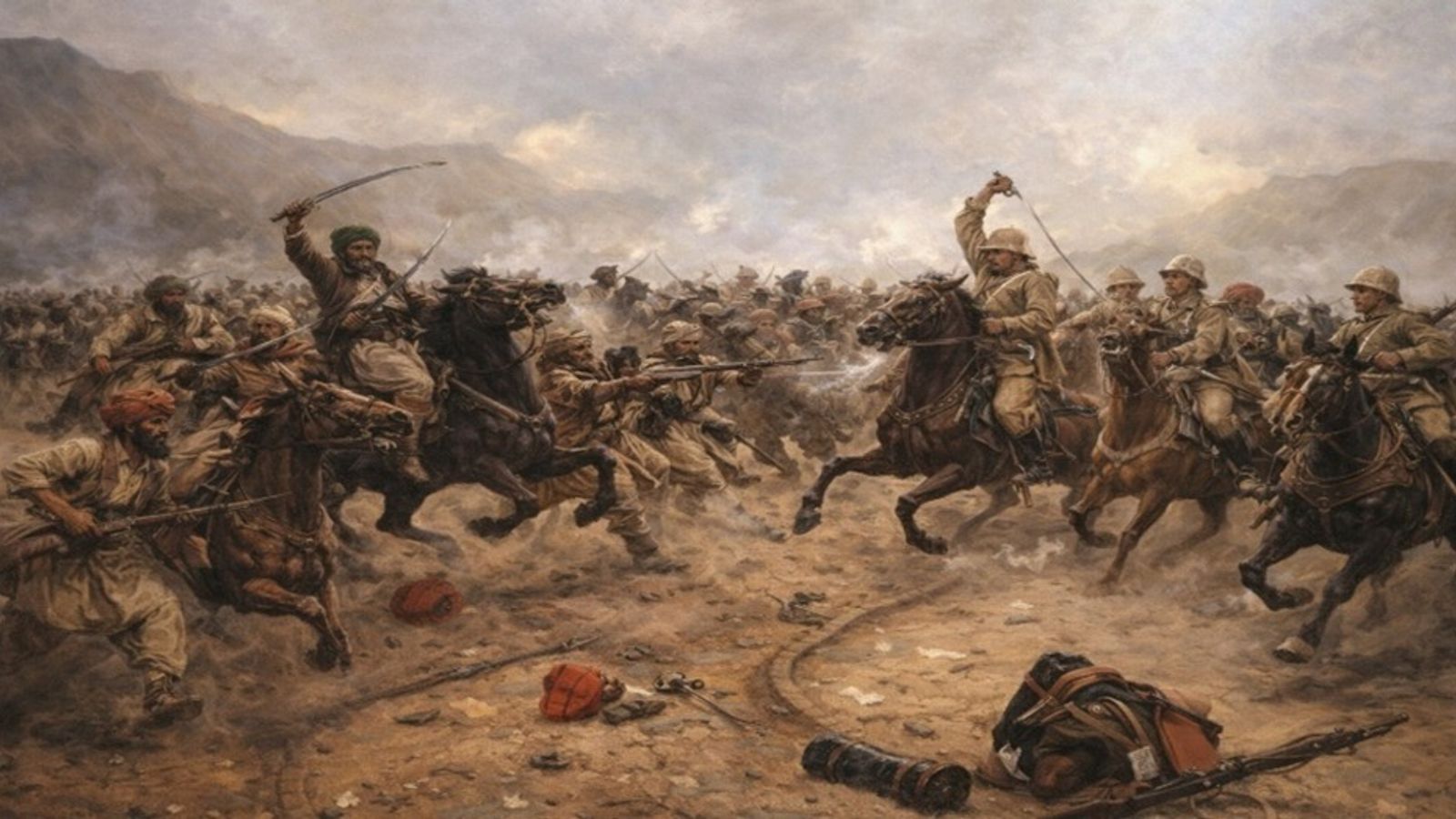
An article published by Hasht-e Subh titled "The Big Lie" argues that promises of freedom and popular sovereignty in modern Afghan history have masked a deeper logic of external control and societal containment.
The piece traces this pattern from the era of Abdul Rahman Khan, whose centralized government emerged from colonial balances rather than collective will, involving suppression of local structures and social cohesion. It cites the Battle of Maiwand in 1880 during the Second Anglo-Afghan War, where Afghan forces under Ayub Khan defeated British troops, demonstrating popular will's potential. However, the article contends this military victory did not yield lasting political freedom, as it was channeled into structures reinforcing control, with Abdul Rahman Khan stabilized as a controllable figure.
The analysis extends to the 1990s Taliban takeover and the post-2001 period following their initial fall. It describes the Bonn Conference designating Hamid Karzai as leader through externally supported political agreements, leading to a republic marred by corruption, eroded legitimacy, and flawed elections in 2009, 2014, and 2019. The Doha Agreement, signed without effective public or prior government involvement, facilitated the Taliban's return and Kabul's fall in August 2021, perpetuating dependency.
The article asserts that external powers continue indirect engagement with the Taliban without full recognition or isolation, maintaining a dual status. It concludes that true legitimacy and freedom require internal awakening, organization, and responsibility by Afghans themselves, rather than reliance on foreign powers or regime changes.
Read the original reporting at Hasht-e Subh →
Reliability assessment
Single-source opinion/analysis piece offering interpretive historical narrative without independent corroboration, direct attributions, or new checkable facts; claims are subjective arguments rather than verified events.
The source language mixes facts with framing or advocacy wording. Phrases like 'The Big Lie' (دروغ بزرگ), 'hidden logic of power' (منطق پنهان قدرت), and 'faces changed, but the logic of power did not change' (چهرهها تغییر کردند، اما منطق قدرت تغییر نکرد) employ accusatory framing and imply deliberate deception across historical actors, blending analysis with emotional judgment.
Across the newsrooms
Filed by
Hasht-e Subh
Originating
Filed under
Politics — Battle of Maiwand, Abdul Rahman Khan, Taliban, Hamid Karzai, Doha Agreement
Reader supported
Keep Ehtebar running
Every published story uses paid tools to translate reporting, compare sources, extract claims, and produce a clearer read on Afghanistan. Reader support helps keep that work independent.
€5
helps cover daily verification runs
€15
supports a week of source comparison
€50
keeps independent analysis moving
More in Politics

Islamic Emirate Leader Orders 21 New Appointments Across Government Posts
— Reliable
Discussion Held on Presenting Achievements of Government Program in Media
— Reliable
Supreme Court of the Islamic Emirate of Afghanistan Outlines Judicial Reforms and Achievements
— Unverified
Ministry of Information and Culture of the Islamic Emirate of Afghanistan Announces Annual Activities and Achievements
— Reliable