
ECONOMY — February 13, 2026
Third Doha Process Private Sector Working Group Meeting Held in Kabul
The third Doha Process private sector working group meeting was held in Kabul, hosted by UNAMA, with Islamic Emirate officials sharing economic progress and participants emphasizing continued cooperation on job creation and entrepreneurship.
The Ehtebar Desk — originates with ToloNews — 2 min read
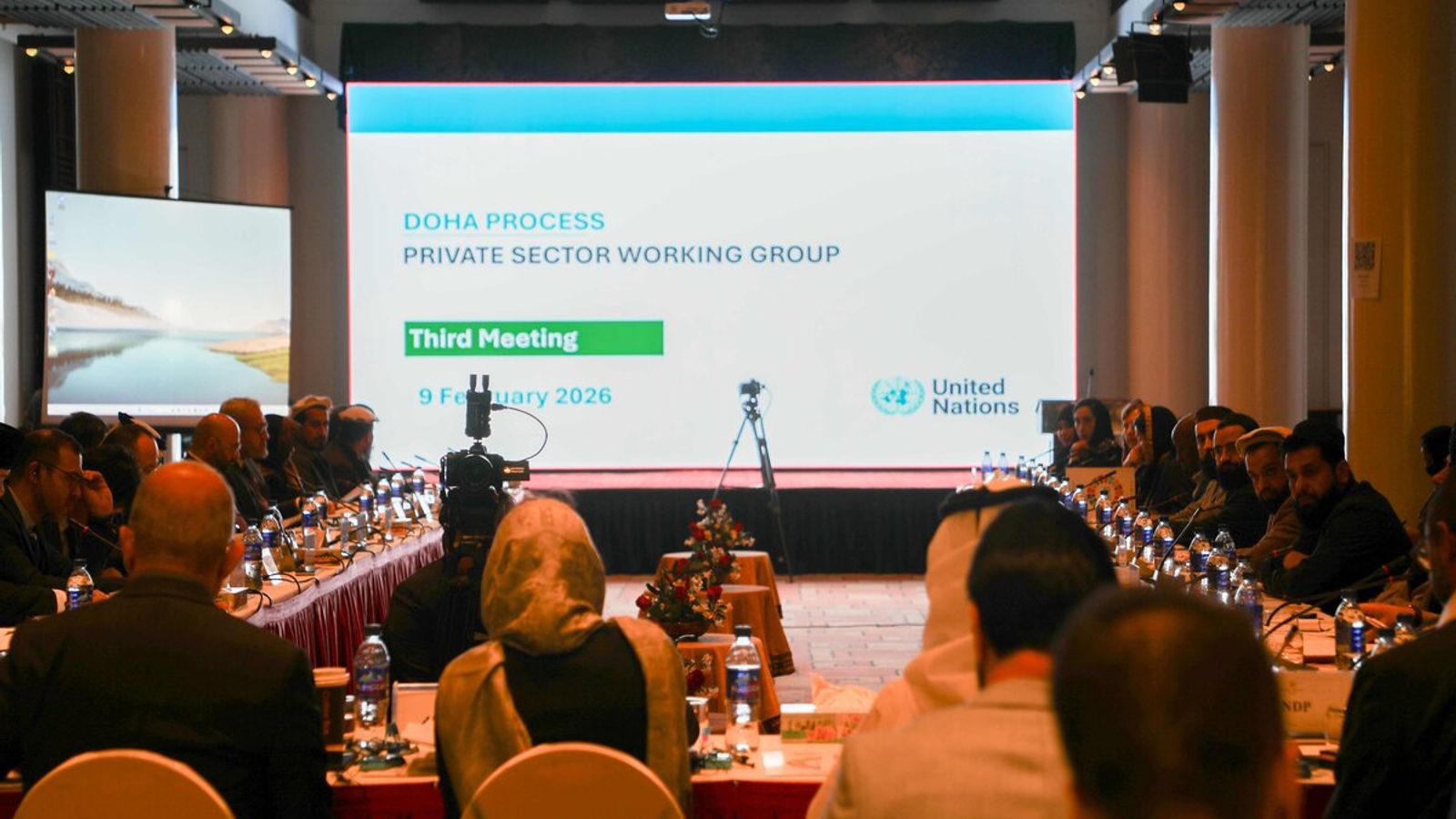
The Ministry of Foreign Affairs of the Islamic Emirate of Afghanistan announced that the third meeting of the Doha Process Working Groups on the private sector took place in Kabul, hosted by the United Nations Assistance Mission in Afghanistan (UNAMA) both in person and online at the Kabul Grand Hotel.
Representatives from key ministries of the Islamic Emirate, the central bank, United Nations-affiliated agencies, international and regional organizations, ambassadors, diplomats and experts attended. The meeting consisted of two sessions: the first on economic growth and inclusion, and the second on coordination and transparency.
During the gathering, Islamic Emirate representatives shared achievements and progress made since its establishment. Participants expressed appreciation for the Islamic Emirate's efforts and accomplishments, acknowledged cooperation in supporting the private sector, and stressed the need for continued collaboration.
UNAMA stated that the private sector working group focused on supporting job creation, strengthening entrepreneurship—particularly increasing women's participation—improving market integration, enhancing access to finance, and bolstering the banking system and private financial infrastructure. Both working groups identified priorities for expanding engagement and cooperation, exchanged views on sustainable support for Afghanistan's people, and highlighted the private sector's role in livelihoods and counter-narcotics efforts, which contribute to economic and social stability.
Political analyst Jannat Fahim Chakari welcomed the continuation of the meetings under UNAMA's supervision, noting their aim to promote economic growth and expand trade relations as part of the broader Doha Process. Sayed Haroon Hashemi suggested addressing political issues alongside economic topics in future meetings, while economic analyst Mir Shakir Yaqubi described the sessions as an important platform for interaction between the government, private sector and international institutions.
The Doha Process has emerged as a key framework for dialogue between Afghanistan and the international community, with the private sector consistently central to discussions on job creation, investment and livelihoods. In a prior meeting, Islamic Emirate representatives raised concerns over smuggling of industrial narcotics from neighboring countries and called for preventive measures.
Read the original reporting at ToloNews →
Reliability assessment
Single source with direct, on-record attributions from Ministry of Foreign Affairs, UNAMA statements, and named analysts (Jannat Fahim Chakari, Sayed Haroon Hashemi, Mir Shakir Yaqubi); concrete details including location (Kabul Grand Hotel), host, sessions, and topics; not high-stakes or volatile.
Across the newsrooms
Filed by
ToloNews
Originating
Filed under
Economy — Doha Process, UNAMA, Islamic Emirate of Afghanistan, Kabul, private sector
Reader supported
Keep Ehtebar running
Every published story uses paid tools to translate reporting, compare sources, extract claims, and produce a clearer read on Afghanistan. Reader support helps keep that work independent.
€5
helps cover daily verification runs
€15
supports a week of source comparison
€50
keeps independent analysis moving
More in Economy
Economic Commission Approves 37 Domestic Standards and 12 Testing Methods
— Reliable

Taliban Governor Says Around 700 Mines Under Extraction in Panjshir
— Reliable
Daily Production at Baghlan's Ghori Cement Factory Increases to 700 Tons
— Reliable

Two Irrigation and Flood-Prevention Projects Completed in Zabul
— Reliable