
SOCIETY — June 22, 2026
UN Agency Estimates 16 Million People in Afghanistan Need Water and Sanitation Assistance in 2026
The 2025 drought affected at least 3.4 million people in northern and western provinces, damaging agriculture, livestock, and livelihoods. The agency called for more urgent food and humanitarian support as water scarcity alters daily life and exposes children to greater health risks.
The Ehtebar Desk — originates with Amu TV — corroborated by Khaama Press — 2 min read
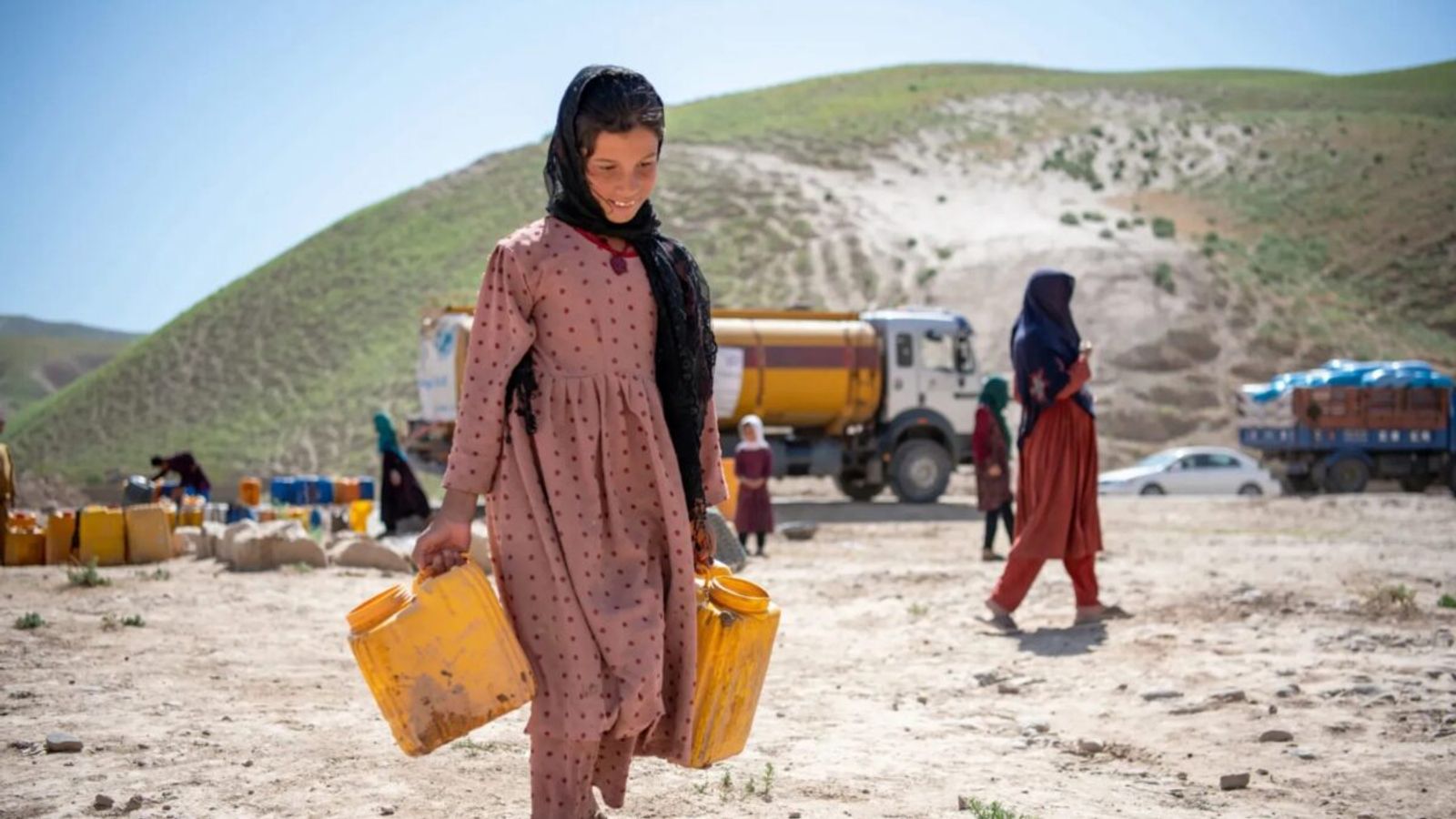
The United Nations Office for the Coordination of Humanitarian Affairs estimates that 16 million people in Afghanistan will need assistance in the water and sanitation sector in 2026. This estimate highlights the scale of the challenge posed by water scarcity in the country.
According to the agency, water scarcity is altering daily life for families and communities. Children face greater health risks as a result of these conditions, and communities are under increasing strain as they attempt to manage limited resources.
The agency also noted the impact of the 2025 drought. At least 3.4 million people in northern and western provinces were affected by this event. Agriculture suffered damage, as did livestock and the livelihoods of many residents in those areas.
Calls have been made for more urgent food and humanitarian support to address the situation. The broader context includes recurring droughts, inadequate infrastructure, poverty, and reduced international aid, all of which contribute to the humanitarian crisis affecting water access.
These factors together are exacerbating the difficulties faced by the population in securing clean water and sanitation services.
Read the original reporting at Amu TV →
Reliability assessment
Two independent sources corroborate the core OCHA statement on the 16 million figure and water scarcity impacts with direct attribution to the organization; no disputes on the event or quote exist
The source language mixes facts with framing or advocacy wording. Khaama Press: "exposing children to greater health risks", "worsening conditions", "critical humanitarian challenge", "intensifying pressure on already fragile communities" — these phrases add emotional framing and urgency beyond neutral reporting of statistics and warnings.
Independent web corroboration
A separate web search returned 8 matching reports. A selection:
- 16M in Afghanistan Need Clean Water by 2026: UNnewkerala.com
As many as 16 million people in Afghanistan will need access to clean water and sanitation services in 2026, the United Nations Office for the Coordination of Humanitarian Affairs said on Monday, local media reported.
The United Nations Office for the Coordination of Humanitarian Affairs (OCHA) said an estimated 16 million people across Afghanistan will require access to clean water and sanitation services in 2026, highlighting the growing impact of water ...
As many as 16 million people in Afghanistan will need access to clean water and sanitation services in 2026, the United Nations Office for the Coordination of Humanitarian Affairs (OCHA) said on Monday, local media reported.
Across the newsrooms
Where reports agree
- OCHA states 16 million people need water and sanitation assistance in 2026
- Water scarcity is impacting daily life, health risks for children, and community coping mechanisms
Filed by 2 outlets
Amu TV
Originating
Reported straight
Reported straight
Khaama Press
Framed
Framed
Filed under
Society — OCHA, Water Scarcity, Humanitarian Crisis, Drought, Afghanistan
Reader supported
Keep Ehtebar running
Every published story uses paid tools to translate reporting, compare sources, extract claims, and produce a clearer read on Afghanistan. Reader support helps keep that work independent.
€5
helps cover daily verification runs
€15
supports a week of source comparison
€50
keeps independent analysis moving
More in Society
Health Officials and Experts Discuss Rise in Black Jaundice Cases in Afghanistan
— Reliable
Discussion on Agricultural Products and Health Services in Samangan Province
— Reliable
WHO Report Cites Taliban Restrictions and Funding Shortfalls as Threats to Health Services in Afghanistan
— Reliable
Afghan officials report returns of families from Pakistan and Iran alongside releases from Pakistani prisons
— Reliable