
POLITICS — June 24, 2026
UN Calls for Afghan Women's Participation in Political Decision-Making
The statement was issued on International Women in Diplomacy Day, observed annually on June 24, and recalls that Afghan women previously held cabinet posts, governorships, and ambassadorial roles before the Taliban takeover in 2021.
The Ehtebar Desk — originates with Afghanistan International — 2 min read

The United Nations Assistance Mission in Afghanistan issued a statement emphasizing the necessity of ensuring meaningful participation by women in public life and decision-making processes. Released to mark International Women in Diplomacy Day, the message stressed equal opportunities for Afghan women and girls in education, leadership, diplomacy, public services, and peacebuilding.
Women are noted for serving as leaders, peace mediators, and advocates for equality in diplomacy and international relations. The statement recalls that before the Taliban return to power in 2021, Afghan women held cabinet positions, served as governors, acted as ambassadors, worked as district governors, and sat in the House of Representatives.
Since the Taliban assumed control in Asad 1400, extensive restrictions have been imposed on women, leading to their gradual exclusion from the public sphere. Human rights activists have described the resulting situation as gender apartheid.
UNAMA stated that the participation of women in these areas remains a fundamental necessity for Afghanistan.
Read the original reporting at Afghanistan International →
Reliability assessment
Single source provides direct attribution to UNAMA's official statement with concrete details on the announcement date and content; the verifiable fact is that UNAMA issued the statement.
The source language mixes facts with framing or advocacy wording. Afghanistan International: "gender apartheid" is a charged phrase framing the Taliban's policies as a form of systemic oppression equivalent to racial apartheid; "extensive restrictions" and "gradual elimination of women from the public sphere" carry negative emotional framing and advocacy language regarding women's rights.
Independent web corroboration
An independent web search turned up no separate corroborating reports. Treat the account as single-sourced until more outlets pick it up.
Across the newsrooms
Filed by
Afghanistan International
Originating
Framed
Framed
Filed under
Politics — UNAMA, Taliban, Women's Rights, Afghanistan, Diplomacy
Reader supported
Keep Ehtebar running
Every published story uses paid tools to translate reporting, compare sources, extract claims, and produce a clearer read on Afghanistan. Reader support helps keep that work independent.
€5
helps cover daily verification runs
€15
supports a week of source comparison
€50
keeps independent analysis moving
More in Politics

Islamic Emirate Leader Orders 21 New Appointments Across Government Posts
— Reliable
Discussion Held on Presenting Achievements of Government Program in Media
— Reliable
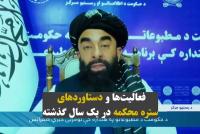
Supreme Court of the Islamic Emirate of Afghanistan Outlines Judicial Reforms and Achievements
— Unverified
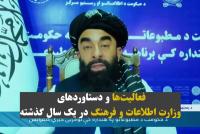
Ministry of Information and Culture of the Islamic Emirate of Afghanistan Announces Annual Activities and Achievements
— Reliable