INTERNATIONAL — February 26, 2026
UN high commissioner supports criminalizing gender apartheid amid Taliban women's rights restrictions
UN officials, including High Commissioner Volker Türk, endorsed criminalizing gender apartheid as a crime against humanity during a Human Rights Council session on Afghanistan's worsening women's rights crisis under Taliban restrictions. NGOs and UN Women condemned specific bans and laws limiting women's work, mobility, and legal protections.
The Ehtebar Desk — originates with Hasht-e Subh — corroborated by Khaama Press, Afghanistan International and Amu TV — 2 min read
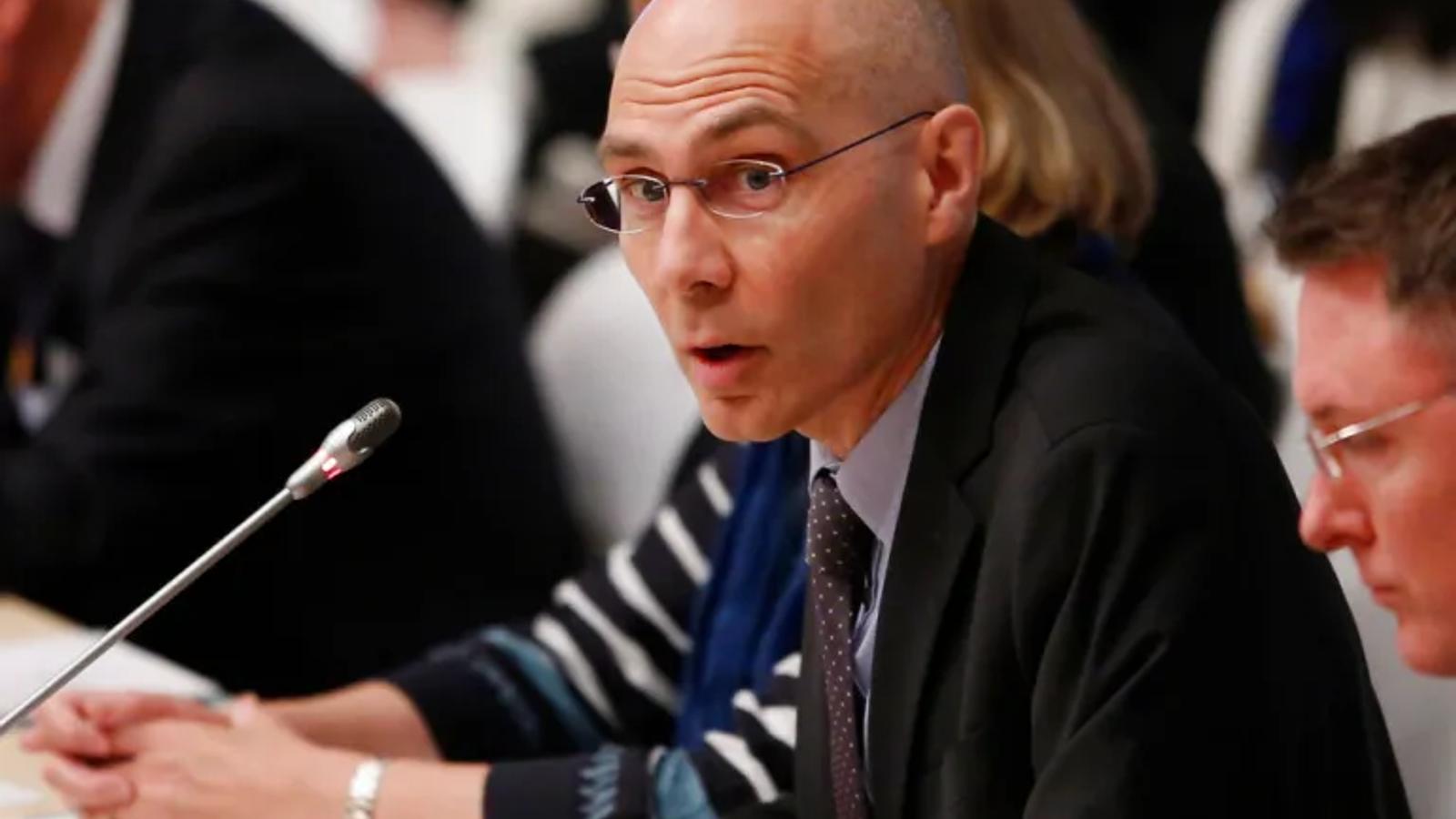
Volker Türk, UN High Commissioner for Human Rights, stated at the Human Rights Council session in Geneva on Feb. 26 that he supports criminalizing gender apartheid as a crime against humanity to address the situation in Afghanistan. Türk described the discrimination and repression faced by Afghan women and girls as systematic persecution reminiscent of apartheid, but based on gender rather than race. He expressed concern over Taliban laws expanding violence against women and children, and also highlighted civilian casualties from border clashes between Taliban forces and Pakistan.
Richard Bennett, UN Special Rapporteur on human rights in Afghanistan, presented a report on women's access to health services, warning of a deteriorating human rights situation, increased corporal punishments, and executions by the Taliban.
Susan Ferguson, UN Women's Special Representative in Afghanistan, condemned Taliban Order No. 12, which bans women from working in national and international NGOs. She said the order, linked to a new penal code, eliminates legal equality between men and women, places husbands as supreme authority, limits accountability for domestic violence to visible injuries only, and requires women to appear before male judges with a male guardian.
Thirty-three Afghan human rights and women's rights organizations, including the Afghan Women's Voice Movement and the Lantern of Freedom for Afghan Women, sent an open letter to UN General Assembly President Ana Lena Baerbock. They described the Taliban's policies as a deliberate, phased imposition of full-scale gender apartheid, denying the humanity and dignity of half the population, and constituting an international crime. The groups called for criminalization of gender apartheid, prosecution of Taliban leaders, and an end to engagement or normalization with the Taliban.
Amit Haliwi, an Israeli Knesset member, told Afghanistan International that no international legitimacy should be granted to the Taliban, urging support for opponents and calling on India to halt its support.
Read the original reporting at Hasht-e Subh →
Reliability assessment
Key claims corroborated by 4 independent outlets: Volker Türk's statement at named HRC session (Sources 3), Richard Bennett's report (Source 3), UN Women's condemnation of Order 12 by named rep (Source 4), 33 NGOs' letter (Source 2); concrete attributions with checkable details like dates, events, names.
The source language mixes facts with framing or advocacy wording. 'آپارتاید جنسیتی تمامعیاری' (full-scale gender apartheid) and 'انکار نظاممند انسانیت' (systematic denial of humanity) from Source 2 use advocacy phrasing to frame policies as intentional crimes; 'بردهداری' (slavery) from Source 1 employs emotional hyperbole for restrictions.
Across the newsrooms
Filed by 4 outlets
Hasht-e Subh
Originating
Khaama Press
Afghanistan International
Amu TV
Filed under
International — Taliban, UN, gender apartheid, women's rights, Human Rights Council
Reader supported
Keep Ehtebar running
Every published story uses paid tools to translate reporting, compare sources, extract claims, and produce a clearer read on Afghanistan. Reader support helps keep that work independent.
€5
helps cover daily verification runs
€15
supports a week of source comparison
€50
keeps independent analysis moving