
SOCIETY — May 5, 2026
UN Warns of Maternal Health Crisis in Afghanistan Amid Funding Cuts and Taliban Education Restrictions
UN agencies warn that Afghanistan’s maternal mortality rate remains critically high, citing international funding cuts and restrictions on women’s health education as major threats to the country’s healthcare system. Officials stress that investing in midwives and restoring essential services are vital to saving lives.
The Ehtebar Desk — originates with Amu TV — corroborated by Hasht-e Subh and Khaama Press — 2 min read
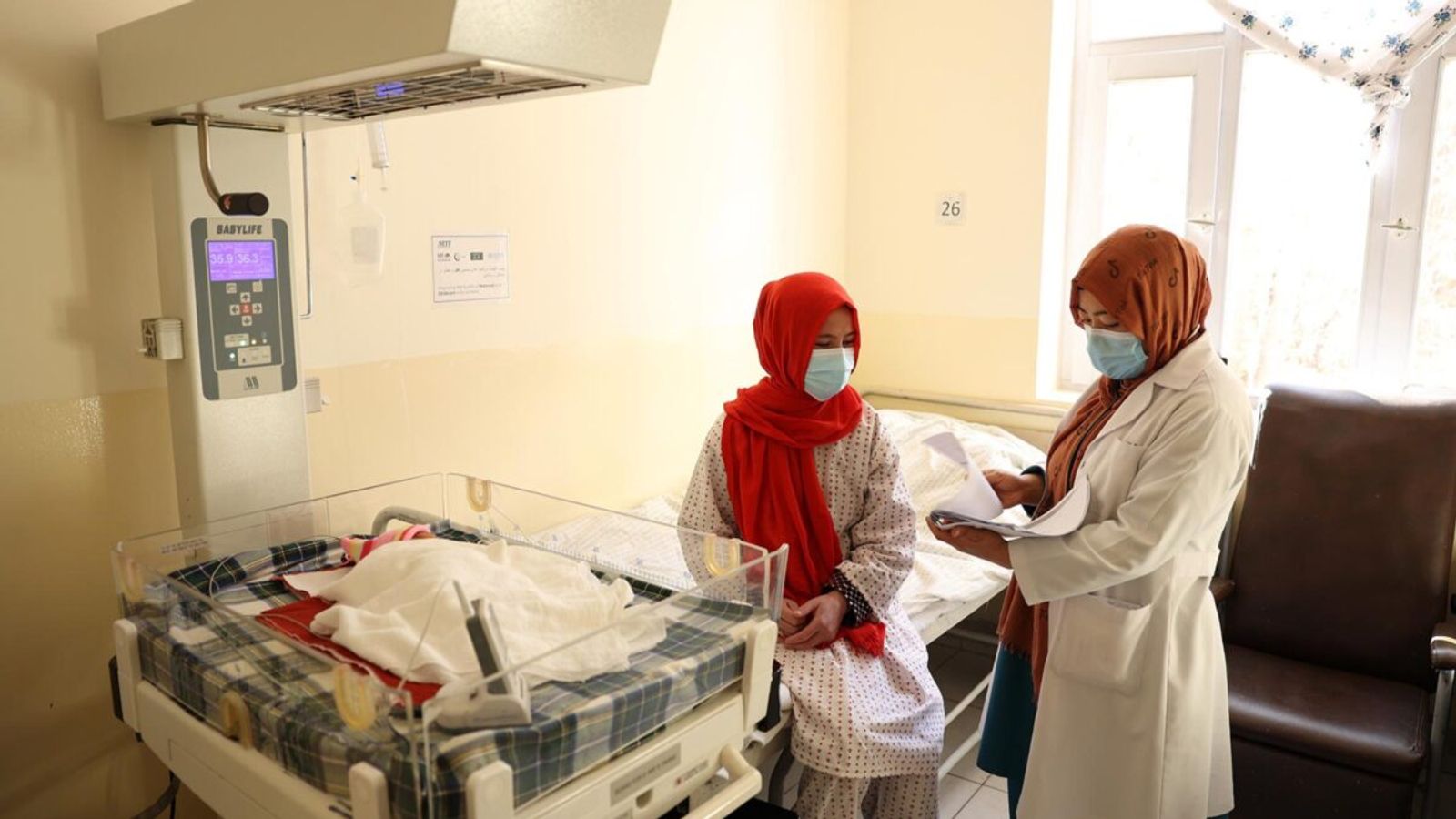
United Nations agencies have issued coordinated statements marking the International Day of the Midwife, highlighting a severe maternal health crisis in Afghanistan and calling for urgent investment in healthcare workers. According to the World Health Organization, the country continues to record approximately one maternal death every hour, with a mortality rate of 521 per 100,000 live births.
The United Nations Population Fund emphasized that supporting more than one million midwives is the most effective strategy to expand prenatal, safe childbirth, and postnatal care. However, UN officials warned that recent cuts to international funding have forced hundreds of health facilities to close, leaving roughly 6.3 million people without access to essential medical services.
UN agencies also raised concerns over restrictions imposed by the Taliban on women’s education and employment. Bans preventing girls from attending health institutes threaten to disrupt the future pipeline of female health workers. The United Nations Children’s Fund projected that current policies could result in the loss of approximately 5,000 health workers and 20,000 teachers by 2030.
Despite improvements in the healthcare sector since the early 2000s, UN representatives stressed that sustained international support is necessary to prevent further deterioration of maternal and child health outcomes. Agencies are currently working with the Islamic Development Bank and local partners to expand specialized care and train health workers, but officials cautioned that progress could be reversed without continued funding and policy adjustments.
Read the original reporting at Amu TV →
Reliability assessment
Three independent outlets corroborate the core event: UN agencies issued statements on International Day of the Midwife regarding Afghanistan's maternal health crisis, funding shortfalls, and restrictions on female health workers. All claims are directly attributed to named UN bodies (WHO, UNFPA, UNICEF) with concrete, checkable details. Variations in specific statistics across sources reflect different agency reports and editorial focuses rather than contradictory facts, which does not impact the reliability of the core event.
The source language reads straight.
Across the newsrooms
Where reports agree
- All three sources confirm UN agencies released coordinated statements on International Day of the Midwife addressing Afghanistan's maternal health crisis.
- Sources consistently report that Afghanistan suffers from one of the world's highest maternal mortality rates.
- All sources agree that international funding cuts and restrictions on women's education and employment are severely degrading the healthcare system.
- Sources uniformly emphasize that sustained international support is critical to prevent further deterioration of maternal and child health outcomes.
Where reports differ
- No direct factual contradictions exist; sources differ only in which specific UN agency data they highlight (WHO mortality statistics vs. UNFPA midwife investment targets vs. UNICEF workforce projections vs. facility closure figures), which reflects complementary reporting rather than conflicting facts.
Filed by 3 outlets
Amu TV
Originating
Reported straight
Reported straight
Hasht-e Subh
Reported straight
Reported straight
Khaama Press
Reported straight
Reported straight
Filed under
Society — World Health Organization, UNFPA, Maternal Health, Midwives, Healthcare Funding
Reader supported
Keep Ehtebar running
Every published story uses paid tools to translate reporting, compare sources, extract claims, and produce a clearer read on Afghanistan. Reader support helps keep that work independent.
€5
helps cover daily verification runs
€15
supports a week of source comparison
€50
keeps independent analysis moving
More in Society
Health Officials and Experts Discuss Rise in Black Jaundice Cases in Afghanistan
— Reliable
Discussion on Agricultural Products and Health Services in Samangan Province
— Reliable
WHO Report Cites Taliban Restrictions and Funding Shortfalls as Threats to Health Services in Afghanistan
— Reliable
Afghan officials report returns of families from Pakistan and Iran alongside releases from Pakistani prisons
— Reliable