
ECONOMY — February 26, 2026
UNDP Head: Not Time to Turn Away from Afghanistan Amid Economic Challenges and Positive Signs
In an exclusive interview, UNDP's Stephen Rodriguez highlighted Afghanistan's ongoing humanitarian and economic challenges alongside positive developments like economic growth and stability, calling for sustained global investment rather than withdrawal.
The Ehtebar Desk — originates with Pajhwok — 2 min read
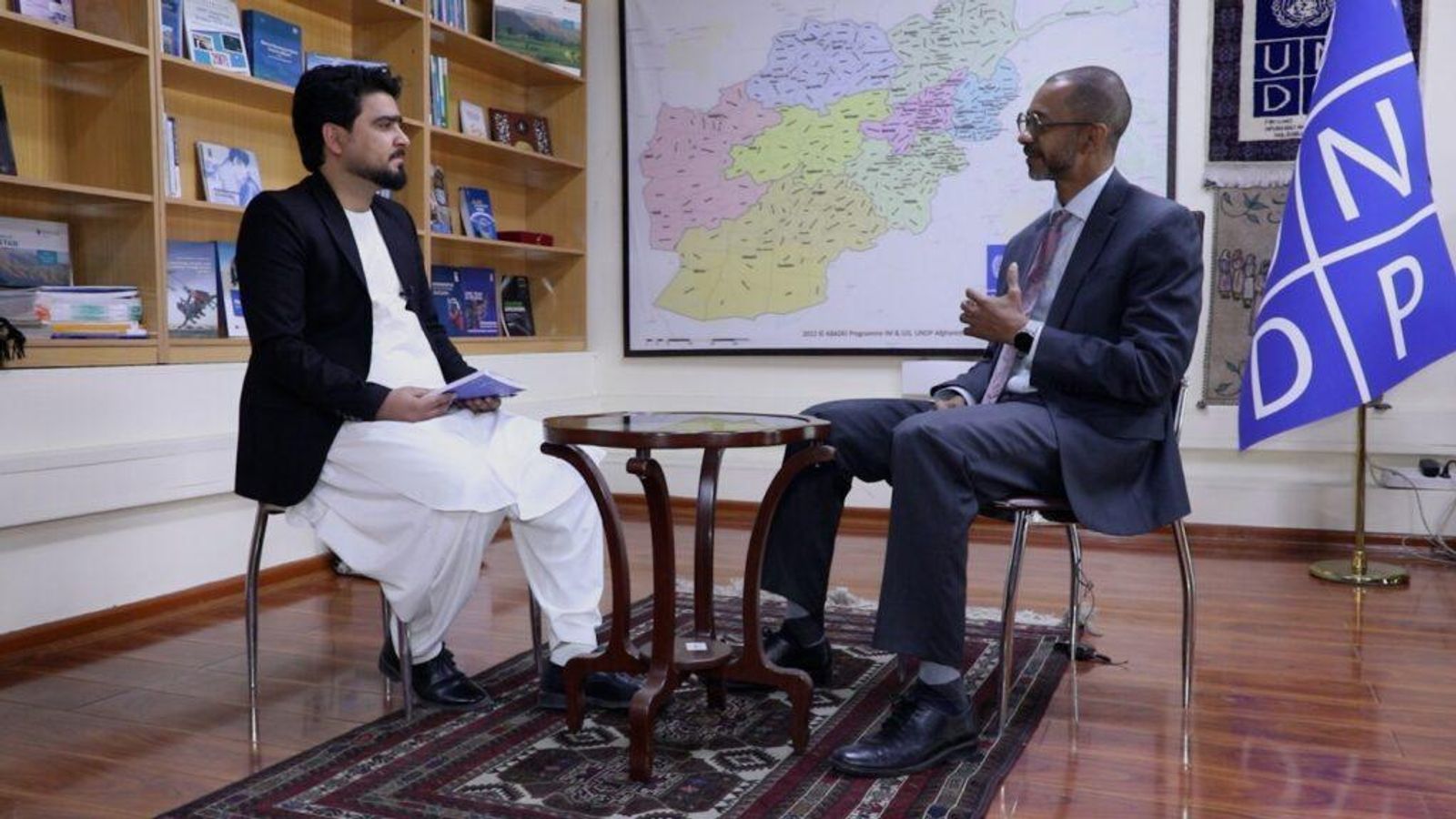
KABUL (Pajhwok) -- Stephen Rodriguez, head of the United Nations Development Programme (UNDP) for Afghanistan, said in an exclusive interview that the country faces serious economic and humanitarian problems but also shows positive progress, with continued global support key to stability and growth.
Rodriguez noted that according to the World Food Programme, about 17.4 million Afghans still need food assistance, while UNDP assessments indicate nearly 75% of the population lives in survival mode. Over the past 2.5 years, more than 5 million Afghans have returned from Iran and Pakistan, and drought, floods, and climate change have exacerbated economic woes.
He highlighted that for the first time in 40 years, relative peace and stability prevail, presenting a major opportunity for economic growth. The World Bank forecasts over 4% growth last year, with increased public trust in banking. The private sector is expanding, and the government is boosting revenue collection and infrastructure projects.
UNDP's priorities include job creation and livelihoods, access to basic services, and mitigating climate impacts, such as water management, check dams, and flood prevention. Only about 40% of Afghans have electricity access. Agriculture, which sustains 70% of the population, receives support through practical programs.
Post-poppy cultivation ban, UNDP has aided over 70,000 farmers with alternatives. It supported more than 80,000 businesses, creating around 430,000 jobs, and provided health services to over 2.5 million Afghans last year, including solar power for more than 200 clinics.
Rodriguez said restrictions on women cause significant economic losses -- estimated at $1.37 billion annually by the World Bank and $1.92 billion over the past two years by UNDP -- and have supported about 78,000 women-owned businesses. These curbs also hinder UN and international organizations' work, particularly women-only health and education services.
He urged the international community to invest in long-term development rather than disengaging, noting 400,000 youth graduate yearly needing jobs, and described Afghans as patient and resilient with a bright future.
Read the original reporting at Pajhwok →
Reliability assessment
Direct, on-record interview with named UNDP head Stephen Rodriguez providing concrete, checkable details (e.g., specific numbers from WFP, World Bank, UNDP projects) and attributions; not a high-stakes unverified ground event.
The source language reads straight.
Across the newsrooms
Filed by
Pajhwok
Originating
Filed under
Economy — UNDP, Stephen Rodriguez, Afghanistan economy, humanitarian aid, women's employment
Reader supported
Keep Ehtebar running
Every published story uses paid tools to translate reporting, compare sources, extract claims, and produce a clearer read on Afghanistan. Reader support helps keep that work independent.
€5
helps cover daily verification runs
€15
supports a week of source comparison
€50
keeps independent analysis moving
More in Economy
Economic Commission Approves 37 Domestic Standards and 12 Testing Methods
— Reliable

Taliban Governor Says Around 700 Mines Under Extraction in Panjshir
— Reliable

Daily Production at Baghlan's Ghori Cement Factory Increases to 700 Tons
— Reliable

Two Irrigation and Flood-Prevention Projects Completed in Zabul
— Reliable