
SOCIETY — March 10, 2026
Afghan Women Between Tradition, Limitations, and Desire for Social Presence
An analysis portrays Afghan women's lives as balancing traditions, restrictions, and aspirations for social participation, highlighting gradual changes amid cultural and economic challenges. It advocates for education and dialogue to foster balanced progress.
The Ehtebar Desk — originates with Hasht-e Subh — 2 min read
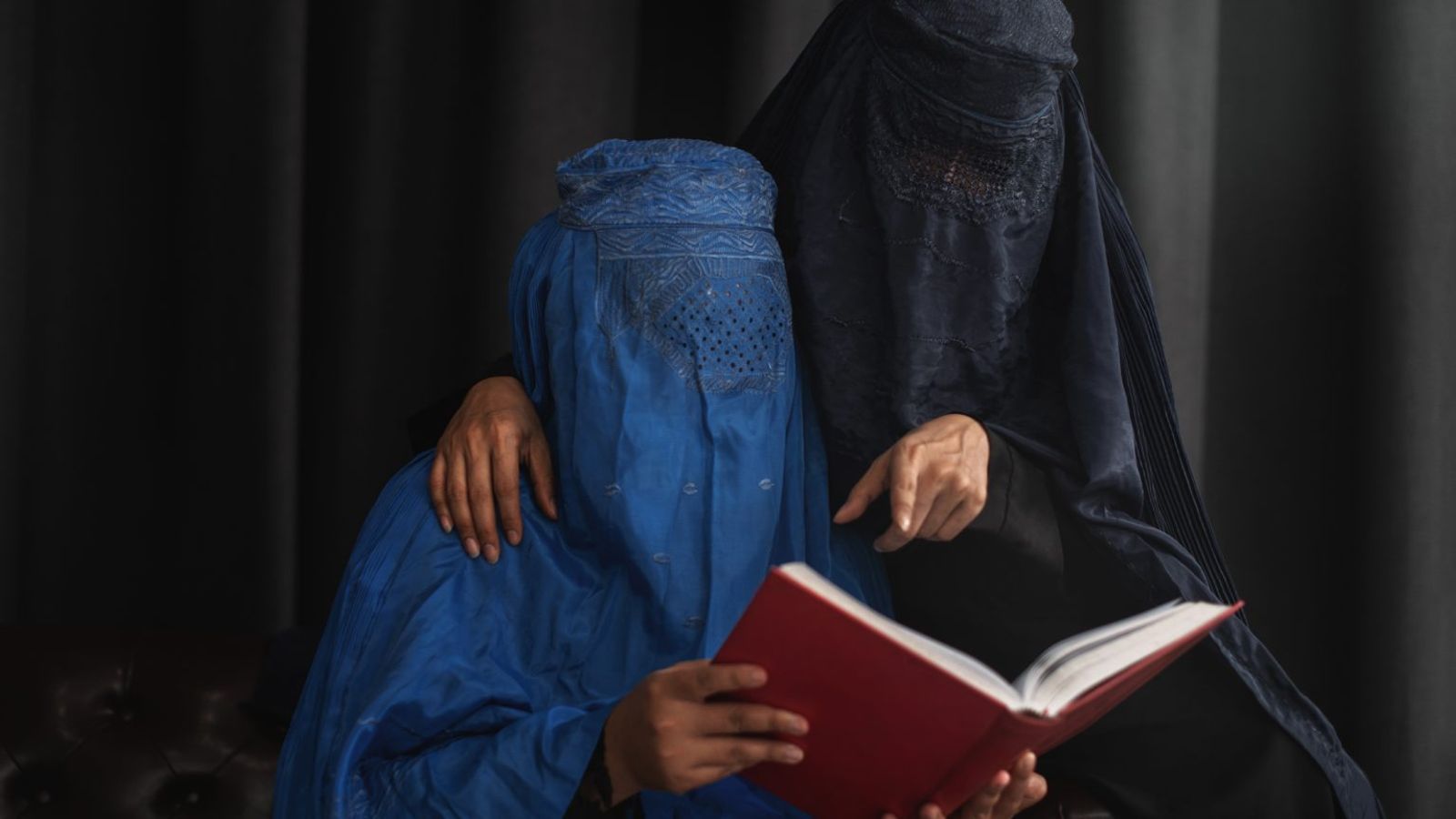
The life of Afghan women presents a complex and multifaceted picture, situated between longstanding traditions that form part of the society's cultural identity, restrictions imposed upon them, and their aspiration for active participation in society, according to an analysis by Hasht-e Subh.
Typically, discussions of Afghan women evoke two contrasting images: one of a woman living within traditional frameworks where her role is primarily defined within the home, and another of a woman striving to transcend these boundaries to claim a broader place in society. The reality lies in the gray area between these images, where tradition, limitations, and the desire for social engagement coexist.
Afghanistan has long been a traditional society, where social roles and responsibilities are often defined by cultural and historical interpretations. Women's positions have historically been linked to family and child-rearing, a view many families still consider natural. Public presence for women is not always seen as a social necessity but sometimes as secondary or even inappropriate.
However, this does not capture the full picture. In recent decades, slow but noticeable shifts occurred in parts of society toward women's roles, though these changes largely stalled under the new governing environment. Increased access to education, connections to the outside world, and new social experiences have spurred greater interest among girls and women in education and social activities. For many, pursuing studies or work is not merely personal choice but an effort to gain a share in social life.
Obstacles persist, rooted in cultural and tribal traditions. In some areas, concerns arise that women's expanded public presence may conflict with traditional values, even if motivated by protection. Social and economic conditions, shaped by decades of war, instability, and economic hardship, have also marginalized issues like girls' education.
Despite these challenges, efforts and hope among Afghan women are evident. In cities and some remote areas, girls pursue education amid difficulties, and women engage in fields like education, health, social activities, and culture. This presence, though limited, signals gradual societal change.
The analysis calls for a balanced perspective, avoiding extremes that either overemphasize restrictions or downplay difficulties. Afghan women are neither mere victims nor fully free from constraints; they navigate a space blending tradition and emerging change. Sustainable progress, it suggests, requires gradual approaches through dialogue and education to align with cultural realities while expanding opportunities.
Read the original reporting at Hasht-e Subh →
Reliability assessment
Single opinion-based article offering personal reflections without concrete, checkable facts, named attributions, or verifiable events.
The source language mixes facts with framing or advocacy wording. Phrases like 'به باور من' ('in my belief') introduce personal opinion as analysis; advocacy phrasing such as 'مهمترین مساله یافتن راهی باشد' ('most important issue is finding a path') and calls for 'گفتوگو و تفاهم' ('dialogue and understanding') frame the piece with mild prescriptive tone.
Across the newsrooms
Filed by
Hasht-e Subh
Originating
Filed under
Society — Afghan women, tradition, social participation, education, cultural change
Reader supported
Keep Ehtebar running
Every published story uses paid tools to translate reporting, compare sources, extract claims, and produce a clearer read on Afghanistan. Reader support helps keep that work independent.
€5
helps cover daily verification runs
€15
supports a week of source comparison
€50
keeps independent analysis moving
More in Society
Health Officials and Experts Discuss Rise in Black Jaundice Cases in Afghanistan
— Reliable
Discussion on Agricultural Products and Health Services in Samangan Province
— Reliable
WHO Report Cites Taliban Restrictions and Funding Shortfalls as Threats to Health Services in Afghanistan
— Reliable
Afghan officials report returns of families from Pakistan and Iran alongside releases from Pakistani prisons
— Reliable