
ECONOMY — April 23, 2026
Women Vendors Report Declining Sales at Kabul’s Badam Bagh Exhibition
Women vendors at Kabul’s 34th Badam Bagh exhibition report declining sales due to gender segregation policies, while the Ministry of Economy of the Islamic Emirate of Afghanistan affirms its continued support for women’s economic participation.
The Ehtebar Desk — originates with ToloNews — 2 min read
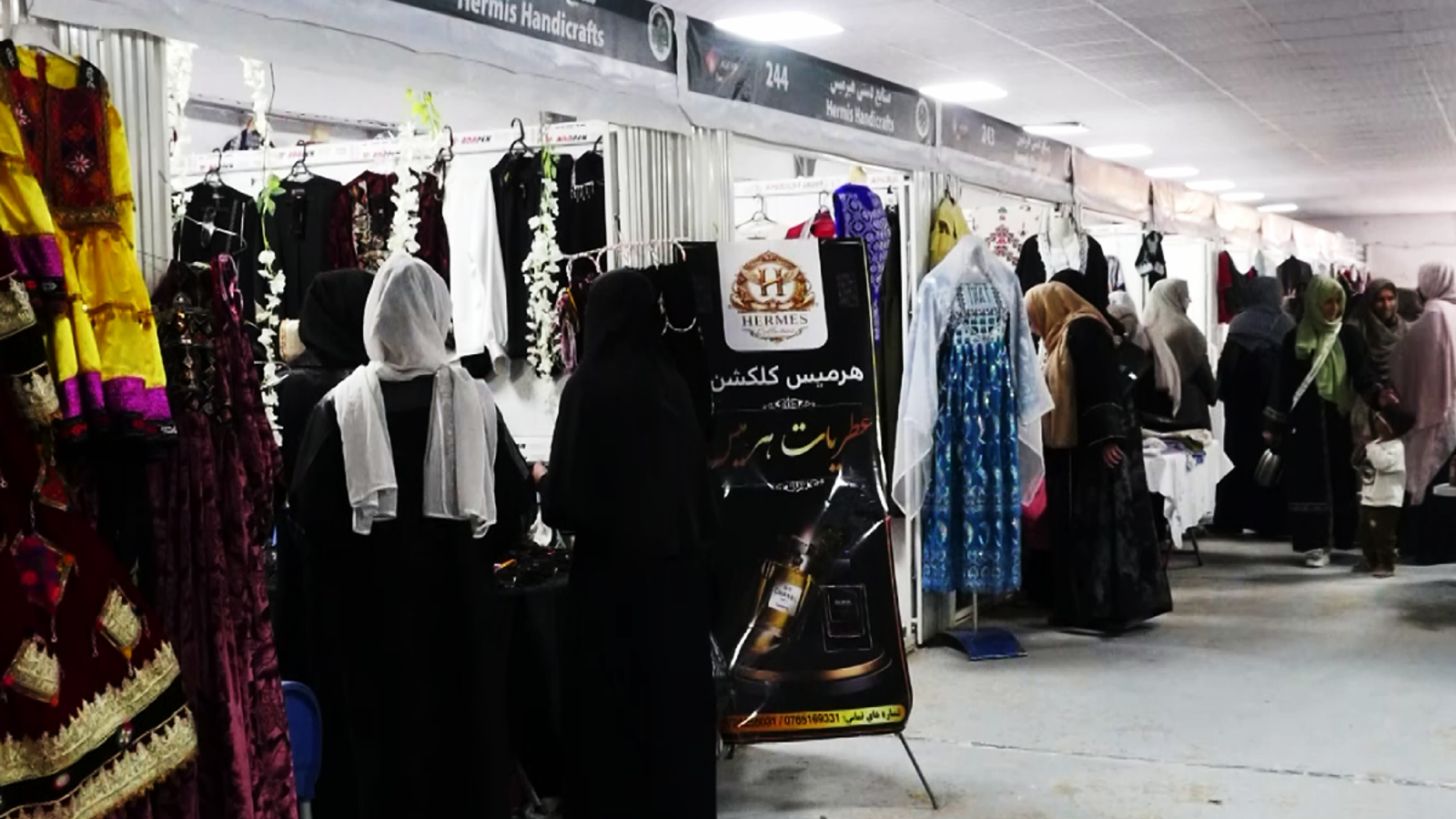
The 34th Agricultural and Livestock Products Exhibition is currently underway at Badam Bagh in Kabul, featuring 56 stalls designated for women vendors. Participants are showcasing traditional crafts, textiles, and locally produced goods, though several vendors have noted a noticeable decline in sales compared to previous years.
Women operating stalls at the exhibition attributed the drop in revenue to recent gender segregation measures that separate male and female attendees. Several vendors stated that the restricted access for male visitors has significantly reduced their customer base, directly impacting their daily earnings. Event organizers and visitors have also observed a decrease in overall attendance, particularly among women.
In response to concerns regarding women’s economic participation, Abdul Rahman Habib, a spokesperson for the Ministry of Economy of the Islamic Emirate of Afghanistan, stated that the government continues to provide necessary facilities and institutional support for women working in commercial sectors. Habib emphasized the administration’s recognition of women’s role in national economic development and affirmed that policies aimed at facilitating their business activities remain in place.
The Badam Bagh exhibition continues to operate as a key marketplace for female entrepreneurs to present their products to the public. Despite the reported financial challenges, vendors maintain that the event remains essential for sustaining family livelihoods and preserving traditional Afghan artisanal work.
Read the original reporting at ToloNews →
Reliability assessment
Single source provides direct, on-record attribution with concrete, checkable details (named Ministry of Economy spokesperson, specific exhibition location and stall count, direct quotes from vendors and visitors). The core event and official statements are clearly attributable.
The source language reads straight.
Across the newsrooms
Filed by
ToloNews
Originating
Reported straight
Reported straight
Filed under
Economy — Badam Bagh Exhibition, Women Entrepreneurs, Ministry of Economy, Kabul, Afghan Handicrafts
Reader supported
Keep Ehtebar running
Every published story uses paid tools to translate reporting, compare sources, extract claims, and produce a clearer read on Afghanistan. Reader support helps keep that work independent.
€5
helps cover daily verification runs
€15
supports a week of source comparison
€50
keeps independent analysis moving
More in Economy
Economic Commission Approves 37 Domestic Standards and 12 Testing Methods
— Reliable

Taliban Governor Says Around 700 Mines Under Extraction in Panjshir
— Reliable
Daily Production at Baghlan's Ghori Cement Factory Increases to 700 Tons
— Reliable

Two Irrigation and Flood-Prevention Projects Completed in Zabul
— Reliable