
SOCIETY — March 28, 2026
Afghanistan's Academic Year Begins One Week Late, Excluding Girls Above Sixth Grade
Afghanistan's academic year began on March 28, 2026, one week late, with the Taliban permitting only boys and girls below sixth grade to attend amid the fifth year of exclusion for older girls. Male students criticized dress and curriculum restrictions, while affected girls demanded international action; UNICEF cites over 2.2 million girls out of school.
The Ehtebar Desk — originates with Amu TV — corroborated by ToloNews — 2 min read
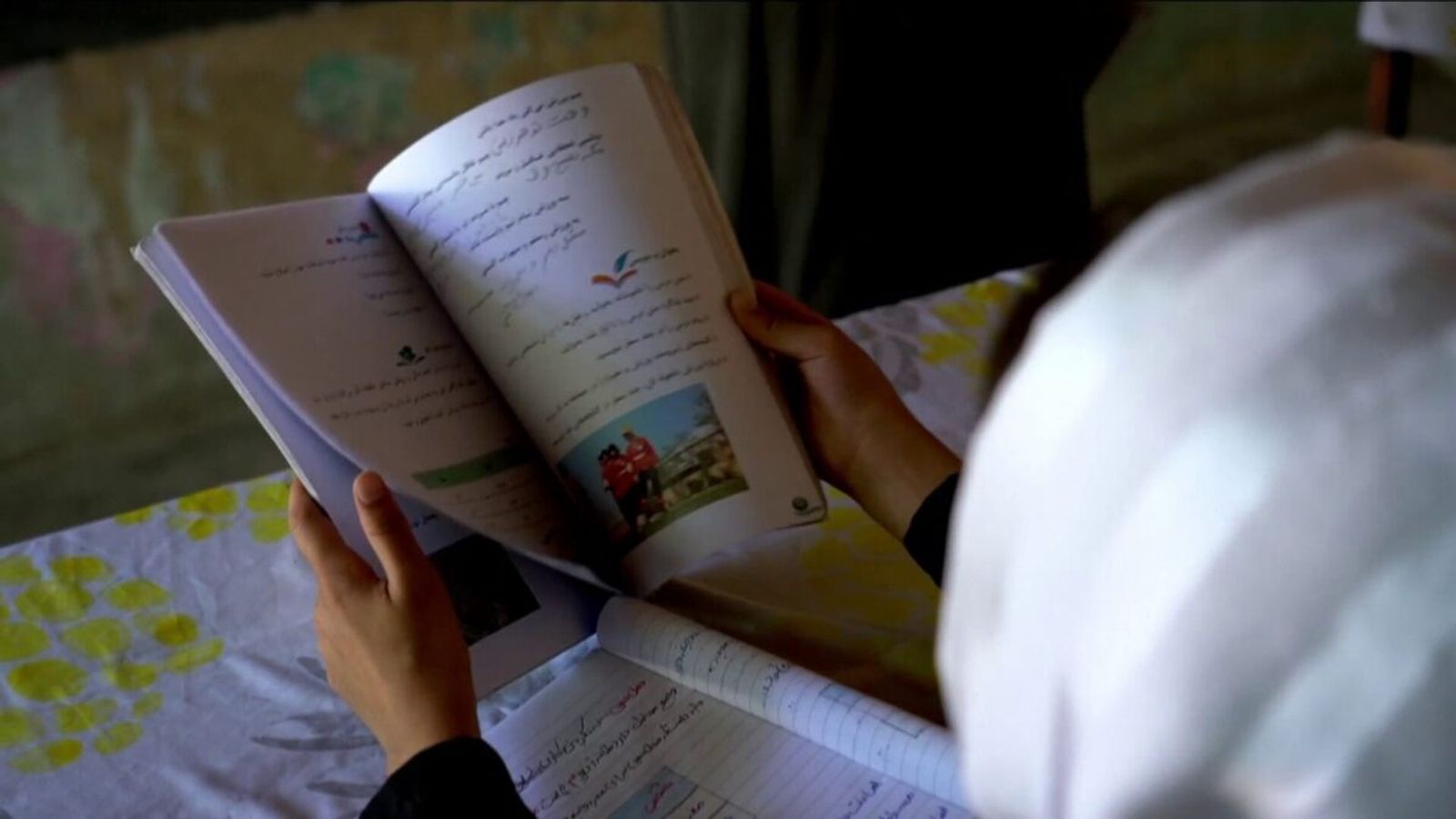
KABUL (Afghan Verified) -- The new academic year in Afghanistan started on Saturday, March 28, 2026, with a one-week delay. The Taliban allowed only boys and girls below the sixth grade to attend schools, continuing the exclusion of girls above the sixth grade for the fifth consecutive year.
Schools in central and cold provinces reopened without female students above the sixth grade. This partial resumption highlights ongoing restrictions on female education imposed since the Taliban's return to power.
Male students criticized the Taliban's restrictions on clothing and changes to the curriculum, describing them as burdensome impositions on their education.
Girls above the sixth grade who are deprived of schooling decried the policy as a violation of their rights. They called for the full reopening of schools and urged international accountability to address the restrictions.
The United Nations Children's Fund (UNICEF) reports that more than 2.2 million girls are out of school in Afghanistan.
Read the original reporting at Amu TV →
Reliability assessment
Two independent outlets (Amu TV and ToloNews) corroborate the academic year start date, one-week delay, and the Taliban's ongoing policy of excluding girls above sixth grade for the fifth year. This is a continuation of a well-documented, publicly enforced policy since 2021 with no active contestation of the core event between sources.
The source language mixes facts with framing or advocacy wording. Amu TV: "clear violation of their fundamental rights" (value judgment on policy as rights abuse); "serious blow to the country's educational and social future" (emotional framing of consequences); "growing despair and protest" (advocacy phrasing highlighting emotional impact on girls).
Independent web corroboration
An independent web search turned up no separate corroborating reports. Treat the account as single-sourced until more outlets pick it up.
Across the newsrooms
Where reports agree
- Academic year started on 2026-03-28 with one-week delay
- Only boys and girls under sixth grade allowed in schools
- Girls above sixth grade excluded for fifth year
- UNICEF reports >2.2M girls out of school
Filed by 2 outlets
Amu TV
Originating
Framed
Framed
ToloNews
Framed
Framed
Filed under
Society — Taliban, girls' education, Afghanistan schools, UNICEF, academic year 2026
Reader supported
Keep Ehtebar running
Every published story uses paid tools to translate reporting, compare sources, extract claims, and produce a clearer read on Afghanistan. Reader support helps keep that work independent.
€5
helps cover daily verification runs
€15
supports a week of source comparison
€50
keeps independent analysis moving
More in Society
Health Officials and Experts Discuss Rise in Black Jaundice Cases in Afghanistan
— Reliable

Discussion on Agricultural Products and Health Services in Samangan Province
— Reliable
WHO Report Cites Taliban Restrictions and Funding Shortfalls as Threats to Health Services in Afghanistan
— Reliable
Afghan officials report returns of families from Pakistan and Iran alongside releases from Pakistani prisons
— Reliable