
ECONOMY — June 19, 2026
Border Closures Force Afghanistan Onto Lengthier Central Asian Trade Routes
The shift has added fifteen to twenty days and up to two thousand dollars per container for traders, while the World Food Programme routed four hundred tons of aid over fifteen thousand kilometers through nine countries.
The Ehtebar Desk — originates with Amu TV — 2 min read
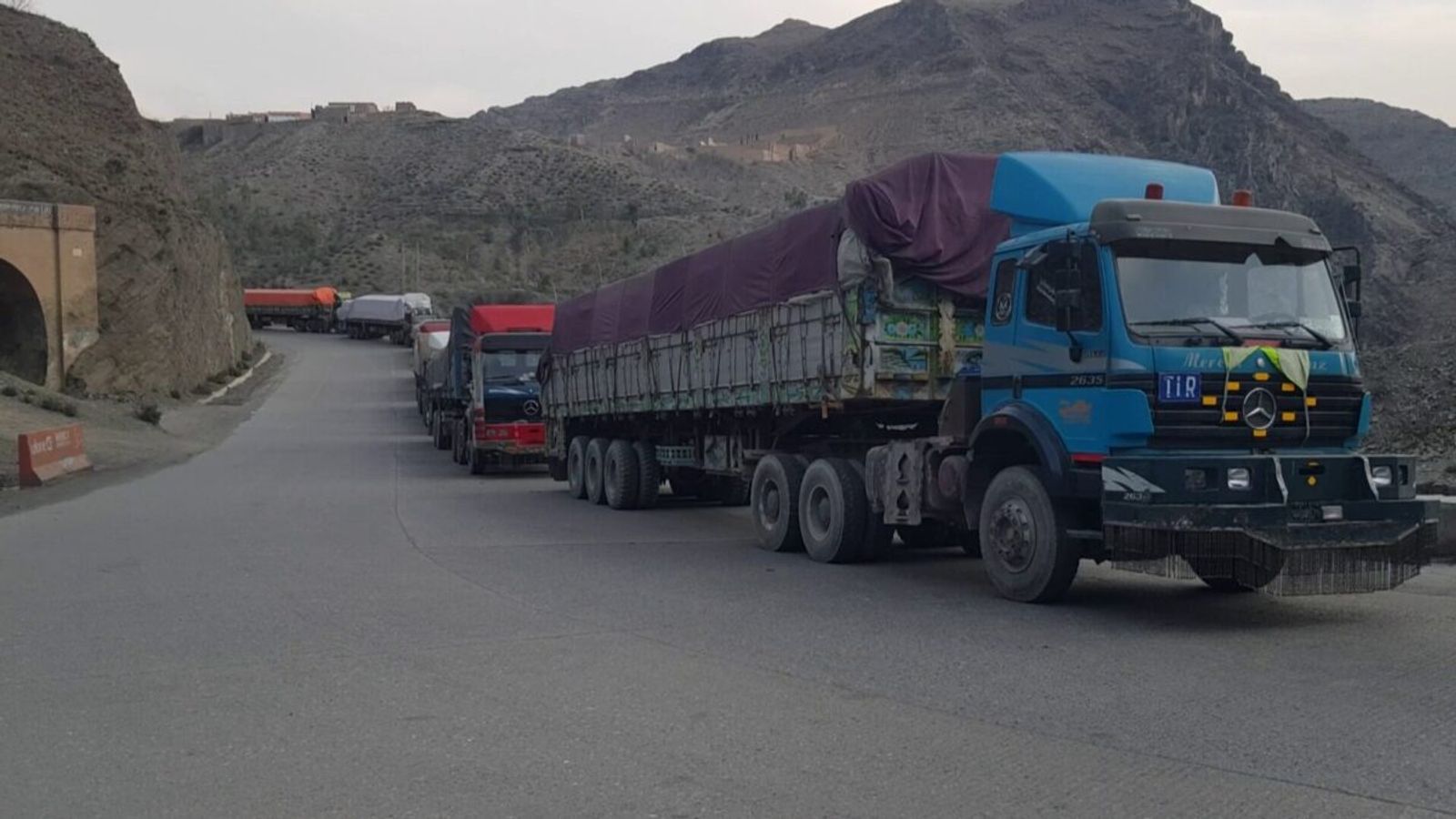
Afghanistan has lost access to its primary sea transit routes through the ports of Karachi in Pakistan, Jebel Ali in the United Arab Emirates, and Bandar Abbas in Iran. Closures tied to border clashes and regional conflicts have redirected all trade, transit, and humanitarian shipments onto longer and costlier paths through Central Asia.
The Torkham and Spin Boldak crossings were closed on the twentieth of Mizan in the fourteen hundred four solar year after clashes involving Taliban forces and Pakistan. The crossings have remained shut for two hundred fifty days.
Traders now import essential goods mainly via Central Asian routes. These alternatives add fifteen to twenty days to transit times and up to two thousand dollars per container compared with the former sea options.
The Jebel Ali closure followed conflicts involving the United States, Israel, and Iran, leaving Afghan containers stranded. A recent agreement between Donald Trump and Iranian President Masoud Pezeshkian may reopen Iran-UAE transit.
The United Nations World Food Programme moved four hundred tons of aid biscuits to Afghanistan along a fifteen thousand kilometer route through nine countries because of the port and border closures. A China-Afghanistan railway via Kazakhstan and Uzbekistan to Hairatan remains underused due to uncertainty and the lack of container sealing, according to analyst Sir Qureshi of the Afghanistan Chamber of Commerce and Investment.
Read the original reporting at Amu TV →
Reliability assessment
Single source (Amu TV) provides direct attribution to Afghanistan Chamber of Commerce and Investment, named analyst Sir Qureshi, and specific checkable details including dates, costs, distances, and the WFP aid example.
The source language mixes facts with framing or advocacy wording. Amu TV: "completely lost its sea transit routes", "costly and time-consuming route", "negative impact on sea and maritime routes" - these phrases frame the situation with negative emotional loading and emphasize hardship without neutral sourcing for all claims.
Across the newsrooms
Filed by
Amu TV
Originating
Framed
Framed
Filed under
Economy — Afghanistan trade, Karachi port, Torkham border, Central Asia transit, Chamber of Commerce
Reader supported
Keep Ehtebar running
Every published story uses paid tools to translate reporting, compare sources, extract claims, and produce a clearer read on Afghanistan. Reader support helps keep that work independent.
€5
helps cover daily verification runs
€15
supports a week of source comparison
€50
keeps independent analysis moving
More in Economy
Economic Commission Approves 37 Domestic Standards and 12 Testing Methods
— Reliable

Taliban Governor Says Around 700 Mines Under Extraction in Panjshir
— Reliable
Daily Production at Baghlan's Ghori Cement Factory Increases to 700 Tons
— Reliable
Two Irrigation and Flood-Prevention Projects Completed in Zabul
— Reliable