
ECONOMY — March 22, 2026
Daily Wage Workers in Herat Struggle to Find Consistent Employment
Around 500 daily wage workers gather daily in Herat City but secure work only one or two days a week amid economic hardships and rising food prices. Officials report issuing 2,525 work permits in the first 11 months of the year while experts call for sustainable jobs in industry and agriculture.
The Ehtebar Desk — originates with Pajhwok — 2 min read
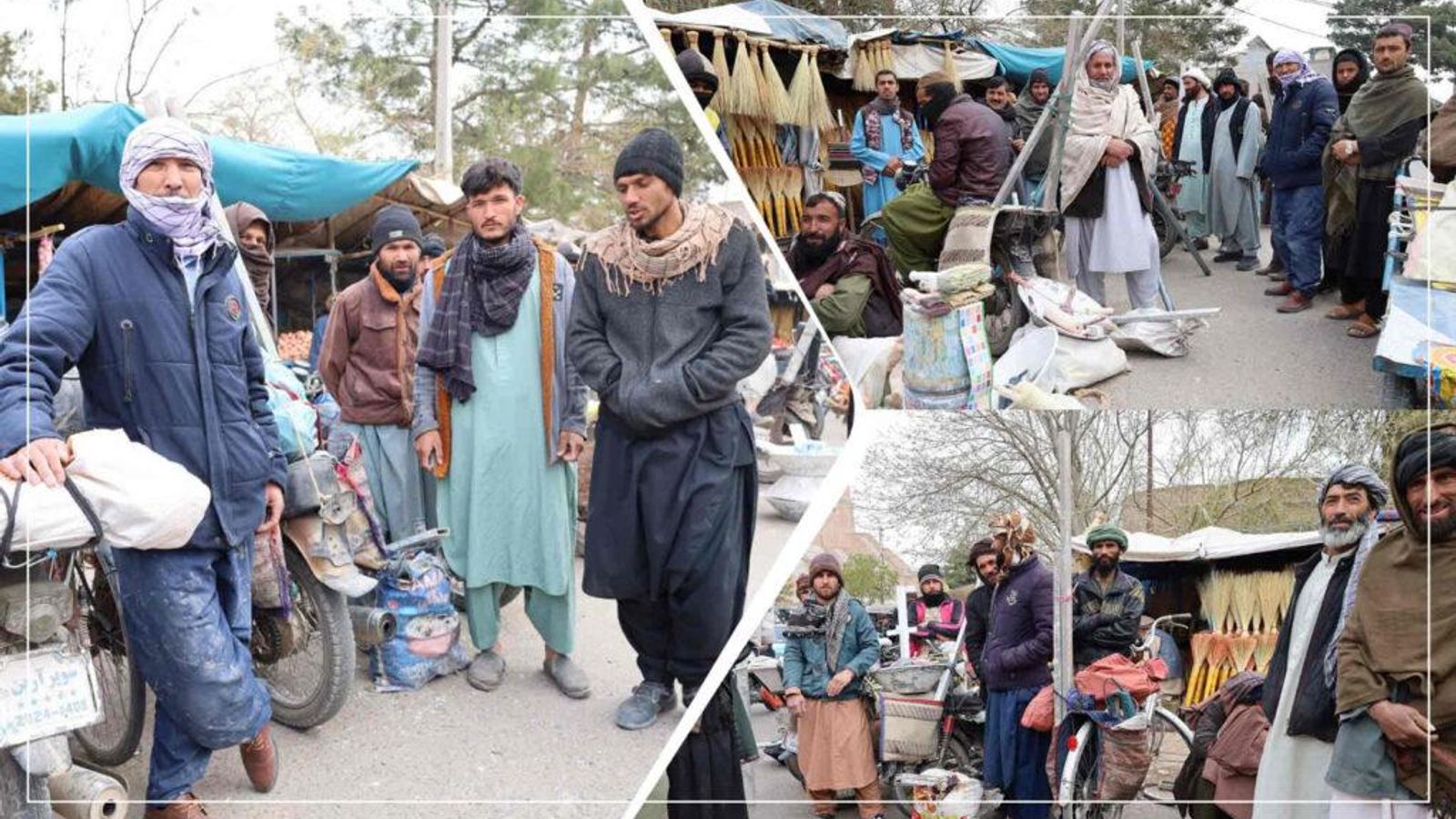
HERAT CITY (Afghan Verified) -- Around 500 daily wage workers gather every day at spots in Herat City in western Afghanistan, but most find work only once or twice a week amid rising food prices.
Many of the men, who are often sole breadwinners for large families, wait from dawn with anxious expressions, hoping for day labor. Syed Ahmad, who returned from Iran about seven months ago due to unemployment, said workers come every morning but opportunities are scarce. "In a week, we may get work only one or two days," he told Pajhwok Afghan News.
Ali Ahmad, a young worker, said he cannot afford new clothes and feels ashamed before his family when work is unavailable. Hamidullah, another laborer, echoed the complaints, returning home empty-handed most days. He urged the government to develop industrial zones, agriculture and livestock sectors to create jobs.
Economic analyst Aqa Gul Haidari emphasized that security alone is insufficient for improving livelihoods. He called for establishing factories, industrial zones and attracting investors, noting Afghanistan's potential in agriculture and livestock for permanent employment.
Hafez Mirza Abu Mohammad Mansour, head of the Herat Directorate of Labour and Social Affairs, said officials issued 2,525 work permits to Herat residents in the first 11 months of the current year. He added that efforts continue to expand employment opportunities across the province.
Read the original reporting at Pajhwok →
Reliability assessment
Single source (Pajhwok) provides direct, on-record attribution with concrete, checkable details including named official Hafez Mirza Abu Mohammad Mansour (specific number: 2,525 work permits), named analyst Aqa Gul Haidari, named workers (Syed Ahmad, Ali Ahmad, Hamidullah), and location (Herat City gathering spots).
The source language mixes facts with framing or advocacy wording. Pajhwok: "tired faces and anxious expressions", "he said sadly", "wait in despair" - these narrative descriptions evoke sympathy and emotional hardship, adding mild emotional framing beyond neutral reporting.
Independent web corroboration
An independent web search turned up no separate corroborating reports. Treat the account as single-sourced until more outlets pick it up.
Across the newsrooms
Filed by
Pajhwok
Originating
Framed
Framed
Filed under
Economy — Herat, unemployment, daily wage workers, work permits, Labour and Social Affairs
Reader supported
Keep Ehtebar running
Every published story uses paid tools to translate reporting, compare sources, extract claims, and produce a clearer read on Afghanistan. Reader support helps keep that work independent.
€5
helps cover daily verification runs
€15
supports a week of source comparison
€50
keeps independent analysis moving
More in Economy
Economic Commission Approves 37 Domestic Standards and 12 Testing Methods
— Reliable

Taliban Governor Says Around 700 Mines Under Extraction in Panjshir
— Reliable
Daily Production at Baghlan's Ghori Cement Factory Increases to 700 Tons
— Reliable
Two Irrigation and Flood-Prevention Projects Completed in Zabul
— Reliable