INTERNATIONAL — February 16, 2026
European Union Expands Support for Mine Clearance and Victim Assistance in Afghanistan
The European Commission is expanding funding for mine clearance, awareness training, and victim rehabilitation in Afghanistan amid ongoing contamination from decades of war and a severe hunger crisis. The support aims to make land safe for agriculture and aid survivors facing lifelong injuries.
The Ehtebar Desk — originates with Amu TV — corroborated by Khaama Press and Hasht-e Subh — 2 min read
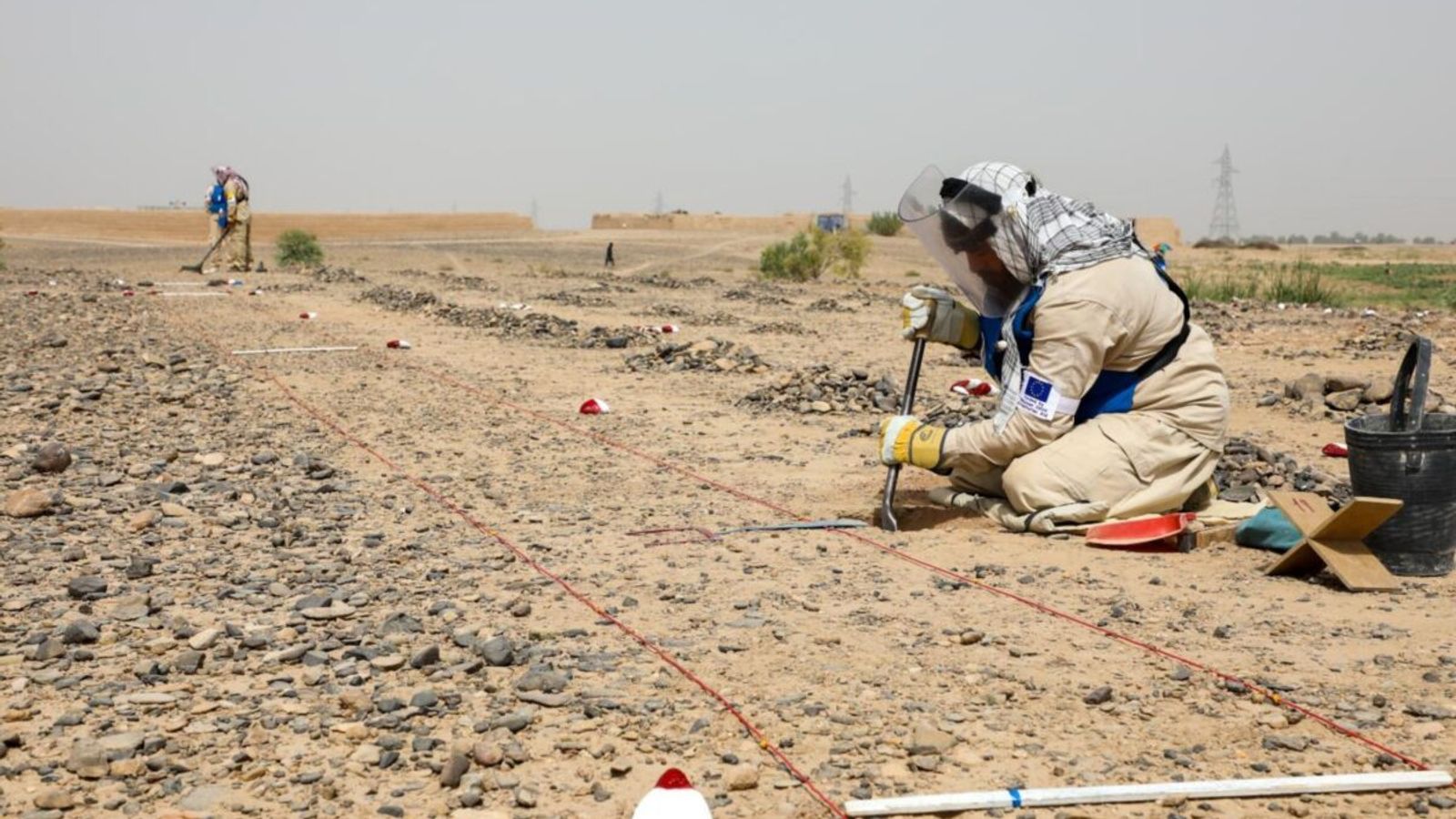
The European Commission, the executive body of the European Union, says it will continue funding mine clearance programs, explosive hazard awareness training, and medical rehabilitation services in Afghanistan.
Decades of war have left Afghanistan with a vast volume of landmines and unexploded ordnance that continue to kill or injure civilians, according to the Commission. Afghanistan is one of the world's most mine-contaminated countries, with millions of explosive remnants scattered in villages, mountains, and agricultural lands, many planted years ago without records of their locations.
United Nations Mine Action Service statistics indicate that since 1989, more than 45,000 civilians have been killed or injured by landmines and explosive remnants of war in Afghanistan. Victims include children playing outdoors and adults farming, collecting firewood, or returning to abandoned homes.
The European Union supports humanitarian demining operations through partner organizations, including the HALO Trust, to clear contaminated areas and enable safe use for agriculture, housing construction, and schools.
These efforts come as Afghanistan faces one of the world's most severe hunger crises. Estimates indicate about 17 million people, nearly one-third of the population, will face acute food insecurity from winter into early 2026. In some areas, fertile land remains unusable due to contamination, while in others, families risk farming polluted fields for survival.
In addition to clearance, the Commission funds community awareness programs on explosive dangers and treatment and rehabilitation services for survivors, who often suffer lifelong consequences such as amputations and long-term psychological trauma. Afghanistan's health system lacks capacity to meet these needs.
At an International Committee of the Red Cross rehabilitation center in Kabul, one survivor said he warned his family not to approach the explosion site after stepping on a mine and received a prosthetic leg after months of treatment.
The Commission emphasized that landmines and unexploded ordnance remain a timeless threat to civilians in Afghanistan and other conflict-affected countries. Clearance is time-consuming and costly, but removing each mine eliminates a hidden danger beneath the soil.
Read the original reporting at Amu TV →
Reliability assessment
Key facts about the European Commission's announcement of expanded funding for mine clearance, awareness training, and victim assistance in Afghanistan are corroborated by three independent Afghan outlets (Amu TV, Khaama Press, Hasht-e Subh), providing multi-source attestation for this official statement.
Across the newsrooms
Filed by 3 outlets
Amu TV
Originating
Khaama Press
Hasht-e Subh
Filed under
International — European Union, mine clearance, Afghanistan, HALO Trust, ICRC
Reader supported
Keep Ehtebar running
Every published story uses paid tools to translate reporting, compare sources, extract claims, and produce a clearer read on Afghanistan. Reader support helps keep that work independent.
€5
helps cover daily verification runs
€15
supports a week of source comparison
€50
keeps independent analysis moving