
ECONOMY — April 23, 2026
Farmers in Logar Shift to Anjeh Cultivation Following Narcotics Ban
Farmers in Logar province are expanding cultivation of anjeh, a low-water hemp crop, as a profitable alternative to poppy following the Islamic Emirate’s narcotics ban. While growers highlight the crop's economic benefits, they are requesting government support for improved marketing and export facilities.
The Ehtebar Desk — originates with Bakhtar News — 2 min read
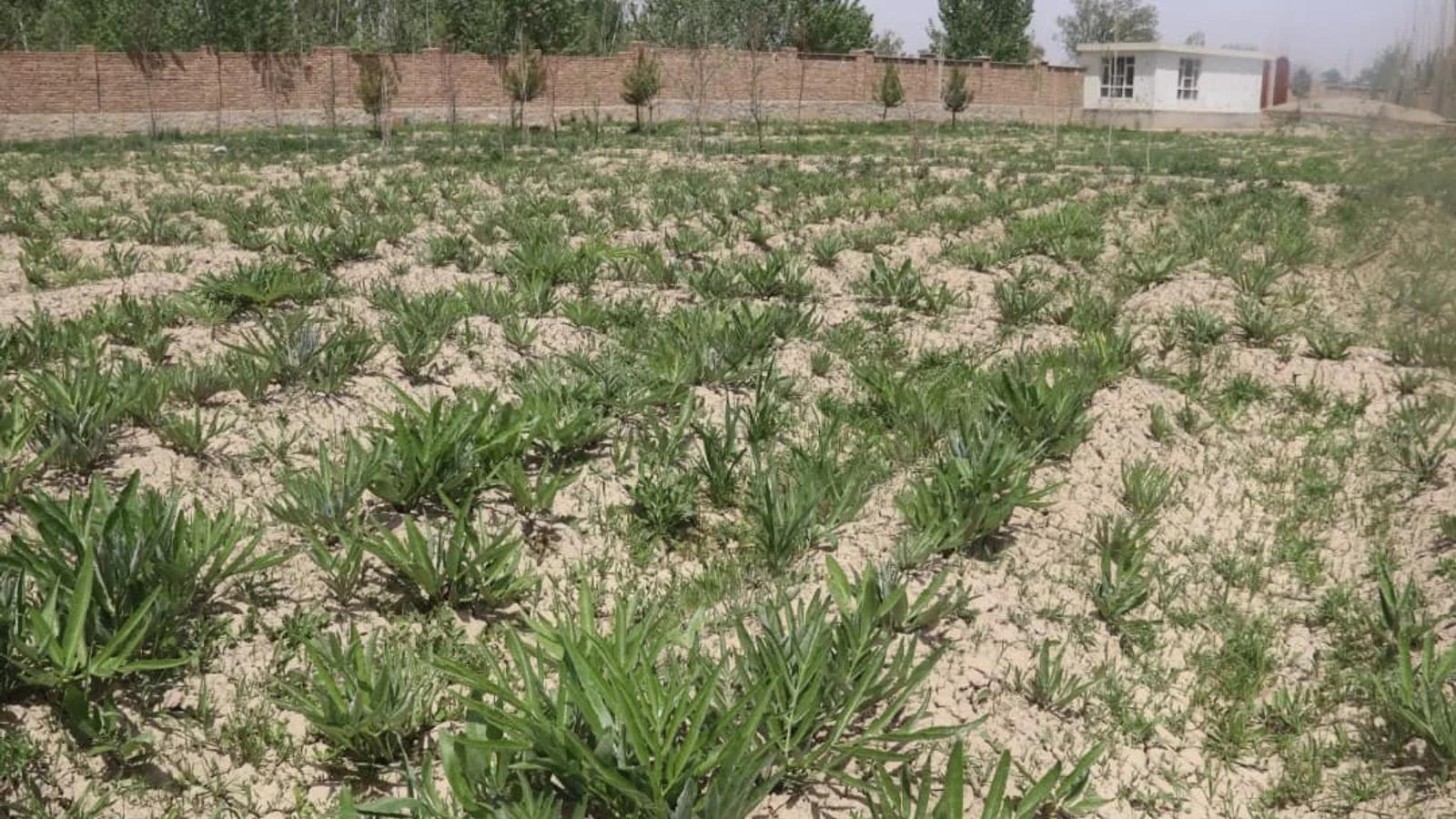
Farmers in Logar province are increasingly turning to the cultivation of anjeh, a hemp variety, as a low-water alternative to poppy following the Islamic Emirate’s ban on narcotics. Agricultural officials and local growers report that the crop has gained traction due to its economic viability and adaptability to the region’s climate.
Engineer Nasiruddin Bahij, head of agricultural affairs at Logar’s Directorate of Agriculture, Irrigation and Livestock, stated that hundreds of jeribs of land were planted with anjeh last year, with acreage expected to expand further this season. He noted that the crop requires minimal irrigation, stores effectively after harvest, and commands strong prices in international markets.
Local farmers describe anjeh as a profitable, rain-fed crop well-suited to Logar’s soil and weather conditions. Many view it as a sustainable replacement for illicit cultivation, aligning with the broader agricultural shift prompted by the narcotics prohibition. Despite the crop’s advantages, growers have requested additional government assistance to establish dedicated marketing facilities and streamline distribution channels.
Provincial agricultural authorities are tracking the expansion of legal crop cultivation as part of ongoing efforts to support rural livelihoods. The shift toward anjeh cultivation highlights a growing reliance on drought-resistant crops in the province. Officials indicate that continued investment in storage infrastructure and market access will be necessary to sustain the transition away from poppy farming.
Read the original reporting at Bakhtar News →
Reliability assessment
Single source provides direct, on-record attribution to a named provincial official (Engineer Nasiruddin Bahij) with concrete, checkable details including specific location (Logar province), crop type (Anjeh/hemp), acreage context (hundreds of jeribs), and policy background (post-poppy ban). The core event is clearly attributable and verifiable per the single-source reliable criterion.
The source language reads straight.
Independent web corroboration
An independent web search turned up no separate corroborating reports. Treat the account as single-sourced until more outlets pick it up.
Across the newsrooms
Filed by
Bakhtar News
Originating
Reported straight
Reported straight
Filed under
Economy — Logar, Anjeh, Agriculture, Islamic Emirate, Crop Substitution
Reader supported
Keep Ehtebar running
Every published story uses paid tools to translate reporting, compare sources, extract claims, and produce a clearer read on Afghanistan. Reader support helps keep that work independent.
€5
helps cover daily verification runs
€15
supports a week of source comparison
€50
keeps independent analysis moving
More in Economy
Economic Commission Approves 37 Domestic Standards and 12 Testing Methods
— Reliable

Taliban Governor Says Around 700 Mines Under Extraction in Panjshir
— Reliable
Daily Production at Baghlan's Ghori Cement Factory Increases to 700 Tons
— Reliable
Two Irrigation and Flood-Prevention Projects Completed in Zabul
— Reliable