
ECONOMY — April 17, 2026
Increase in Herat Province's Gas Share in the TAPI Project
The Islamic Emirate of Afghanistan has announced that Herat province's gas share in the TAPI project has increased from 500 million to 4.3 billion cubic meters. The change is expected to reduce energy costs by 15-25 percent, generate savings and jobs, with the first phase in the province due to finish by the end of 2026.
The Ehtebar Desk — originates with ToloNews — 2 min read
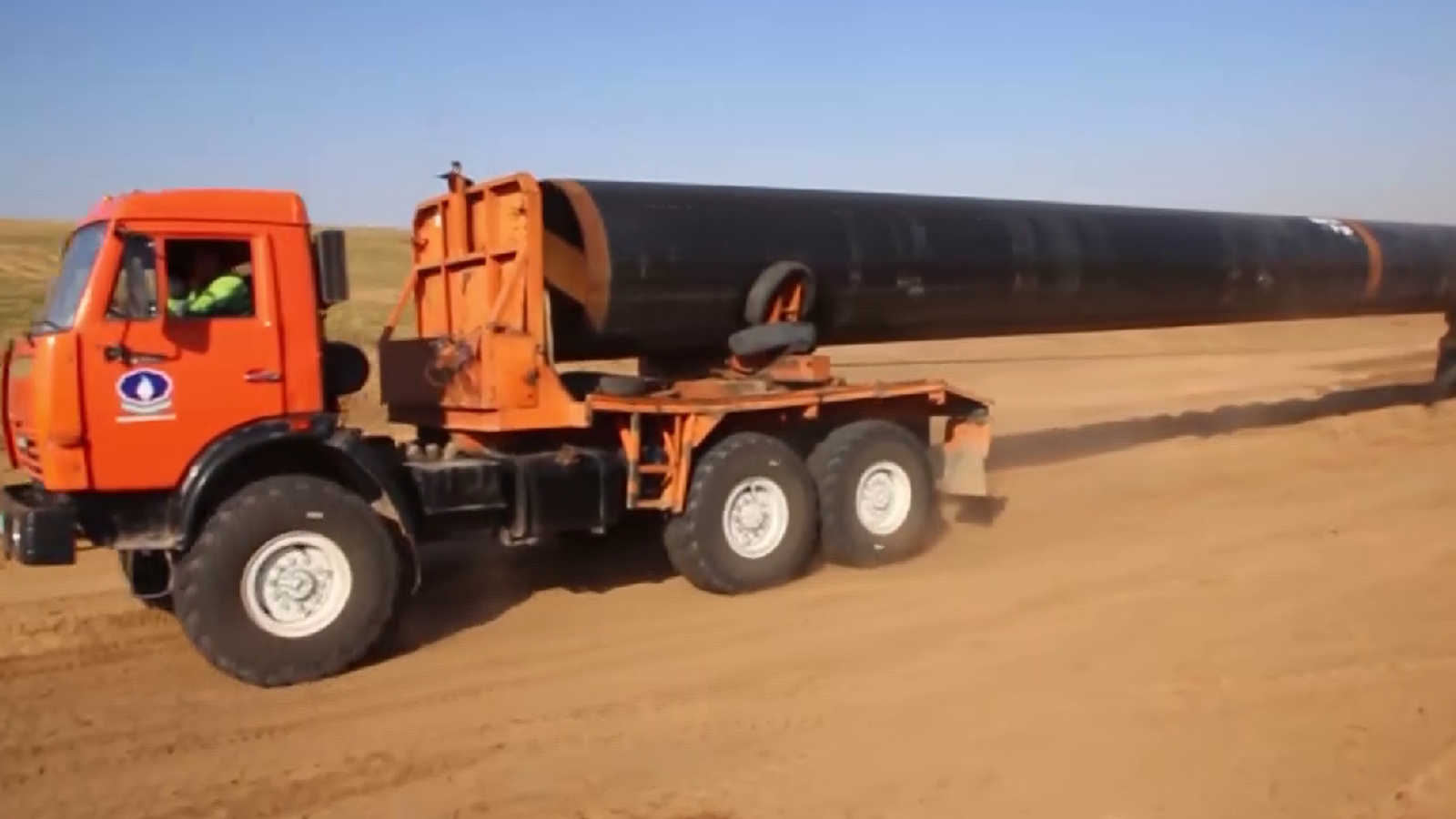
The Islamic Emirate of Afghanistan has reported a major increase in the volume of gas that Herat province will receive from the TAPI natural gas pipeline project.
According to Shafie Azam of the Ministry of Foreign Affairs, the province's allocation has grown from 500 million cubic meters to 4.3 billion cubic meters.
This boost is anticipated to have considerable positive effects on the local economy. Officials say using the gas in place of electricity for industrial and urban use could cut energy costs by 15 to 25 percent.
Economic experts Mirshakar Yaqubi and Abdul Shakur Hadewal pointed to broader benefits. They said that the use of one billion cubic meters of gas could lead to annual savings of about 900 million dollars while also creating up to 200,000 new job opportunities.
The project is also expected to increase transit revenues for Afghanistan.
Construction activities in Herat province are moving forward. More than 25 kilometers of the pipeline have already been installed, with work continuing on the first phase. This phase is scheduled to be completed by the end of 2026.
The TAPI project involves the transport of natural gas from Turkmenistan through Afghanistan and on to Pakistan and India.
Both officials and experts have stressed that the project's overall success will require ongoing cooperation from the participating countries, especially Pakistan and India.
Read the original reporting at ToloNews →
Reliability assessment
Single source (ToloNews) provides direct, on-record attribution to named officials and experts (Shafie Azam of the Ministry of Foreign Affairs, economic experts Mirshakar Yaqubi and Abdul Shakur Hadewal) along with concrete, checkable details including specific quantities (4.3 billion m³, 25+ km), timelines (end of 2026), and economic projections. Additional backing from Ministry of Mines and Petroleum data on pipeline progress.
The source language reads straight.
Independent web corroboration
An independent web search turned up no separate corroborating reports. Treat the account as single-sourced until more outlets pick it up.
Across the newsrooms
Filed by
ToloNews
Originating
Reported straight
Reported straight
Filed under
Economy — TAPI Project, Herat Province, Gas Pipeline, Energy Transit, Afghanistan Economy
Reader supported
Keep Ehtebar running
Every published story uses paid tools to translate reporting, compare sources, extract claims, and produce a clearer read on Afghanistan. Reader support helps keep that work independent.
€5
helps cover daily verification runs
€15
supports a week of source comparison
€50
keeps independent analysis moving
More in Economy
Economic Commission Approves 37 Domestic Standards and 12 Testing Methods
— Reliable

Taliban Governor Says Around 700 Mines Under Extraction in Panjshir
— Reliable
Daily Production at Baghlan's Ghori Cement Factory Increases to 700 Tons
— Reliable

Two Irrigation and Flood-Prevention Projects Completed in Zabul
— Reliable