
SOCIETY — February 16, 2026
Kabul Families Concerned Over Taliban Songs Influencing Children Toward Violence
Families in Kabul report Taliban songs are influencing children to adopt violent language and ideas, raising fears of long-term ideological indoctrination via social media. Experts and residents warn of societal risks including moral collapse and extremism among youth.
The Ehtebar Desk — originates with Hasht-e Subh — 2 min read
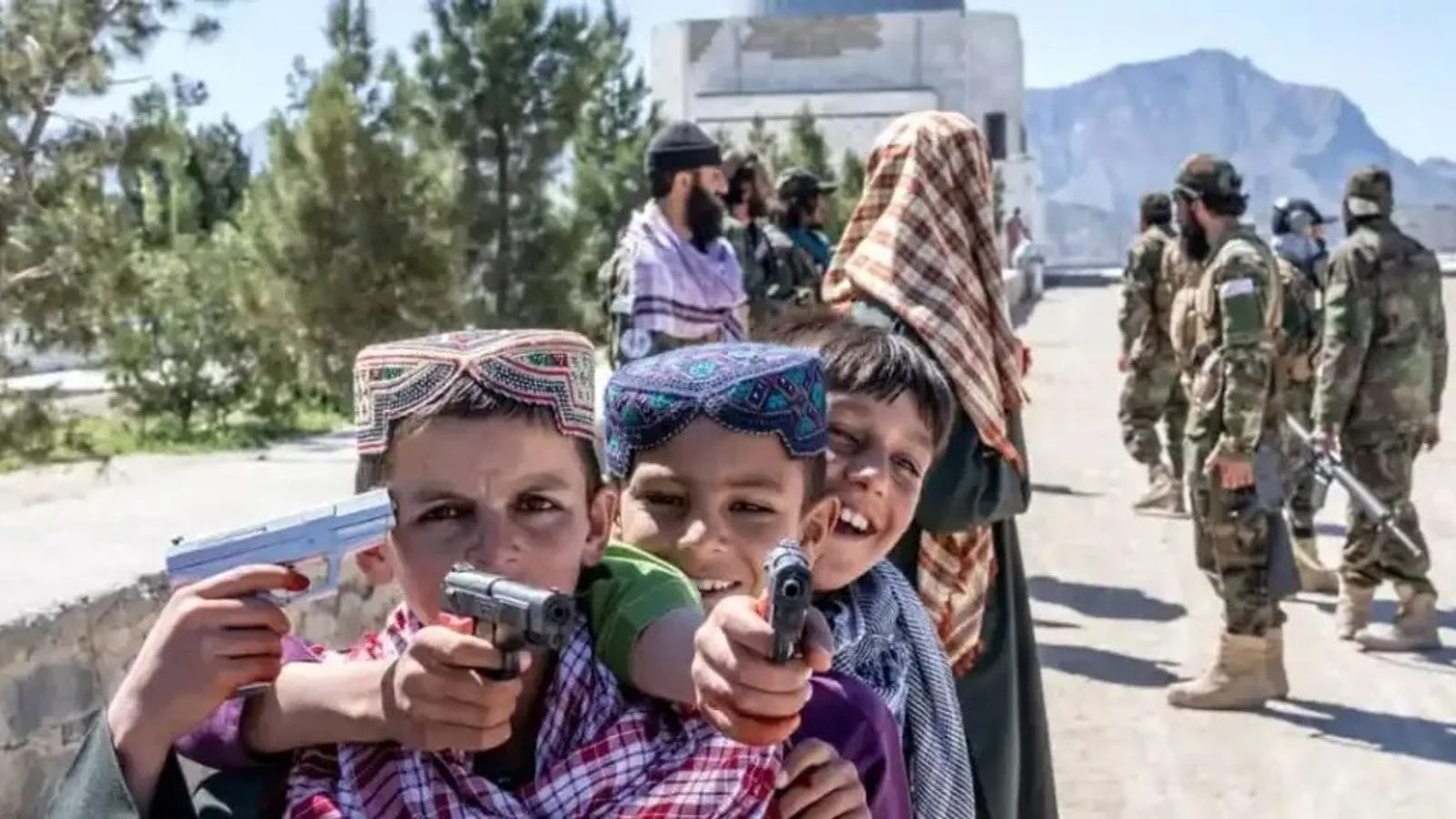
Families in Kabul report that their children have shown changed attitudes after listening to songs produced by the Taliban. They say the children display increased curiosity about war-related topics and use terms such as 'suicide,' 'jihad,' and 'martyrdom' in play and daily conversations.
Noor Agha, a Kabul resident using a pseudonym, stated that his children began asking questions about jihad and whether killing leads to paradise, prompting him to take the songs more seriously. He warned that the Taliban are deliberately institutionalizing their ideology from a young age, even within families, through these songs easily accessible on social media and mobile phones. Noor Agha added, 'Hearing these songs is terrifying for the next generation and could lead society to moral collapse and the erosion of civil values.'
Ghaznfar, another Kabul resident, described the songs by Taliban-associated singers as promoters of violence, cautioning that widespread dissemination could turn children and youth into a generation with extremist and violent views. He said, 'The negative impacts are greater on children and adolescents, as they might take up arms. Unfortunately, with the Taliban's propaganda methods, Afghanistan's future could be discouraging.'
Families criticized Meta and YouTube for failing to remove the violent content despite regulations, noting the difficulty in monitoring access. They expressed concerns over the lack of awareness programs and stricter oversight on violent material.
Sociologist Rashid Seddiqi said the content has a negative impact, spreading deviation in society. 'From a sociological and psychological perspective, promoting violence, war, and suicide has victimized the people of Afghanistan and poses serious challenges. Youth may be drawn toward such behaviors,' he stated.
Political experts view the songs as propaganda tools that glorify violence, war, and martyrdom, directing youth toward extremism.
Read the original reporting at Hasht-e Subh →
Reliability assessment
Single source with strong anti-Taliban framing and anecdotal reports from pseudonymous residents, a named sociologist, and unnamed experts; lacks independent corroboration for the core claims of behavioral changes in children.
Across the newsrooms
Filed by
Hasht-e Subh
Originating
Filed under
Society — Taliban, Kabul, children, violence, social media
Reader supported
Keep Ehtebar running
Every published story uses paid tools to translate reporting, compare sources, extract claims, and produce a clearer read on Afghanistan. Reader support helps keep that work independent.
€5
helps cover daily verification runs
€15
supports a week of source comparison
€50
keeps independent analysis moving
More in Society
Health Officials and Experts Discuss Rise in Black Jaundice Cases in Afghanistan
— Reliable
Discussion on Agricultural Products and Health Services in Samangan Province
— Reliable
WHO Report Cites Taliban Restrictions and Funding Shortfalls as Threats to Health Services in Afghanistan
— Reliable
Afghan officials report returns of families from Pakistan and Iran alongside releases from Pakistani prisons
— Reliable