
SOCIETY — February 18, 2026
Kabul Residents Demand Removal of Concrete Barriers Around Russian Embassy
Kabul residents near the Russian Embassy demand removal of security barriers obstructing daily access and causing traffic jams, as the Interior Ministry continues removals elsewhere in the city.
The Ehtebar Desk — originates with ToloNews — 2 min read
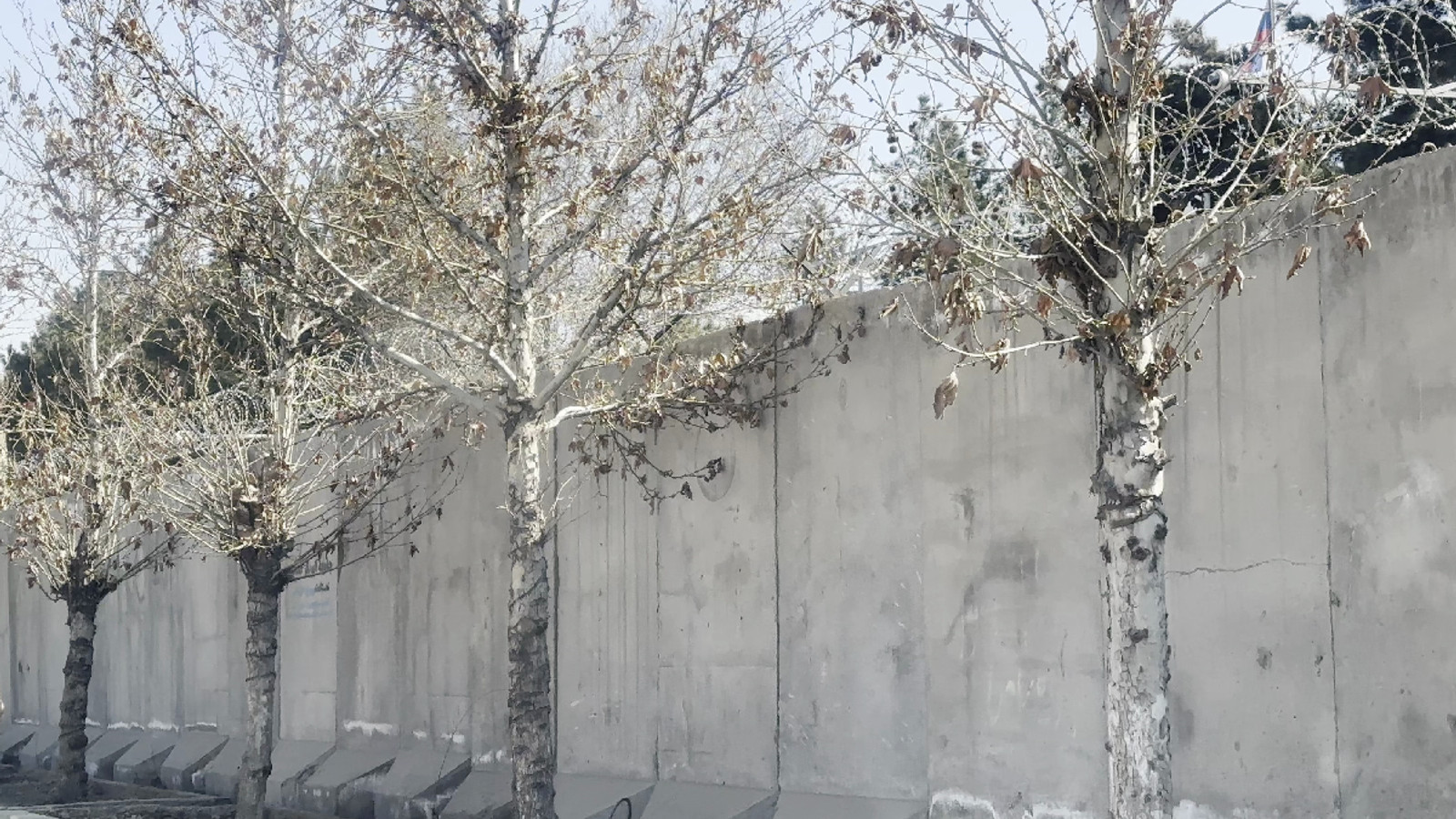
Residents in the area surrounding the Russian Embassy in Kabul are calling for the removal of concrete barriers erected around the diplomatic mission.
Locals say the barriers have created significant challenges to their daily lives, complicating access to homes, shops and main roads. Khalil, a Kabul resident, said: "It would be good if these barriers are removed, our road would open because from this road we pass, we are forced to go a long way to reach the main road."
Mohammad Qais, another Kabul resident, told ToloNews: "Barriers have been collected from everywhere and only not removed from here. If concrete barriers are also removed from this area, the main road will become wider and people's problems will be solved."
Vehicle drivers in the area have also complained about longer routes and traffic congestion caused by the barriers, leading to wasted time, higher fuel consumption and increased fatigue. Ahmad Rashad, a driver, said: "Problems are created more in the evenings, especially in the afternoon and evening on this Deh-e-Aman road, where seven roads converge and become congested. Cars coming from the city mostly get stuck, and these barriers have become problematic."
Zabihullah, another driver, added: "We face too many problems, and concrete barriers have been removed in other parts of the city by the Islamic Emirate of Afghanistan except at the Russian Embassy."
The concrete barriers were installed in various parts of Kabul, particularly around embassies and important organizations, for security purposes in past years. They have since become a major concern for citizens.
Previously, the Ministry of Interior stated that the process of removing the barriers is ongoing, with many already cleared from areas across the capital.
Read the original reporting at ToloNews →
Reliability assessment
Single reputable source (ToloNews) with direct, on-record quotes from named residents and drivers (Khalil, Mohammad Qais, Ahmad Rashad, Zabihullah), specific location (Russian Embassy in Deh-e-Aman area), and reference to Ministry of Interior statement; low-stakes local issue with concrete, checkable details.
Across the newsrooms
Filed by
ToloNews
Originating
Filed under
Society — Kabul, Russian Embassy, Concrete Barriers, Traffic Congestion, Islamic Emirate of Afghanistan
Reader supported
Keep Ehtebar running
Every published story uses paid tools to translate reporting, compare sources, extract claims, and produce a clearer read on Afghanistan. Reader support helps keep that work independent.
€5
helps cover daily verification runs
€15
supports a week of source comparison
€50
keeps independent analysis moving
More in Society

Health Officials and Experts Discuss Rise in Black Jaundice Cases in Afghanistan
— Reliable

Discussion on Agricultural Products and Health Services in Samangan Province
— Reliable
WHO Report Cites Taliban Restrictions and Funding Shortfalls as Threats to Health Services in Afghanistan
— Reliable
Afghan officials report returns of families from Pakistan and Iran alongside releases from Pakistani prisons
— Reliable