
ECONOMY — May 4, 2026
Officials Discuss Electricity Infrastructure and Industrial Development Plans
Minister of Industry and Commerce Nooruddin Azizi and Afghanistan Electricity Company executive director Mullah Abdul Haq Hamkar met to discuss expanding power infrastructure for industrial growth, regional energy cooperation, and targeted electricity projects for Panjshir province.
The Ehtebar Desk — originates with Bakhtar News — corroborated by RTA — 2 min read
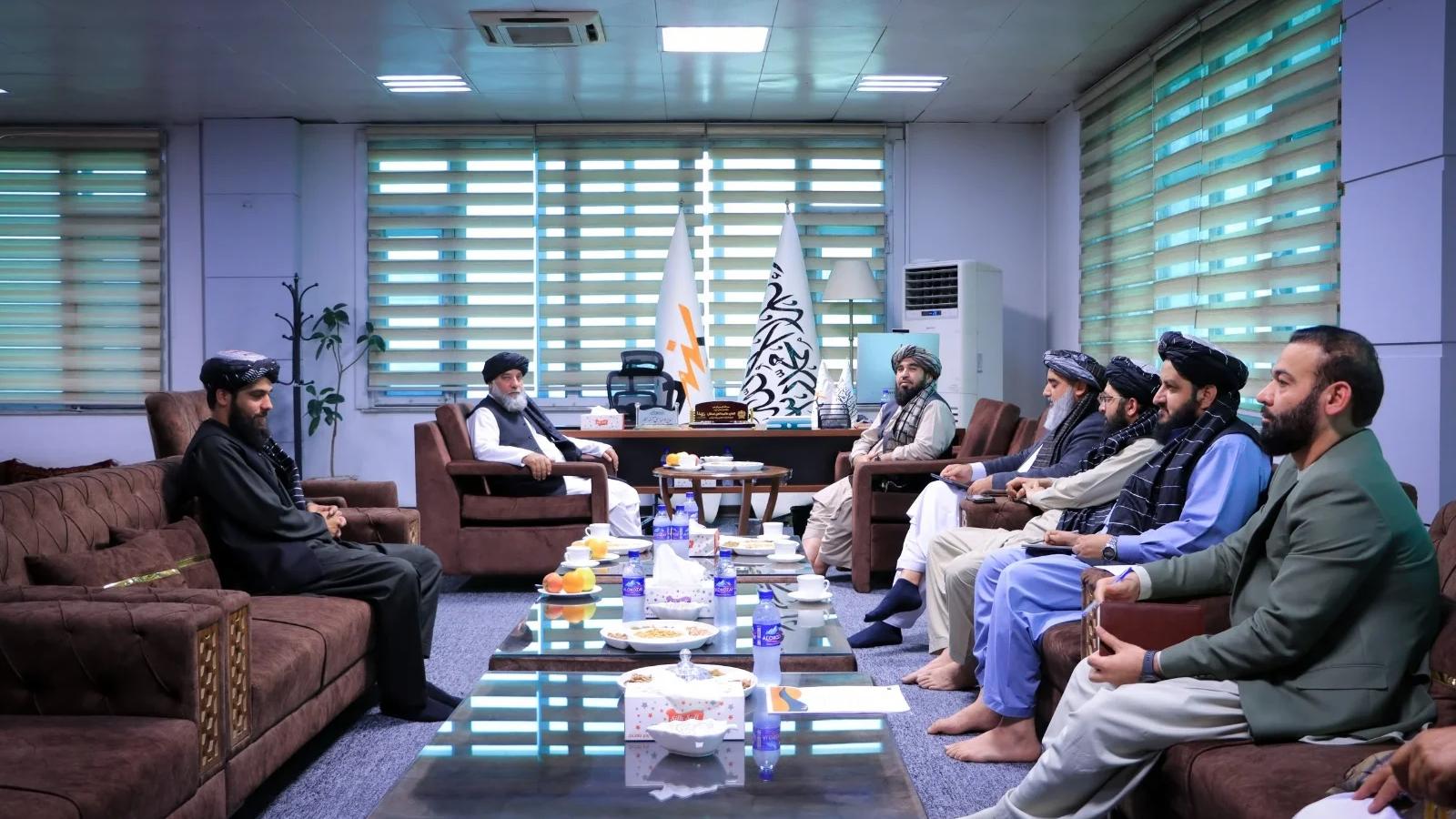
Minister of Industry and Commerce Nooruddin Azizi met with Mullah Abdul Haq Hamkar, executive director of the Afghanistan Electricity Company, to review plans for expanding the national power grid and supporting industrial growth. The meeting focused on aligning electricity infrastructure with the needs of domestic manufacturers and advancing regional energy cooperation.
During the discussions, Hamkar outlined recent diplomatic engagements with Central Asian countries, highlighting ongoing commitments to cross-border energy partnerships. He emphasized the importance of securing stable power supplies to sustain industrial operations and reduce reliance on imported electricity. Officials also reviewed proposals for targeted infrastructure upgrades, including specific power generation and distribution projects designated for Panjshir province.
Azizi reiterated the ministry’s commitment to expanding operational facilities and support for local industrialists. He stated that improving access to reliable electricity is a central component of the broader strategy to achieve economic self-sufficiency. Both officials agreed that coordinated efforts between the commerce ministry and the national power utility are essential for long-term industrial development.
The meeting also addressed the implementation of recently launched domestic power generation initiatives. These projects, introduced in accordance with national leadership directives, aim to increase local energy production capacity and provide a more resilient foundation for the manufacturing sector. Officials indicated that further technical assessments and funding allocations will follow to ensure the timely execution of the proposed infrastructure upgrades.
Read the original reporting at Bakhtar News →
Reliability assessment
Two independent state media outlets corroborate the core event: a meeting between named officials (Minister Azizi and DABS CEO Hamkar) on a specific date. Details are consistent across both reports, and the information is directly attributed to official company press releases and on-record statements. The absence of one minor detail in one source does not undermine the corroboration of the main event.
The source language reads straight.
Across the newsrooms
Where reports agree
- A meeting took place between Minister Nooruddin Azizi and DABS CEO Mullah Abdul Haq Hamkar.
- The primary agenda was electricity infrastructure development for industrial growth and economic self-sufficiency.
- Hamkar referenced recent trips to Central Asian countries regarding energy sector cooperation.
- Panjshir province electricity infrastructure was specifically discussed as a project focus.
- Azizi committed to expanding facilities and support for domestic industrialists.
Where reports differ
- No substantive disagreements exist. RTA includes an additional detail about launched domestic power projects and leadership directives, which Bakhtar News omits but does not contradict.
Filed by 2 outlets
Bakhtar News
Originating
Reported straight
Reported straight
RTA
Reported straight
Reported straight
Filed under
Economy — Ministry of Industry and Commerce, Afghanistan Electricity Company, Nooruddin Azizi, Mullah Abdul Haq Hamkar, Panjshir Province
Reader supported
Keep Ehtebar running
Every published story uses paid tools to translate reporting, compare sources, extract claims, and produce a clearer read on Afghanistan. Reader support helps keep that work independent.
€5
helps cover daily verification runs
€15
supports a week of source comparison
€50
keeps independent analysis moving
More in Economy
Economic Commission Approves 37 Domestic Standards and 12 Testing Methods
— Reliable

Taliban Governor Says Around 700 Mines Under Extraction in Panjshir
— Reliable
Daily Production at Baghlan's Ghori Cement Factory Increases to 700 Tons
— Reliable

Two Irrigation and Flood-Prevention Projects Completed in Zabul
— Reliable