
SOCIETY — February 15, 2026
UN OCHA: Mental Health Activities Banned in Afghanistan
UN OCHA reports that mental health and psychosocial support activities are banned in Afghanistan, heavily impacting women who rely on these services. Humanitarian access constraints persist at medium severity in 60% of districts amid Taliban interference and restrictions on female aid workers.
The Ehtebar Desk — originates with Amu TV — 2 min read
The United Nations Office for the Coordination of Humanitarian Affairs (OCHA) states that activities related to mental health and psychosocial support are currently banned in Afghanistan.
Women heavily rely on these services in social spaces, but they now face restrictions or complete halts, according to OCHA's latest Humanitarian Access Snapshot report.
The eighth round of severity mapping, involving UN agencies, international and national organizations, and humanitarian cluster leads, found no districts classified as high severity access constraints, down from nine in the previous round. Medium severity affects 242 districts (60% of total), while low severity covers 159 districts (40%). Compared to the seventh round, medium severity areas increased from 234 to 242.
Key barriers include restrictions on female staff and gender-sensitive programs, bureaucratic and administrative obstacles, interference by de facto authorities, and socio-economic and demographic pressures. Restrictions on women's access to essential health services persist.
Despite relative improvements in physical access since August 2021 due to reduced armed conflict, these gains are offset by heightened administrative restrictions and interference in humanitarian operations. Bans on female aid workers in non-health and non-education sectors have tightened, and women require a male mahram in some areas to visit clinics. Work permits for health and education staff remain difficult to obtain, with mobile phone use banned for female health workers in certain regions.
Humanitarian staff face stops at checkpoints, demands for additional documents post-field visits, temporary arrests, and harassment. House-to-house polio vaccinations are not permitted. Taliban interference accounted for 85% of recorded incidents, with gender-related restrictions comprising 31%.
Arrests of 34 humanitarian workers (18 men, 16 women) mark a 66% decrease from 100 in the prior period, though OCHA notes ongoing security risks. In one area, partners reported female staff being pursued by unknown armed individuals. Environmental challenges like floods, military operations, and explosive contamination, particularly in eastern and southeastern regions, further hinder access.
Read the original reporting at Amu TV →
Reliability assessment
Single source directly reporting on UN OCHA's official Humanitarian Access Snapshot report (eighth round) with concrete, checkable details including district numbers, percentages, arrest figures, and incident breakdowns; attributable to named entity (OCHA) with specific comparisons to prior periods.
Across the newsrooms
Filed by
Amu TV
Originating
Filed under
Society — OCHA, humanitarian access, mental health, Taliban, women restrictions
Reader supported
Keep Ehtebar running
Every published story uses paid tools to translate reporting, compare sources, extract claims, and produce a clearer read on Afghanistan. Reader support helps keep that work independent.
€5
helps cover daily verification runs
€15
supports a week of source comparison
€50
keeps independent analysis moving
More in Society
Health Officials and Experts Discuss Rise in Black Jaundice Cases in Afghanistan
— Reliable
Discussion on Agricultural Products and Health Services in Samangan Province
— Reliable
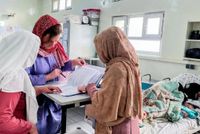
WHO Report Cites Taliban Restrictions and Funding Shortfalls as Threats to Health Services in Afghanistan
— Reliable
Afghan officials report returns of families from Pakistan and Iran alongside releases from Pakistani prisons
— Reliable